Last updated November 18, 2026





Free written scope consultation - allowances, timeline, and change-order rules on paper before a single trade is scheduled
Driveway & Pavers Warning Signs Every Homeowner Should Know
A single rocking paver in an otherwise stable field is a base failure signal, not a surface nuisance. Left through one monsoon season in Henderson, that one loose unit typically turns a small reset job into a full base repair, and the price difference is stark. We’ve pulled apart enough driveways here to know the pattern: the visible signs show up 6 to 18 months before the failure gets expensive, and they arrive in a sequence. This guide maps what you’re seeing to what’s actually happening underneath, and sorts every warning sign into a repair-urgency tier so you know what to call about this week and what can wait for the next scheduled maintenance.
Quick Answer
The most reliable driveway paver warning signs are a single rocking paver, joint sand turning from charcoal to light gray, stones spreading at the edges, and standing water pooling near the driveway after a storm. Each points to a different root cause: base settlement, polymeric binder breakdown, edge restraint failure, or reversed pitch. Fix Tier 1 signs within 30 days to avoid a repair that runs several times the cost of the original problem.
Styles & brands we work with
- Kitchen remodeling
- Bathroom remodeling
- Home additions & ADU
- Roofing
- Windows & doors
- Driveway & pavers
- Fence
Table of Contents
- The Three-Tier Urgency System: How to Read What You’re Seeing
- Rocking and Loose Pavers: The First Signal
- Joint Sand Color Change: The 12-to-24-Month Warning
- Settlement vs. Erosion vs. Tree Roots: Reading the Depression Pattern
- Edge Restraint Failures in Henderson’s Caliche-Adjacent Soil
- The Drainage Sign Most Homeowners Misread
- Efflorescence, Spalling and Staining: What’s Cosmetic and What Isn’t
- A Practical Monthly Walk-Around: 7 Steps
The Three-Tier Urgency System: How to Read What You’re Seeing
Not every warning sign demands an immediate call. What matters is matching the sign to how fast it gets worse. We sort the visible evidence into three tiers so a homeowner can plan instead of panic. Tier 1 means fix within 30 days. Tier 2 means monitor monthly and fix before monsoon season (roughly June through September in Henderson). Tier 3 means cosmetic, address it at the next scheduled maintenance.
Here is how ten common warning signs fall into those tiers.
- Tier 1 (fix within 30 days): a single paver rocking underfoot; joint sand washing out in a channel; edge restraint spikes pulling up; pavers spreading along the driveway edge.
- Tier 2 (monitor, fix before monsoon): joint sand lightening in color; shallow depressions 1 to 2 inches deep; hairline cracks in a concrete border; efflorescence appearing in the same spot repeatedly.
- Tier 3 (cosmetic, next maintenance): a slightly sunken paver under an inch deep; minor color fade from UV; scattered stray weeds in joints; isolated surface stains.
The tier isn’t permanent. A Tier 3 sign that shows up after every storm is doing the work of a Tier 1 sign, because the water is reaching the base. When you’re ready to talk through a plan, our Driveway & Pavers in Henderson page lays out how a written scope handles each tier, and we’ll always put the price in writing before anyone starts.
Rocking and Loose Pavers: The First Signal
A paver that rocks when you step on it has lost contact with its bedding layer. The bedding sand under that unit has migrated or compacted unevenly, which is usually the first sign the base beneath it is settling. It is not surface instability. In our experience across Henderson, a rocking paver fixed by resetting the single unit and re-sanding the joint runs in the low hundreds of dollars. Left through a season, water reaches the base, more units move, and you’re looking at a full section relevel.
Test it in ten seconds. Press one foot on the paver’s corner and feel for movement. Then walk the full driveway at a slow pace and note every spot that rocks. Count them.
- Mark rocking pavers with a piece of tape or chalk line so you can count them from a distance.
- Note whether the movement is vertical (rocking) or lateral (sliding), because lateral movement points to edge restraint failure, not base settlement.
- Check the same spot after the next rain and see if the rock has increased. Water accelerates the problem fast here.
- If the count is three or fewer and the field is otherwise solid, it’s a targeted reset job. If more than five, get a full assessment.
In Henderson, the caliche layer sits under much of the valley floor, and caliche doesn’t drain the way ordinary soil does. Water that gets under a rocking paver sits there instead of percolating away, which is why a loose unit here degrades faster than the same sign would in a wetter climate.
Joint Sand Color Change: The 12-to-24-Month Warning
Polymeric joint sand that has gone from charcoal to light gray is telling you its binder is breaking down. This is our most-missed warning sign. In Henderson’s UV environment, the polymeric binder in joint sand typically starts to fail 12 to 24 months before the joints structurally fail. The color shift is the window to act. Once the joints are actually open (you can push your finger into the sand), the water is already reaching the base, and the repair tier jumps.
The mechanism is simple. UV exposure breaks down the polymer that locks the sand grains together. Once the polymer is compromised, the sand holds less tightly, water works into the joint, and the sand starts to wash out in runoff channels during storms. Those channels are visible evidence you can photograph with a phone.
- Charcoal to dark gray: joints are sound, no action needed.
- Dark gray to light gray: binder breakdown has begun. Tier 2 sign, plan a re-sand before monsoon season.
- Light gray to near-white with visible sand loss: joints are open. Tier 1 sign, base may already be exposed to weather.
If the driveway borders a slope or a sidewalk, runoff channels form fastest along the downslope edge. If you’re also planning work on the yard perimeter, our Fence Installation in Henderson page notes how drainage routing around a fence footing can affect where water pools near the driveway.
Settlement vs. Erosion vs. Tree Roots: Reading the Depression Pattern
Not every depression under a paver comes from the same cause, and each one carries a different repair cost range. The shape and location of the depression tells you which one you’re looking at. This is the diagnostic skill that saves the most money, because a repair crew called for the wrong cause does the wrong work.
- Broad, dish-shaped depression: base settlement. The compacted gravel beneath the bedding has shifted, usually because it was under-compacted at install or because a moisture path reached it. Repair means lifting the field and re-compacting the base. This is typically the most expensive of the three.
- Narrow trench or linear channel at the edge: erosion. Water has channeled under the pavers and carried away the bedding sand. Repair focuses on correcting the water path plus local rebedding. Less costly than full settlement, but only if the water source is fixed.
- Circular depression near a tree, sometimes with lifted pavers at the perimeter: tree root intrusion. The root has grown beneath the pavers and pushed up, and adjacent areas sink as soil displaces. Repair involves root management and a localized reset, and the price depends on how much of the root system reaches the driveway.
Henderson backyards and side yards run to Palo Verde and mesquite, and the surface roots on both run wide. On driveways near a mature tree, we look for circular depressions first because the wrong fix (re-sanding) does nothing when the cause is a root. If a future Home Additions & ADU in Henderson is in the plans, it pays to have the driveway inspected before the new footprint reroutes drainage, since moving a gutter outlet can change which side of the driveway erodes.
Edge Restraint Failures in Henderson’s Caliche-Adjacent Soil
Edge restraint holds the paver field from spreading outward. On Henderson installs, especially those near the caliche layer, we see three distinct failure modes, and each needs a different response. Homeowners often mistake one for another, which is why they re-drive the same spike three times and wonder why it keeps coming up.
- Spike pull-out. The restraint is intact, but the fastening spikes have worked their way up out of the soil. You’ll see the restraint tilting inward slightly and the head of a spike standing proud. Response: re-drive the spikes and, if they don’t hold, replace them with longer ones seated into the base layer. This is a Tier 1 sign because the field starts spreading immediately.
- Restraint cracking. The restraint itself has cracked at a joint or across a length. This points to settling beneath the restraint or a bind from thermal movement. Response: replace the cracked section. Re-driving the spikes into a broken restraint does nothing. Tier 1.
- Restraint heaving. The restraint has lifted vertically, usually from soil moisture or frost-like expansion (rare in Henderson but possible in shaded sections with heavy irrigation). Response: relieve the moisture path and reset the restraint. Tier 2, but watch it after every storm.
When the restraint is sound but the field still spreads, the fix is base work, not restraint work. If you’re also adding hardscape to the yard, our team reviews edge detail as a documented photo record on every visit, so you have evidence of what was found and what was done.
The Drainage Sign Most Homeowners Misread
Standing water 20 feet from the driveway after a monsoon event is a sign most homeowners misread. The instinct is to call for a new drain or a French drain. The more common cause in our experience is that the paver field has reversed pitch. The base has settled unevenly, the pavers now slope toward a low point rather than toward the street or swale, and water pools where it isn’t supposed to. A drain installation won’t fix a reversed pitch; it just moves the water after the base has already degraded. Fixing it is a base releveling job.
Test the pitch without a level. After a storm, look at where the water pools and how far it stays for how long. A shallow, even sheet that dries within a day is normal. A standing puddle more than 1/4 inch deep that stays for two days is a pitch problem. Standing water on the driveway itself after a storm, in the middle of the field, is the same signal and typically involves the base.
Henderson’s monsoon pattern drops a season’s worth of rain in a handful of storms, so a driveway that drains fine in March can fail visibly in August. Once you’ve identified a drainage problem, our Rowan Construction Group Henderson home page describes how we document the condition of the substrate and the pitch before we quote any repair.
Efflorescence, Spalling and Staining: What’s Cosmetic and What Isn’t
Efflorescence is the white, powdery bloom that appears on the surface of pavers when salts migrate up through the stone with moisture. In most cases it’s cosmetic. It appears, it dries, it can be brushed off. What matters is whether it recurs in the same spot. Repeated efflorescence in one area means moisture is reaching that spot from below, and that’s a Tier 2 sign worth monitoring.
Spalling is different. Spalling is the top layer of a paver flaking off or chipping away, and in our experience it usually points to a surface that was exposed to repeated freeze-thaw or to a paver that was under-fired at the factory. Spalling is a manufacturing or material-quality issue rather than a base issue, but a broad patch of spalling across many pavers in the same field is worth a look. If you see spalled pavers, we recommend documenting the pattern in a photo; if multiple pavers are affected, get an inspection, because the paver itself isn’t going to heal.
Surface staining from irrigation minerals, fertilizer, or tree sap is cosmetic. Oil stains from vehicles are cosmetic too, though they can etch the surface over time.
A Practical Monthly Walk-Around: 7 Steps
This is the inspection routine we recommend to every homeowner. It takes ten minutes and catches the Tier 1 and Tier 2 signs before they turn into full repairs.
- Walk the full edge. Look for edges spreading outward or restraint lifting vertically. Photograph anything that looks off.
- Walk the field at a slow pace. Count every spot that rocks underfoot. Note the count and revisit monthly.
- Look at the joint sand color after a storm. Photograph the driveway from the same angle each month. Compare shade over time.
- Check for standing water within 48 hours after rain. Note depth and location.
- Look for efflorescence and note whether it’s recurring in the same spot.
- Check the border concrete or restraint for new cracks. Crack length tells you if it’s growing.
- Look under any trees near the driveway. A circular depression near a tree is a root signal.
Common Mistakes to Avoid
- Resetting a rocking paver without checking the base. Resetting the surfacing only solves the symptom. If the base beneath is settled, the paver will rock again within a season, and you’ll have paid twice. In Henderson, the caliche layer traps water, so base investigation matters more here than in most climates.
- Re-sanding joints instead of replacing polymeric binder. If the joint sand has gone light gray, topping it off with ordinary sand doesn’t restore the polymer. You need to remove the degraded sand and install fresh polymeric sand at the right moisture level.
- Ignoring edge restraint pull-out. A slightly tilted restraint looks harmless. It spreads the whole field outward over time, and the correct fix is to re-drive or replace the spikes before the field has to be re-squared.
- Calling for a French drain when the problem is reversed pitch. A drain installed in front of a low spot doesn’t stop the base from degrading under the pavers. Base slope has to be corrected first.
- Assuming a broad depression is just “settling in.” Broad dish-shaped depressions worsen over time and are usually the most expensive failure mode. Catching them at 1 inch saves the base work at 3 inches.
- Skipping the post-monsoon inspection. Henderson gets most of its rainfall in a few weeks. One storm can do a season’s worth of damage to a driveway with compromised joints.
- Accepting a verbal estimate for the fix. Every repair price should come to you in writing, with a scope, before the work starts. If someone gives you a range on the phone and no written scope, that’s not a price yet.
See the difference
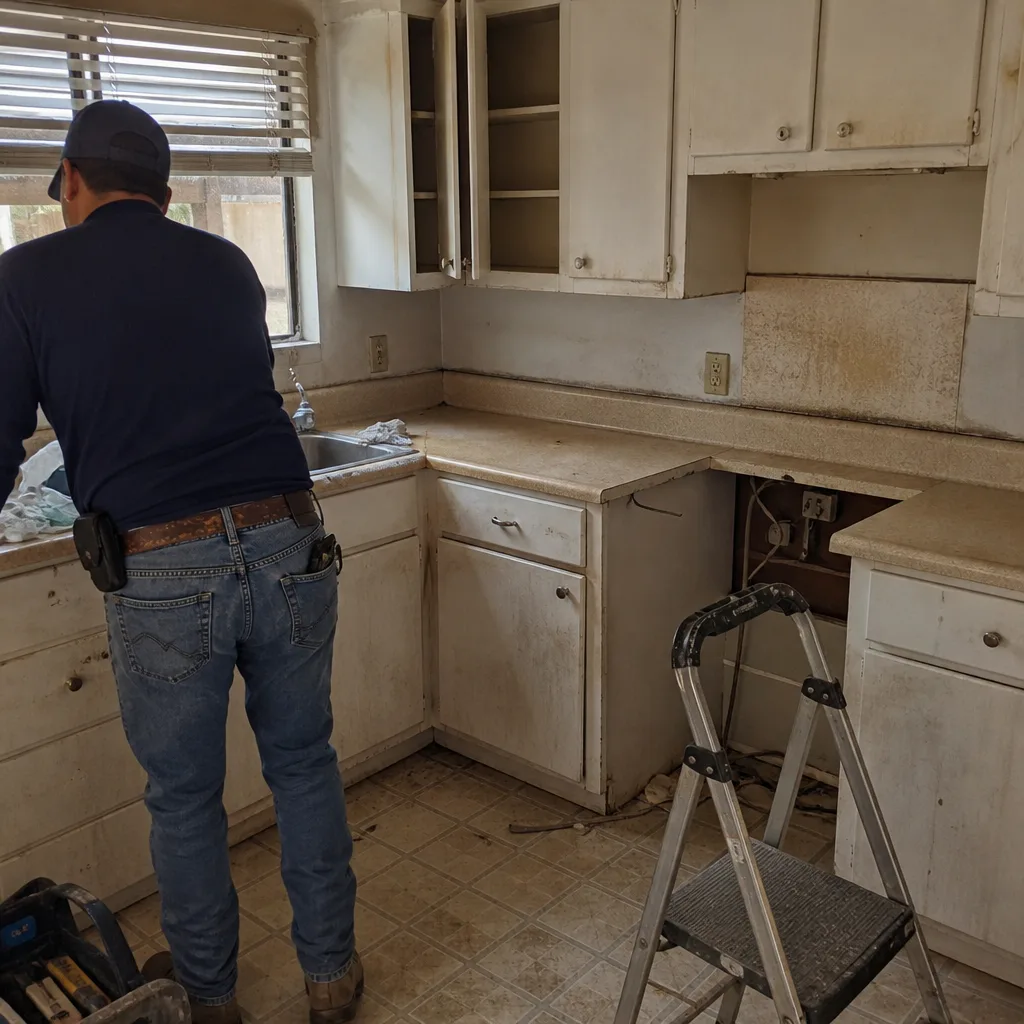 Before
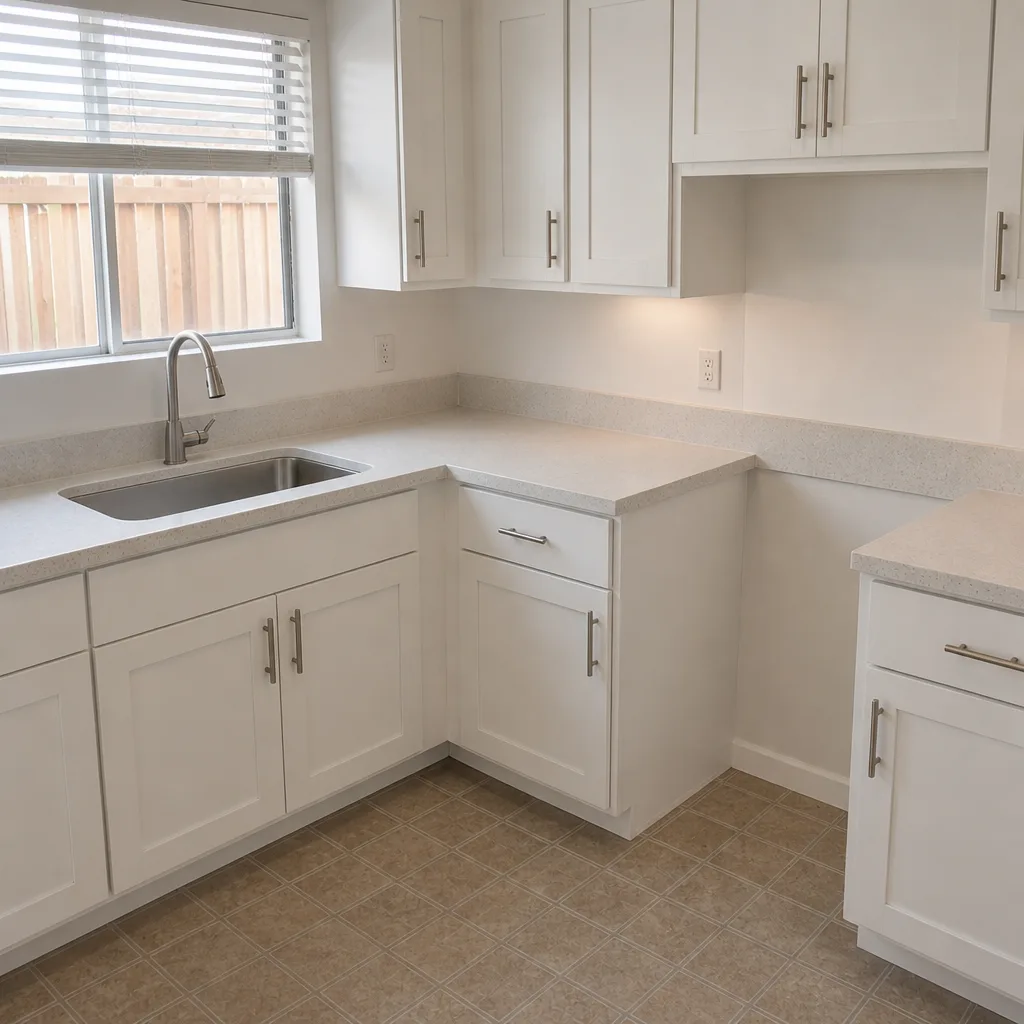 After
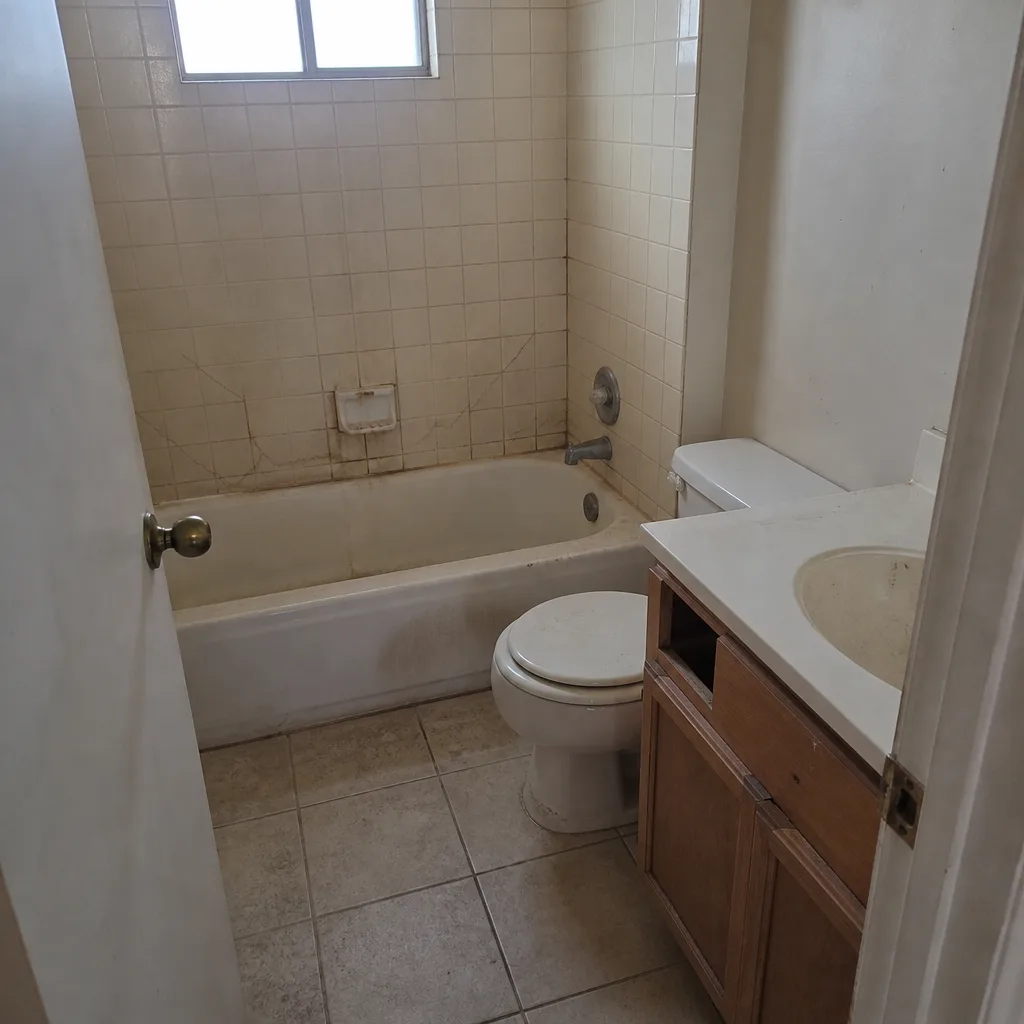 Before
 After
 Before
 After
When to Call a Professional
Call a professional when a Tier 1 sign appears: rocking pavers at more than five locations, edge restraint pulling out, visible sand loss with exposed base, or standing water more than a day after a storm. Also call when a Tier 2 sign repeats: recurring efflorescence in the same area, joint sand that has gone light gray across a whole section, or a depression that has deepened since your last monthly check. What you can handle yourself is a surface clean and minor staining. What you should not do is reset pavers into a base you haven’t inspected, or drive restraint spikes into a cracked restraint. Rowan Construction Group Henderson offers free estimates in Henderson, and every visit includes a documented photo record of the condition we find. Call (833) 954-5920 to schedule a walk-through.
Frequently Asked Questions
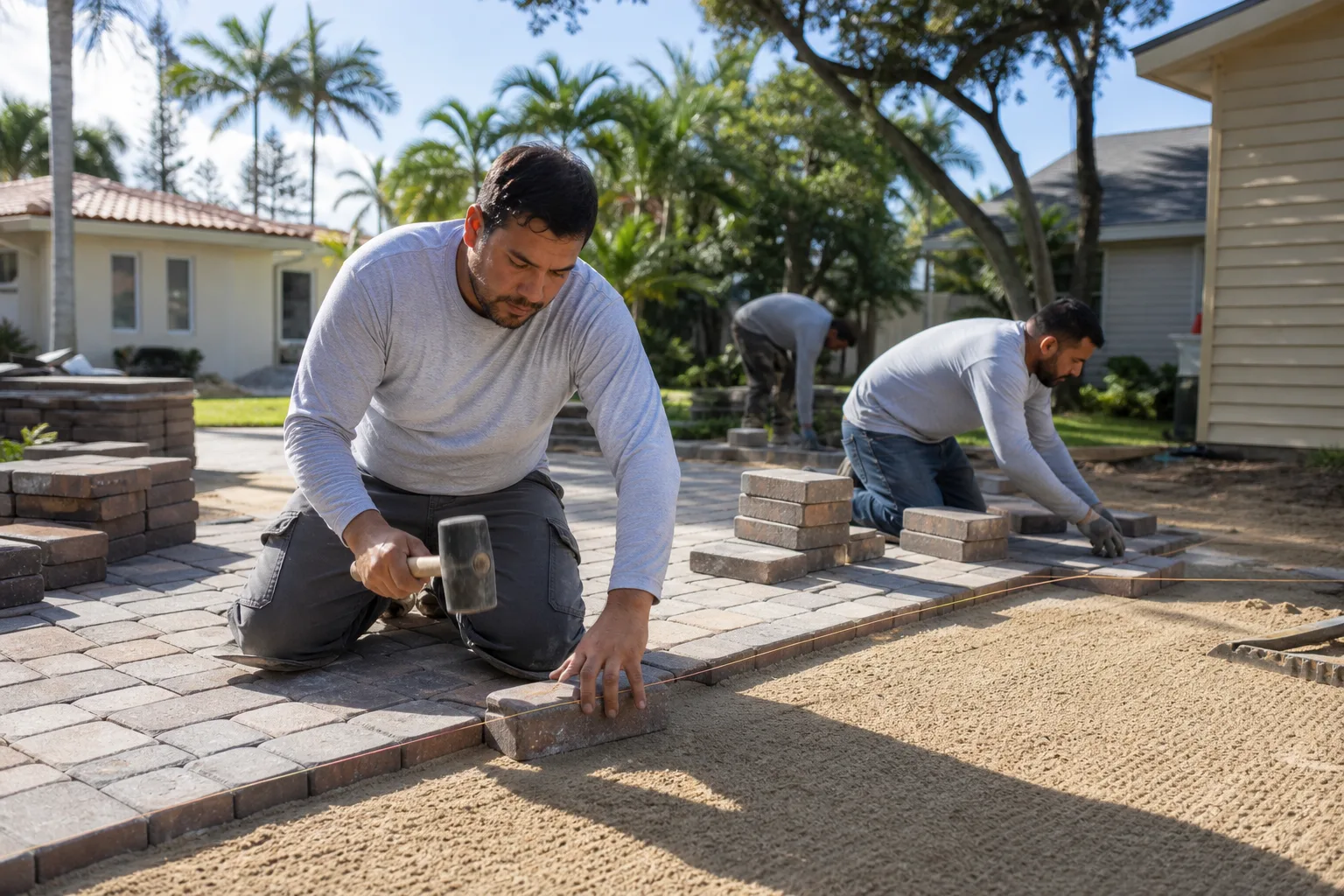
Driveway paver repair in Henderson typically runs from a few hundred dollars for a single-paver reset and re-sand up to several thousand dollars for a full section relevel with edge restraint replacement. A broad base settlement repair is the top of the range. We put a flat written price and scope in front of you before any work starts, so you know the exact figure rather than a phone range. Call (833) 954-5920 for an exact quote.
Settlement produces a broad, dish-shaped depression across a wide area, while erosion produces a narrow trench or channel usually along an edge where water has channeled. Settlement is corrected by re-compacting the base under the field; erosion is corrected by fixing the water path and rebedding locally. If you’re unsure which you have, describe the shape and location to us and we can tell you before we visit. Call (833) 954-5920 for a free estimate.
Joint sand lightening from dark gray to light gray means the polymeric binder in the sand is breaking down from UV exposure. In Henderson’s climate, this happens about 12 to 24 months before the joints structurally fail, so it’s the best window to re-sand before water reaches the base. It’s a Tier 2 sign, which means plan the re-sand before monsoon season rather than this week.
Restraint cracking and heaving should be handled by a professional because re-drive attempts on a broken or heaved restraint don’t work and can make it worse. A simple spike pull-out may be fixed with longer fasteners, but only after confirming the base isn’t compromised. We document what we find with a photo record so you can see the condition. Call (833) 954-5920 for a free estimate.
Water pooling 20 feet or more from the driveway after a monsoon usually signals that the paver field has reversed pitch – the base has settled unevenly, and the pavers now slope toward a low point. It is serious because the base is degrading while the water sits, and the fix is base releveling rather than a drain installation. A standing puddle more than 1/4 inch deep that lasts past two days should get a professional look. Call (833) 954-5920.
A single-paver reset takes less than a day. A section relevel with edge restraint runs a few days depending on how much base needs re-compacting. Under Clause 1 of the Haven Standard, the price is written before anyone starts, and no work proceeds on a change until the change order is signed. That’s why our projects finish within a few percent of the number you approved. Call (833) 954-5920 for your free estimate.
The Bottom Line
Every driveway paver failure in Henderson announces itself 6 to 18 months before it gets expensive, and the warning signs arrive in a sequence. A rocking paver is a base signal, not a nuisance. Joint sand that has gone from charcoal to light gray means the polymeric binder is breaking down and you have 12 to 24 months to re-sand. Edge restraint failures come in three distinct modes, each needing a different response. And standing water 20 feet from the driveway after a monsoon means the pitch has reversed, which is base work, not drain work. Sort what you see into the three tiers, walk the driveway once a month, and call about Tier 1 signs within 30 days.
Rowan Construction Group writes the price before we start, backs the work with the 365-Day Done Right Promise, and hands over a documented photo record of every visit as standard. Our technicians have up to 19 years of experience, and we’re happy to give you a free second opinion on any written estimate you’ve already received. Call (833) 954-5920 for a free estimate in Henderson.
Written by the team at Rowan Construction Group Henderson.