Last updated November 18, 2026
Free written scope consultation - allowances, timeline, and change-order rules on paper before a single trade is scheduled
Home Additions & ADU Warning Signs Every Homeowner Should Know
Most ADU horror stories don’t start with a bad contractor. They start with a bad contract. A Henderson ADU contract that accepts more than 10% of total project cost as a down payment before permit issuance is a warning sign – Nevada law (NRS 624.600) caps contractor advance deposits at 10% or $1,000, whichever is less, before work begins, and violation is grounds for license revocation. The red flags that predict cost overruns rarely show up in the sales pitch. They show up in the contract’s omissions: no engineer’s name, no permit timeline, no change order clause, no payment schedule tied to inspections. This guide walks through what a legitimate Henderson addition or ADU agreement includes, what it should never contain, and how to verify a contractor before you sign.
Quick Answer
The most reliable warning signs of a problem ADU or addition contractor are four absences in the written contract: no licensed engineer named on the plans, no specific permit submittal date, no change order clause requiring signed authorization, and no payment schedule tied to inspection milestones. Combined with any request for more than 10% down before work begins (Nevada’s NRS 624.600 limit), those gaps predict cost overruns far better than any single complaint you’ll read online.
Styles & brands we work with
- Kitchen remodeling
- Bathroom remodeling
- Home additions & ADU
- Roofing
- Windows & doors
- Driveway & pavers
- Fence
Table of Contents
- Nevada’s Deposit Cap: What NRS 624.600 Actually Means for Your ADU
- How to Verify a Henderson Contractor Before You Sign
- What a Legitimate Henderson ADU Contract Must Contain
- The Subcontractor Disclosure Test
- The Design-Build Bait-and-Switch
- Inspection Avoidance Patterns
- Payment Schedules That Protect You
- The Twelve Red Flags, in Order of Severity
Nevada’s Deposit Cap: What NRS 624.600 Actually Means for Your ADU
NRS 624.600 is the statute that limits how much money a Nevada contractor can accept before starting work. In plain terms: no more than 10% of the contract price, or $1,000, whichever is less, may be collected as an advance deposit before the job begins. It’s one of the tighter deposit limits in the country, and it exists because too many homeowners paid six figures up front for a project that never broke ground.
The phrase “before work begins” is where disputes happen. Legally, “work” doesn’t mean a site visit, a permit application, or a design sketch. It means physical construction activity on the property – excavation, footings, framing. A contractor asking for 30% down “to cover permit fees and engineering” is asking you to fund pre-construction out of pocket, which is not what the statute allows and not how a well-run Henderson addition or ADU project should be structured.
For a $250,000 ADU, the cap works out this way:
- Maximum legal deposit before work begins: $1,000 (because $1,000 is less than 10% of $250,000).
- Any deposit request above $1,000 before physical work: a violation of NRS 624.600.
- Penalty exposure for the contractor: disciplinary action up to license revocation by the Nevada State Contractors Board.
If a contractor tells you “everyone does 20% down,” they’re telling you they either don’t know the statute or don’t care. Either answer should stop the conversation. A well-capitalized firm doesn’t need your money to fund the permit phase – it needs your signature on a scope.
How to Verify a Henderson Contractor Before You Sign
Nevada makes this easy if you know where to look. Every licensed contractor in the state has a public record at nvcontractorsboard.com that shows license number, classification, status, bond history, and complaint history. Before you sign an addition or ADU contract in Henderson, spend ten minutes on that site.
- Search by license number, not company name. Company names change; license numbers stay attached to the responsible party.
- Confirm the classification matches your project. A residential ADU requires the correct residential classification. A contractor licensed only for, say, fencing or landscaping isn’t authorized to build an addition.
- Check the license status. “Active” is what you want. “Suspended,” “expired,” or “revoked” are self-explanatory.
- Read the complaint history, not the review count. One resolved complaint from four years ago is different from three unresolved complaints in the last eighteen months about the same issue.
- Cross-reference the bond. A current license carries a bond. If the bond is listed as expired or reduced, that’s a warning about the firm’s financial standing.
One more check: search the same license number on the county’s building permit portal. The City of Henderson and Clark County both publish permit history. A contractor who says they’ve built “dozens of ADUs in Henderson” should show up dozens of times. If the record shows two pulled permits and eleven expired ones, you’ve learned more in five minutes than in an hour of sales conversation.
What a Legitimate Henderson ADU Contract Must Contain
The four elements below are the ones competitors most often skip, and they’re the ones that predict whether your project lands near the quoted number or drifts 20% past it. A complete Henderson ADU or addition contract should include all four, in writing, before any money changes hands.
- A named licensed engineer on the plans. The structural plans must carry the engineer’s name and license number. If the contractor can’t tell you who is stamping the drawings, they don’t have a structural plan – they have a sketch.
- A specific permit submittal date. Not “we’ll submit soon.” A calendar date the contractor commits to submitting the permit package to the City of Henderson or Clark County. That date anchors every subsequent milestone.
- Itemized material specifications with brand and grade. Not “premium cabinets.” KraftMaid versus Wellborn, Cambria versus Caesarstone, GAF versus Owens Corning – the quote should name what’s going into the walls and roof, because those decisions are made before product arrives on site, not after.
- A change order clause requiring written authorization. The clause should state that no scope change, no substitution, and no additional work proceeds without a signed change order from the homeowner. This single clause is the difference between an ADU that finishes at the agreed price and one that finishes thousands over.
Rowan Construction Group operates under The Haven Standard, and Clause 1 is exactly this: the written price comes before any work starts, and no change proceeds until the change order is signed. That discipline across 4,000-plus projects is why our projects finish within a few percent of the agreed number rather than a few percent past it. If you’re evaluating a Henderson ADU contract right now, our Home Additions & ADU in Henderson page walks through the full scope structure we use, and if you’ve already got a competitor’s estimate in hand, we offer a free second opinion – line by line, at no charge.
The Subcontractor Disclosure Test
A general contractor on an ADU in Henderson will use licensed electrical and plumbing subcontractors. That’s not a flaw; it’s how the industry works. The warning sign is a general contractor who won’t tell you who those subs are before you sign.
Any licensed subcontractor can be verified at nvcontractorsboard.com the same way you check the GC. A GC with nothing to hide gives you the names and license numbers when you ask, because the equivalent of a five-minute lookup is the answer they already have. A GC who deflects – “we handle all of that,” “we’ll decide when we’re closer to that phase” – may be planning to use unlicensed labor, and the risk lands entirely on you as the property owner.
Why it matters specifically for ADUs: Nevada’s electrical and plumbing codes are updated frequently, ADU service upgrades are common (older Henderson properties often have 100-amp panels that need a bump to 200-amp for an ADU with electric heat or EV charging), and unlicensed work in those systems rarely fails visibly. It fails functionally years later, usually as a code violation that surfaces when you try to sell the property. Say it plainly: if the GC won’t name the subs, ask again in writing. If the answer is still vague, that contract isn’t ready to sign.
The Design-Build Bait-and-Switch
This is the most expensive warning sign in the list, and the hardest to catch because it happens before the contract exists. The pattern looks like this.
- A homeowner is quoted a low “design estimate” for the ADU – say $150,000 – with the promise that the final number will be confirmed once plans are complete.
- The homeowner signs a design agreement and pays for drawings.
- The drawings, once engineering reveals the actual footings, grading, and utilities needed for the specific Henderson lot, run the project to $240,000.
- The homeowner is now emotionally invested, is out the design money, and feels locked in.
Legitimate firms invert this order. They provide a complete budget range – with a low and a high – before design begins, based on the lot, the soils, the grade, and the intended footprint. The design phase narrows the range; it doesn’t reveal a project twice as large as the one discussed. If a contractor can’t give you a budget range up front because “we don’t know until we design it,” that’s a signal that the up-front number is a sales figure, not a budget figure.
Modular ADU products from firms like Abodu and Cover are useful for this exact reason: their pricing is more transparent because the factory-built core is defined. But even with a modular core, the site work – grading, utility trenches, foundation, and connection – is where Henderson budgets shift, and that’s the piece to nail down before design starts.
Inspection Avoidance Patterns
Building inspectors exist to verify, not obstruct. A contractor who describes them as obstacles – “the city is slow here,” “we just need to keep them happy,” “you don’t need to be there for that inspection” – is telling you something about their own work.
Specific patterns to watch for:
- Walls framed before rough-in inspection passes. Rough-in refers to electrical, plumbing, and mechanical systems installed inside wall cavities before the drywall goes up. If the drywall goes up before the rough-in inspection passes, the contractor has hidden the work and skipped the verification.
- Discouraging your attendance at inspections. Homeowners are allowed to attend inspections in most jurisdictions. A contractor who steers you away is steering you away from evidence.
- Repeated inspection failures on “small” items. Every contractor fails an inspection occasionally. A pattern of failures on structural or framing items signals a crew that doesn’t read the code book.
- Permit scope creep. If the permit reads “covered patio” and the framing is 9 feet tall with a slab and a bathroom rough-in, the work on site doesn’t match the permit on file.
In Henderson specifically, the city’s inspection sequencing for ADUs is well documented and the turnaround is reasonable. A contractor blaming “Henderson is slow” for delays is usually describing their own scheduling, not the city’s. Ask for the permit number and pull the inspection log yourself.
Payment Schedules That Protect You
A payment schedule tied to calendar dates is the single most common way homeowners lose leverage. If your contract says “30% upon signing, 30% at month two, 30% at month four, 10% at completion,” the contractor is paid on the calendar regardless of whether the work progressed. That’s not how the deal should be structured.
A schedule tied to inspection milestones looks like this (percentages vary by project):
- Deposit at signing: within Nevada’s NRS 624.600 cap of 10% or $1,000, whichever is less.
- Payment #2: after foundation inspection passes.
- Payment #3: after framing inspection passes.
- Payment #4: after rough-in (electrical, plumbing, mechanical) inspection passes.
- Payment #5: after drywall and final finishes are substantially complete.
- Final payment: after final inspection passes and the punch list is closed.
Each payment should correspond to a documented deliverable – an inspection result, a signed-off phase, a completed and photographed milestone. Rowan sends a documented photo record with every visit so the customer has evidence of what was found and what was done, not a verbal update. Ask any Henderson ADU contractor for their payment schedule in writing and watch how they respond. If the schedule is calendar-based, the contractor is asking you to carry the risk; if it’s inspection-based, they’re carrying it.
The Twelve Red Flags, in Order of Severity
If you’re scanning a contract or a contractor right now, here’s the ordered list. The first four are deal-stoppers.
- Deposit above Nevada’s NRS 624.600 limit. 10% or $1,000, whichever is less, before work begins.
- No licensed engineer named on the plans. Structural work without a stamped drawing isn’t engineered.
- No change order clause. Without it, the price on the page isn’t the price of the project.
- No specific permit submittal date. “Soon” is not a date.
- Payment schedule on calendar dates rather than inspection milestones.
- Refusal to name licensed electrical and plumbing subs.
- Design estimate far below the budget range that emerges after design.
- Discouragement of homeowner attendance at inspections.
- Framing that moves forward before rough-in inspection passes.
- License status that doesn’t match the work being quoted (e.g., a landscaping-only classification bidding an ADU).
- Complaint history with unresolved items in the last eighteen months.
- Lack of written warranty. A verbal warranty is worth what it costs.
Common Mistakes to Avoid
- Paying the deposit before confirming the license. Check nvcontractorsboard.com first, sign second. The order matters because once money moves, your leverage drops.
- Accepting “premium” or “upgraded” as a material specification. Ask for brand and grade on every visible material – KraftMaid vs. Wellborn cabinetry and GAF vs. Owens Corning roofing are the level of specificity a written scope should carry.
- Treating the design phase as the lock-in point. The lock-in should happen at permit submittal, not at design. If the budget range isn’t in writing before design begins, you’re the one carrying the risk.
- Assuming the City of Henderson permit timeline is fixed. It varies by scope, lot, and whether the property is in a flood plain or has an existing non-conforming structure. A contractor who quotes a specific permit turnaround without looking at the lot is guessing.
- Ignoring the sub list because the GC has good reviews. Reviews tell you about past customers; the sub list tells you about your specific job.
- Skipping the inspection log after the permit is pulled. Pull the log once a month. If the last inspection entry is six weeks old, the project isn’t moving on schedule.
- Signing without a written warranty. The 365-Day Done Right Promise is printed on the page and backed by a terms document – that’s the standard. A verbal “we’ll take care of you” is not a warranty.
See the difference
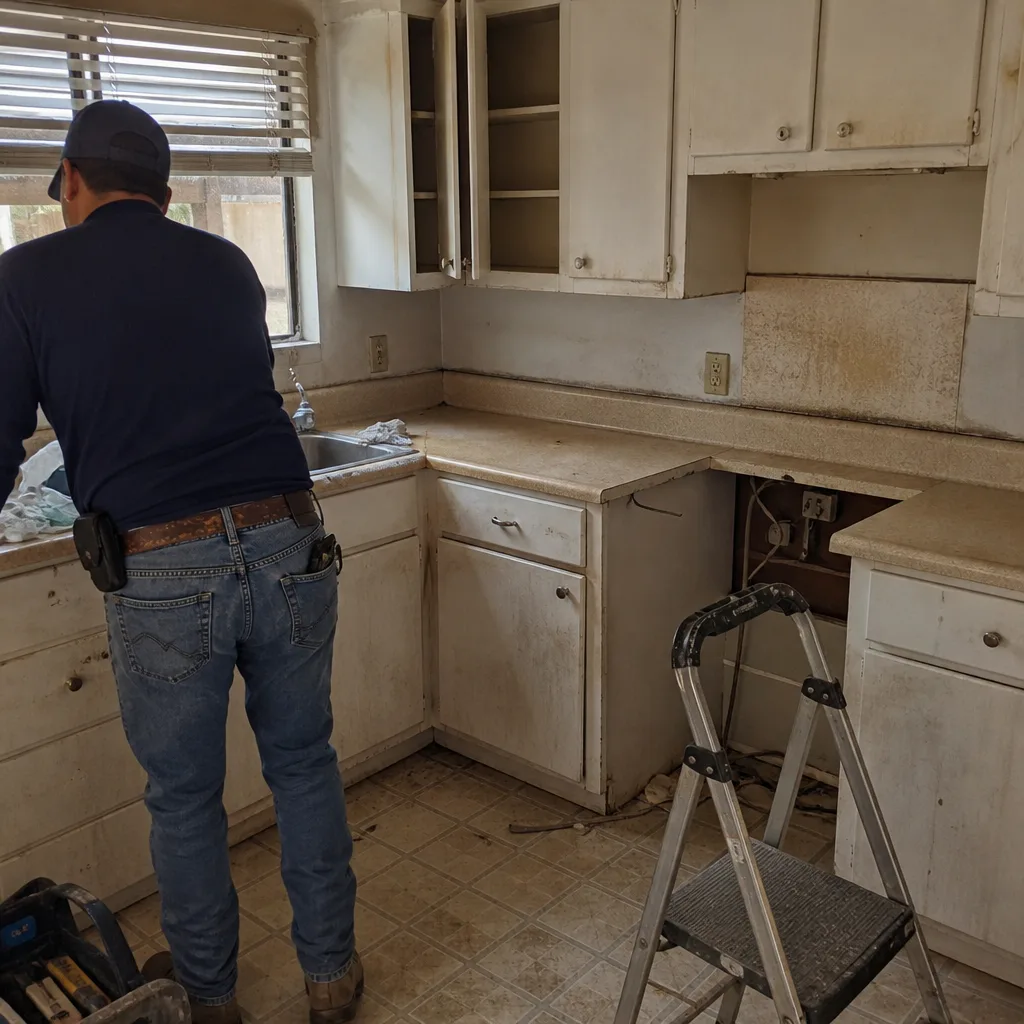 Before
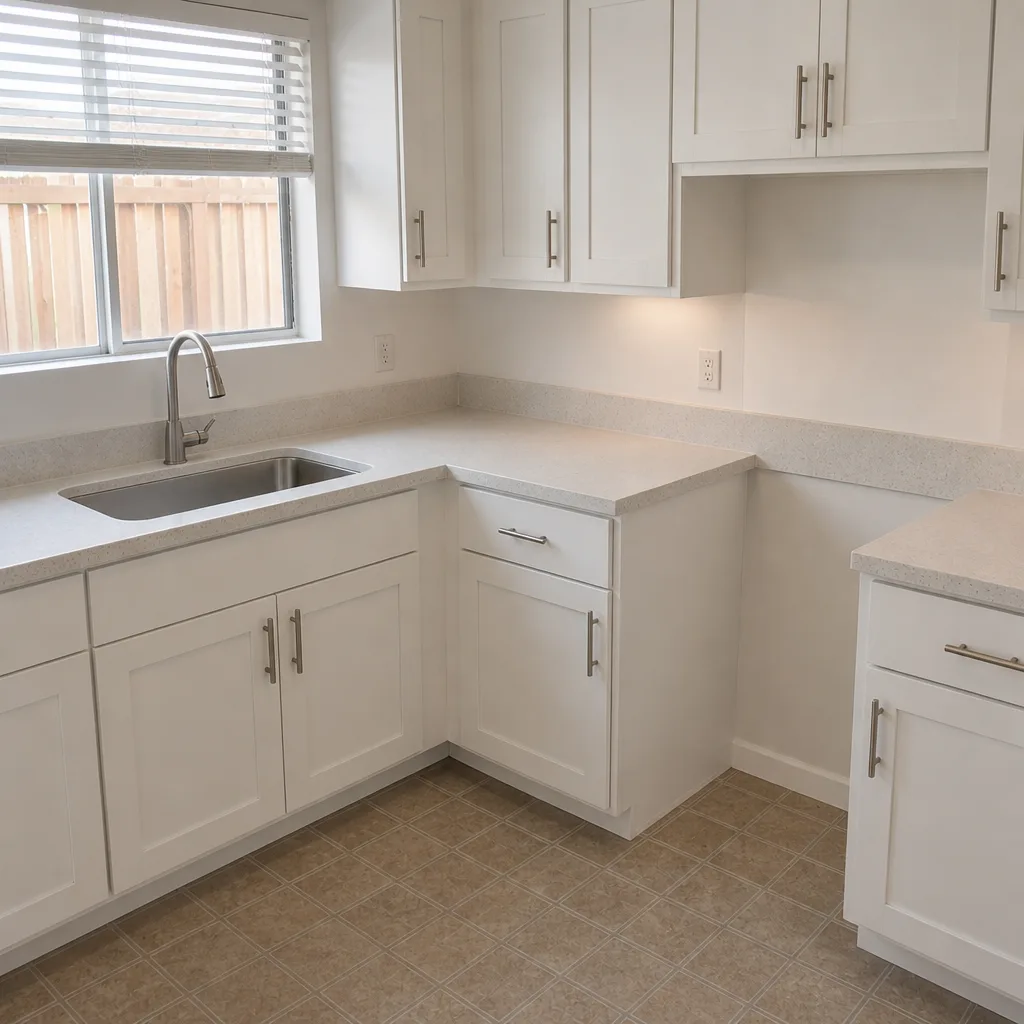 After
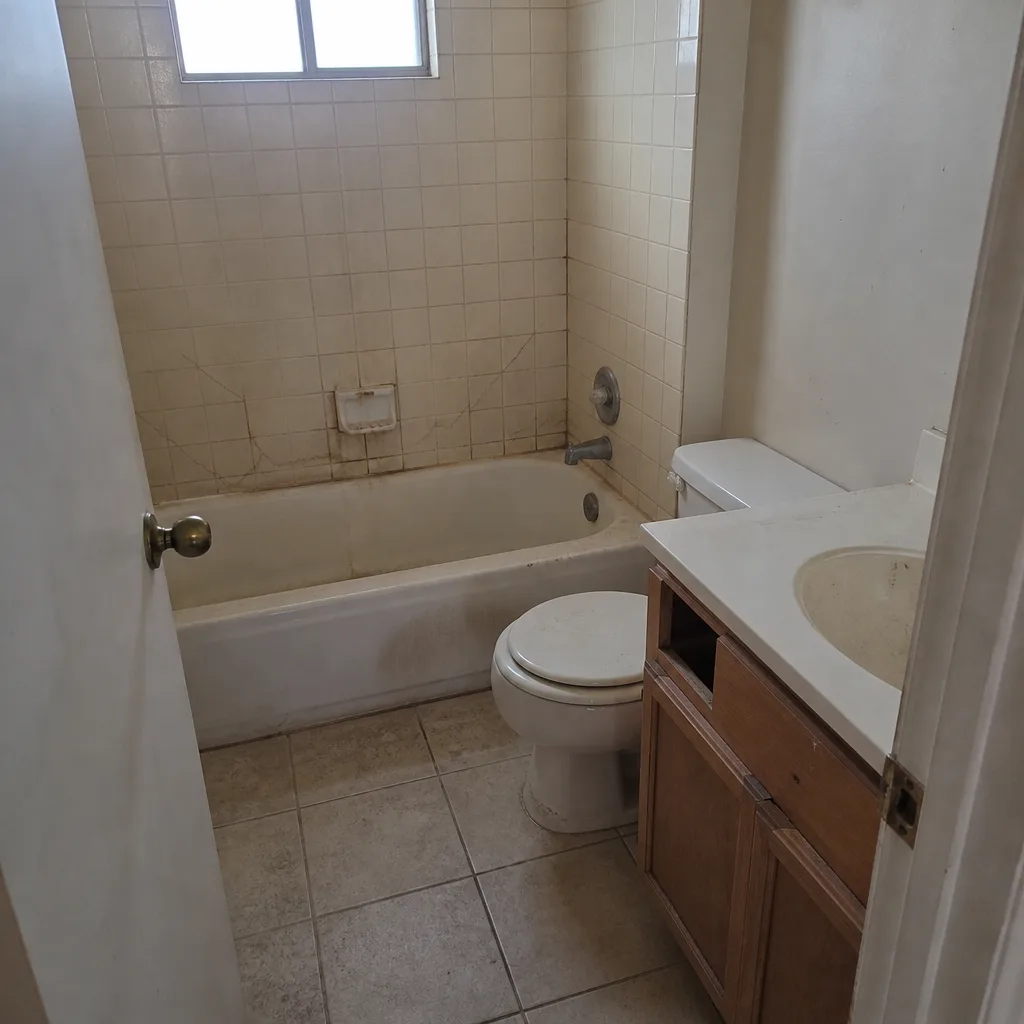 Before
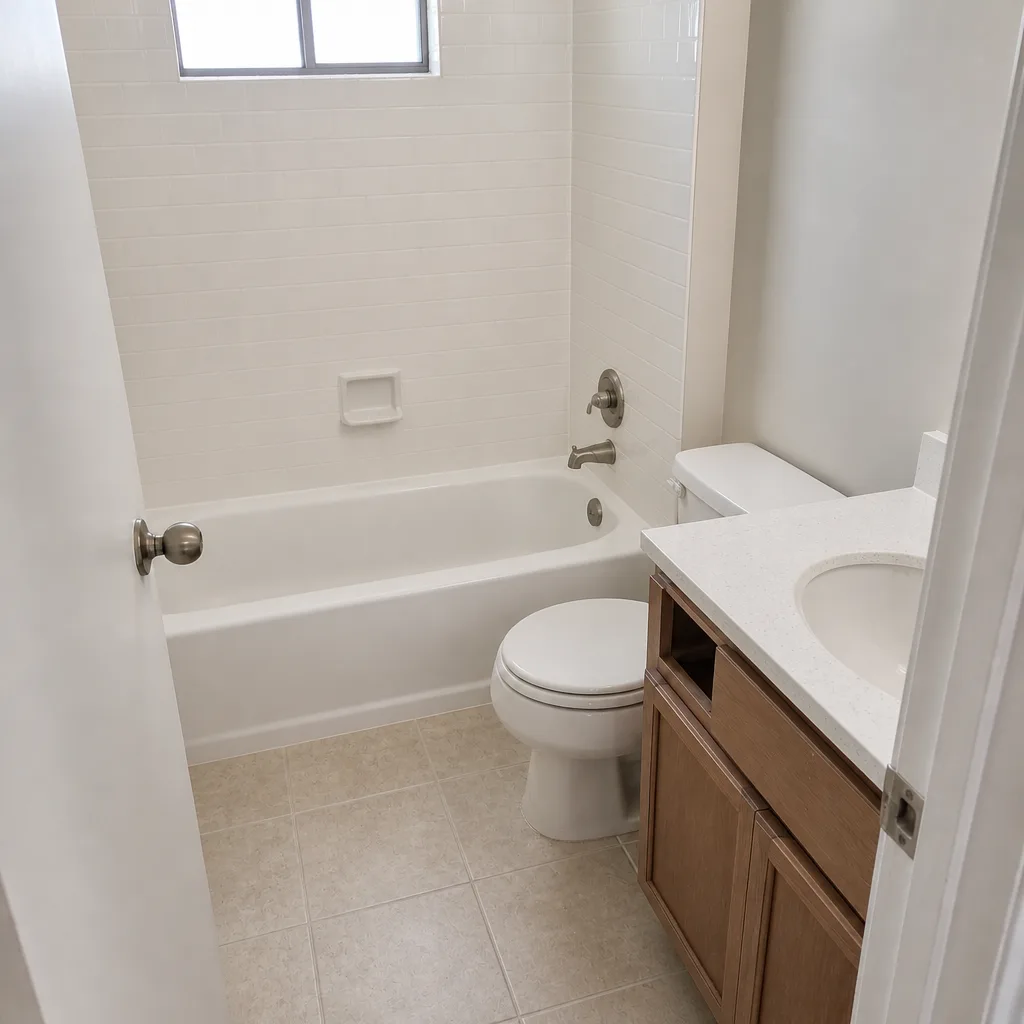 After
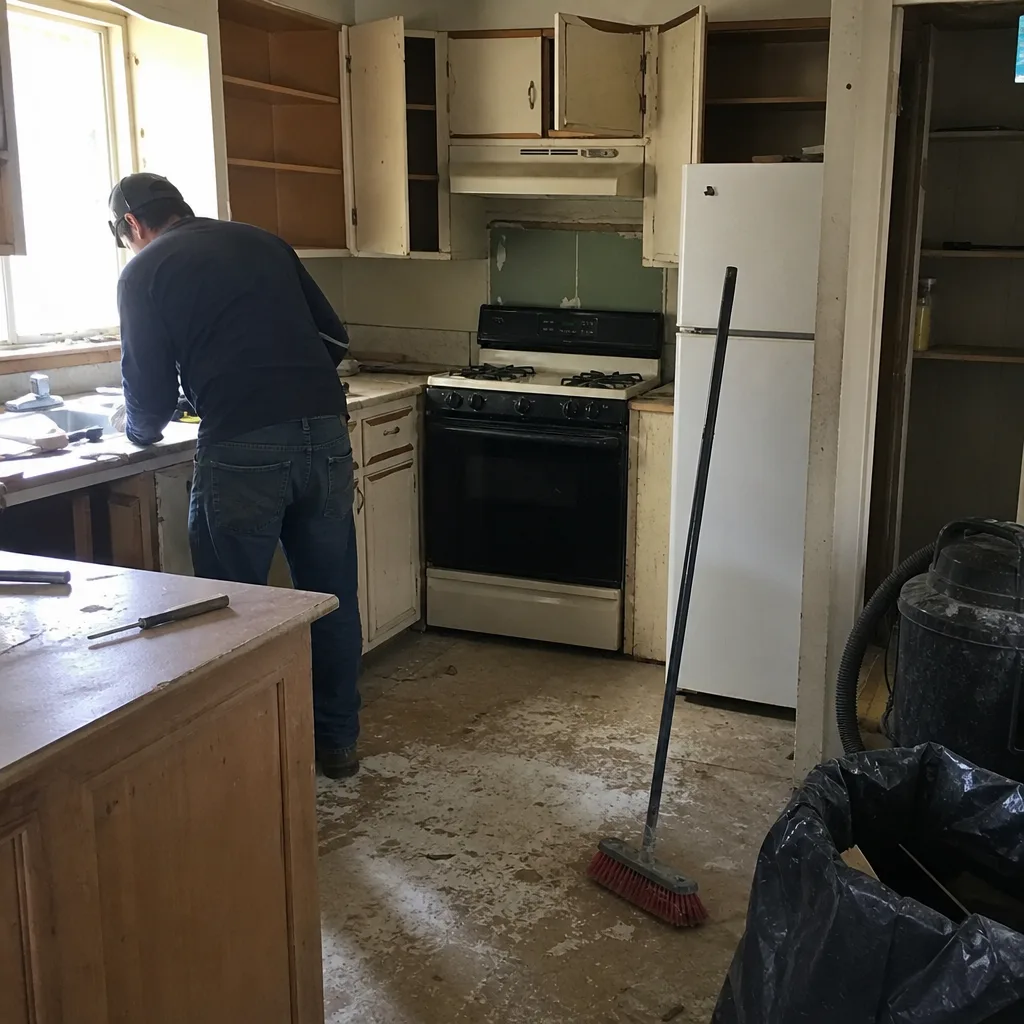 Before
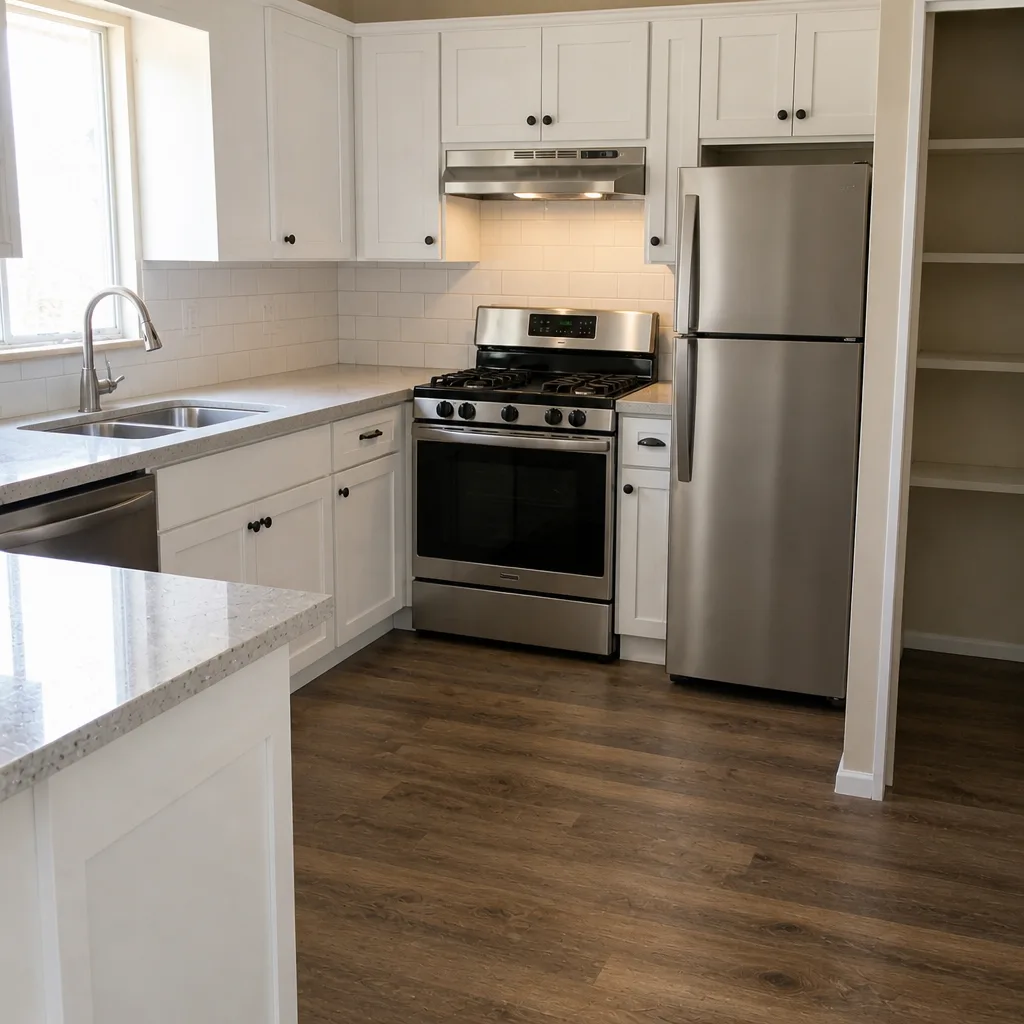 After
When to Call a Professional
Some warning signs are worth a conversation with a licensed contractor before you decide anything. If you’ve been asked for a deposit above Nevada’s legal cap, if the plans lack an engineer’s stamp, if the payment schedule is calendar-based, or if the subs haven’t been named, call us. We’ll review your existing contract line by line and tell you which omissions matter, at no charge, before you sign anything. Our technicians have up to 19 years of experience and every project we quote carries a written flat price, a written scope, a written warranty, and the 365-Day Done Right Promise. If you’re also planning the surrounding site work, our pages on Driveway & Pavers in Henderson and Fence Installation in Henderson cover the sequencing questions ADU owners ask most. Rowan Construction Group Henderson offers free estimates in Henderson – call (833) 954-5920 to schedule your free estimate.
Frequently Asked Questions
Nevada caps advance deposits at 10% of the contract price or $1,000, whichever is less, before work begins (NRS 624.600). For any ADU project in Henderson, that means the deposit is effectively $1,000 until physical construction starts. Anything above that is a violation and gives you grounds to walk away and report the contractor to the Nevada State Contractors Board. Call (833) 954-5920 for a free second opinion on any written estimate you’re comparing – the review is free and line by line.
An ADU (accessory dwelling unit) is a separate, self-contained living unit on the same lot as the main house, with its own kitchen, bathroom, and sleeping area – it can be a detached structure, an attached addition, or a conversion above a garage. An in-law suite is typically a bedroom-and-bathroom addition inside the existing footprint, without a separate kitchen. The distinction matters for permits: ADUs in Henderson require their own utility connections, address, and inspection sequence, while in-law suites usually do not. Call (833) 954-5920 to walk through which classification fits your property – estimates are free.
Not without a signed change order. Under our Haven Standard, no work proceeds on any change until the change order is signed by the homeowner. That’s the discipline that kept 4,000-plus projects within a few percent of the agreed price. If your current contract doesn’t have a written change order clause, that’s the single biggest warning sign to fix before signing. Call (833) 954-5920 to have your written estimate reviewed at no charge.
Typical timelines run six to ten months for a detached ADU in Henderson, depending on lot conditions, utility hookups, and the City of Henderson’s permit review queue. The design phase runs four to eight weeks, permit review another four to twelve weeks, and construction four to seven months. Any contractor quoting a total under five months on a detached ADU is compressing the permit and inspection phase, which is where the schedule usually slips. Call (833) 954-5920 for a written timeline estimate on your specific lot.
Yes. Nevada requires structural plans for an ADU to be stamped by a licensed engineer, and the plans submitted to the city must carry that engineer’s name and license number. A contractor who can’t name the engineer before you sign is likely planning to use a plan set from a previous job or a stock drawing, which usually fails inspection on the first round and adds weeks to your timeline. Call (833) 954-5920 if you need the plan set reviewed – estimates are free.
Bring it to us. Our free second opinion reviews any written estimate line by line, at no charge, and we’ll tell you which clauses to negotiate and which omissions are deal-stoppers. Many clauses – change order authorization, payment milestones, engineer disclosure – can be amended with a signed addendum before work starts. Call (833) 954-5920 to schedule the review. If you’d like the full scope of what a Rowan addition or ADU project includes, our Home Additions & ADU in Henderson page covers it, and you can start with the Rowan Construction Group Henderson home page for our full service list.
The Bottom Line
The ADU warning signs that matter most aren’t in the sales pitch – they’re in what the contract leaves out. Four absences predict cost overruns better than any review or rating: no named engineer, no specific permit date, no change order clause, and no inspection-based payment schedule. Add to those the Nevada NRS 624.600 deposit cap of 10% or $1,000 (whichever is less) and a refusal to name licensed subs, and you have a full diagnostic checklist you can apply to any contract in ten minutes. If you’re considering an addition or ADU in Henderson, the goal isn’t to find the contractor with the lowest estimate – it’s to find the one whose written scope, payment schedule, and change order discipline protect the number you agreed to.
Ready to get a written price before anything else happens? Call Rowan Construction Group Henderson at (833) 954-5920 for a free estimate, a written flat price with a written scope and warranty, and a free second opinion on any competitor’s quote you’re already comparing. Our crews are background-checked and uniformed, a live person answers calls around the clock, and every visit includes a documented photo record as standard. The 365-Day Done Right Promise is printed on every page and backed by a terms document – not an asterisk.
Written by the team at Rowan Construction Group Henderson.