Last updated November 18, 2026
Free written scope consultation - allowances, timeline, and change-order rules on paper before a single trade is scheduled
Driveway & Pavers Maintenance Checklist for Henderson Homeowners
Polymeric joint sand sold as “high heat” typically lists a maximum service temperature of 140°F. In Henderson, pavers backed by dark asphalt or set on a south-facing slope regularly hit 165°F in July. That’s a specification gap most installers never bring up at the sales table, and it’s the reason so many Henderson driveways shed joint sand years ahead of schedule. This checklist is built around Henderson’s actual conditions: 110°F summers, near-zero rain, caliche dust in the base, and UV that cooks binders. We’ll cover what to inspect and when, how often to re-sand locally, how to catch caliche infiltration before your pavers settle, and the real cost of putting maintenance off.
Quick Answer
In Henderson, driveway pavers need joint sand topped up every 18 – 24 months, not the 3 – 5 years national guides recommend, because UV exposure here degrades polymeric binder faster. Inspect the base and joints each March before heat season, re-sand or re-seal in October after monsoon season, and budget $0.80 – $1.20 per square foot for re-sanding versus $12 – $18 per square foot for a full reset. Catching caliche dust and settling early is the difference between a cheap fix and a costly one.
Styles & brands we work with
- Kitchen remodeling
- Bathroom remodeling
- Home additions & ADU
- Roofing
- Windows & doors
- Driveway & pavers
- Fence
Table of Contents
- Why Henderson’s Climate Breaks the Standard Paver Timeline
- Month-by-Month Maintenance Calendar for Henderson
- Joint Sand Intervals: Why 18 – 24 Months, Not 3 – 5 Years
- Spotting Caliche Dust Before Your Pavers Settle
- Choosing a Sealer Built for Desert Heat
- The Cost of Deferred Maintenance
- A 10-Minute Inspection You Can Do Yourself
- Neighborhood Notes: What We See Across Henderson
Why Henderson’s Climate Breaks the Standard Paver Timeline
Most paver maintenance guides were written for places with four seasons and steady rainfall. Henderson is the opposite: bone-dry air, relentless sun, and a short but violent monsoon window in July and August. That combination changes what fails first. Instead of freeze-thaw heaving, you get thermal cycling (pavers expanding by day and contracting at night), UV degradation of the sand binder, and wind-blown caliche dust working its way into every gap.
The heat matters more than people realize. A paver’s surface temperature runs well above air temperature when the sun is direct. Dark and asphalt-backed pavers in a Henderson July can hit 165°F at the surface. When the joint sand is rated only to 140°F, the binder softens, and once it softens the sand starts to migrate with the first gust or the first garden hose.
Rainfall here averages around 4 – 5 inches a year. That sounds like a maintenance holiday, but it’s not. When rain does arrive, the ground is baked hard and the runoff can be sudden. Water that would soak in slowly in a wetter climate instead sheets across a driveway, and if the joints are already sand-starved, it drives straight into the base. In our experience across Henderson, the driveways that fail fastest are the ones where the homeowner skipped re-sanding because “it never rains here.”
Month-by-Month Maintenance Calendar for Henderson
Timing your maintenance to the season saves money and catches problems before they compound. This is the schedule we’d give a Henderson homeowner with a typical paver driveway.
- March – pre-heat inspection. Walk the driveway and look for missing joint sand, rocking pavers, and any low spots. Fix them now, before the surface gets hot enough to make sealing or working on the pavers unpleasant and before the summer sun starts cooking a weakened binder.
- April – re-sand if needed. If joints are more than about 1/4 inch below the paver surface, top them up. This is the last comfortable window before the heat.
- May through June – watch and water sparingly. No major work. Keep an eye on edges and any pavers near downspouts. Avoid over-watering landscape beds that drain across the driveway.
- July through August – monsoon watch. After any heavy rain, check for sand loss and water pooling at the slab edge. Standing water is a base problem, not a surface problem, and it needs attention.
- September – post-monsoon assessment. This is when you’ll see the year’s real damage. Mark rocking or sunken pavers with chalk.
- October – re-sand and seal. The heat has broken, the monsoon is over, and the surface is cool enough for sealer to cure properly. This is the single best month for the bigger jobs in Henderson.
- November through February – light upkeep. Spot-treat weeds in joints, sweep off debris, and address any small issues before the cycle starts again.
Joint Sand Intervals: Why 18 – 24 Months, Not 3 – 5 Years
The national recommendation for polymeric joint sand is 3 – 5 years. In Henderson, we tell homeowners to plan on 18 – 24 months. The gap comes down to two things working together: UV and heat. UV breaks down the polymer binder that holds the sand together, and constant high surface temperatures soften it further. Where a temperate-climate driveway keeps its sand for four years, a sun-baked Henderson driveway often needs a top-up in under two.
Here’s how to judge whether you actually need re-sanding rather than waiting:
- Joints sit less than 1/8 inch below the paver surface: still fine, no action.
- Joints are 1/8 to 1/4 inch low: plan a re-sand before next summer.
- Joints are more than 1/4 inch low or you can see daylight between pavers: re-sand now, this month.
- Sand washes out in one specific zone after rain: that’s a drainage or base issue, not just wear.
If you’re not sure which category you’re in, a free second opinion on a written estimate will get you a straight answer. Under Clause 1 of the Haven Standard, the price comes in writing before anyone touches a broom, so you know the scope and the number up front.
Choosing the right sand matters too. In Henderson the material needs an ASTM C144 or C33 grading for joint sand, and if you go polymeric you want one rated above 140°F. Many installers specify Belgard’s polymeric sand because it’s formulated for high heat, and it’s the kind of brand we’d name on a written quote rather than wave at you in a brochure. The material cost difference is small; the labor and the timing are what you’re paying for.
Spotting Caliche Dust Before Your Pavers Settle
Caliche is the calcium-carbonate cemented layer common in Henderson’s desert soils, and its dust is the quiet killer of paver driveways. Wind kicks it up, it settles into the joints and the edge restraints, and over time it infiltrates the base course. Once caliche dust mixes into the bedding sand, the base loses the even load transfer that keeps pavers flat, and you start to see settling. By the time a paver is visibly sunken, the base has usually been degrading for a year or more.
Signs to look for:
- Fine whitish or pale powder collecting along the driveway edges and in joints, especially after wind.
- A paver that flexes underfoot but hasn’t visibly dropped yet.
- A slight dish or dip that appears after rain and doesn’t drain away.
- Gaps opening at the edge restraint, where water and dust both enter the base.
- Areas where weeds seed most easily.
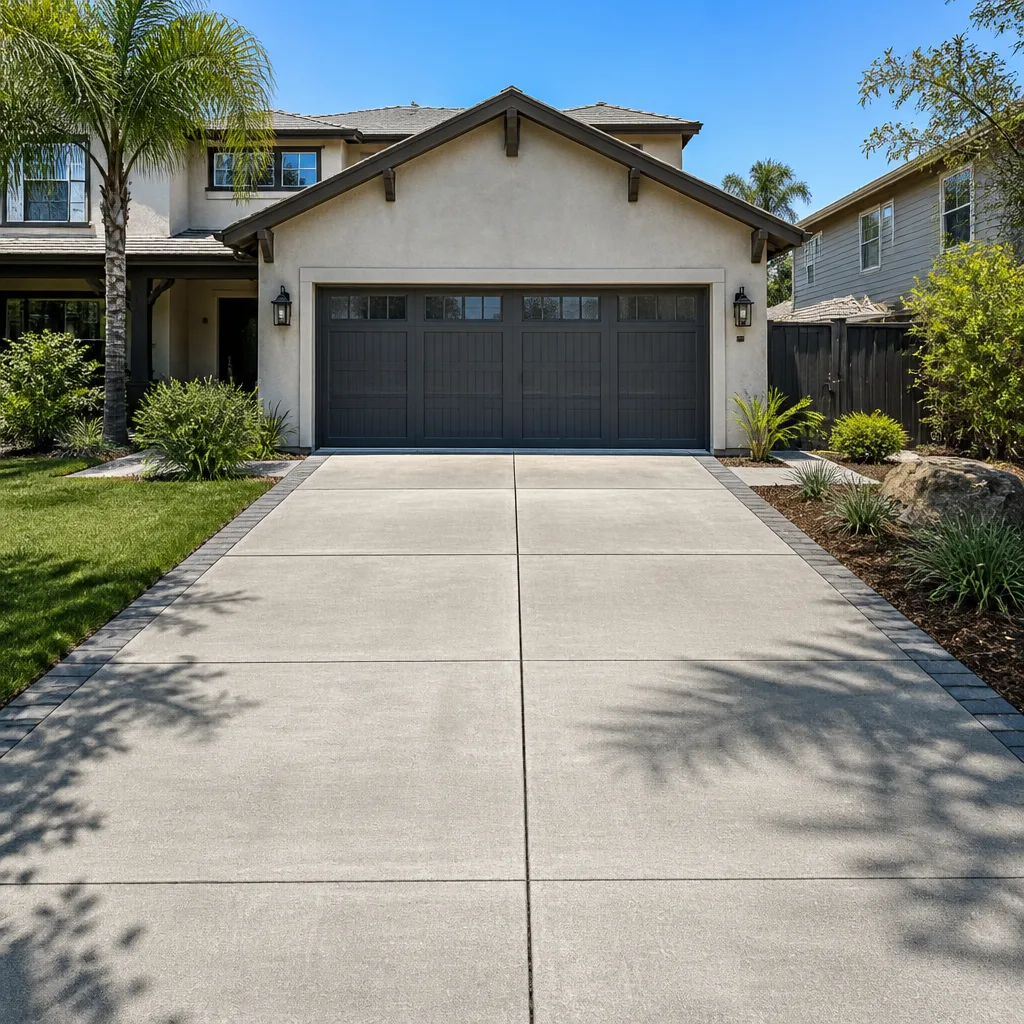
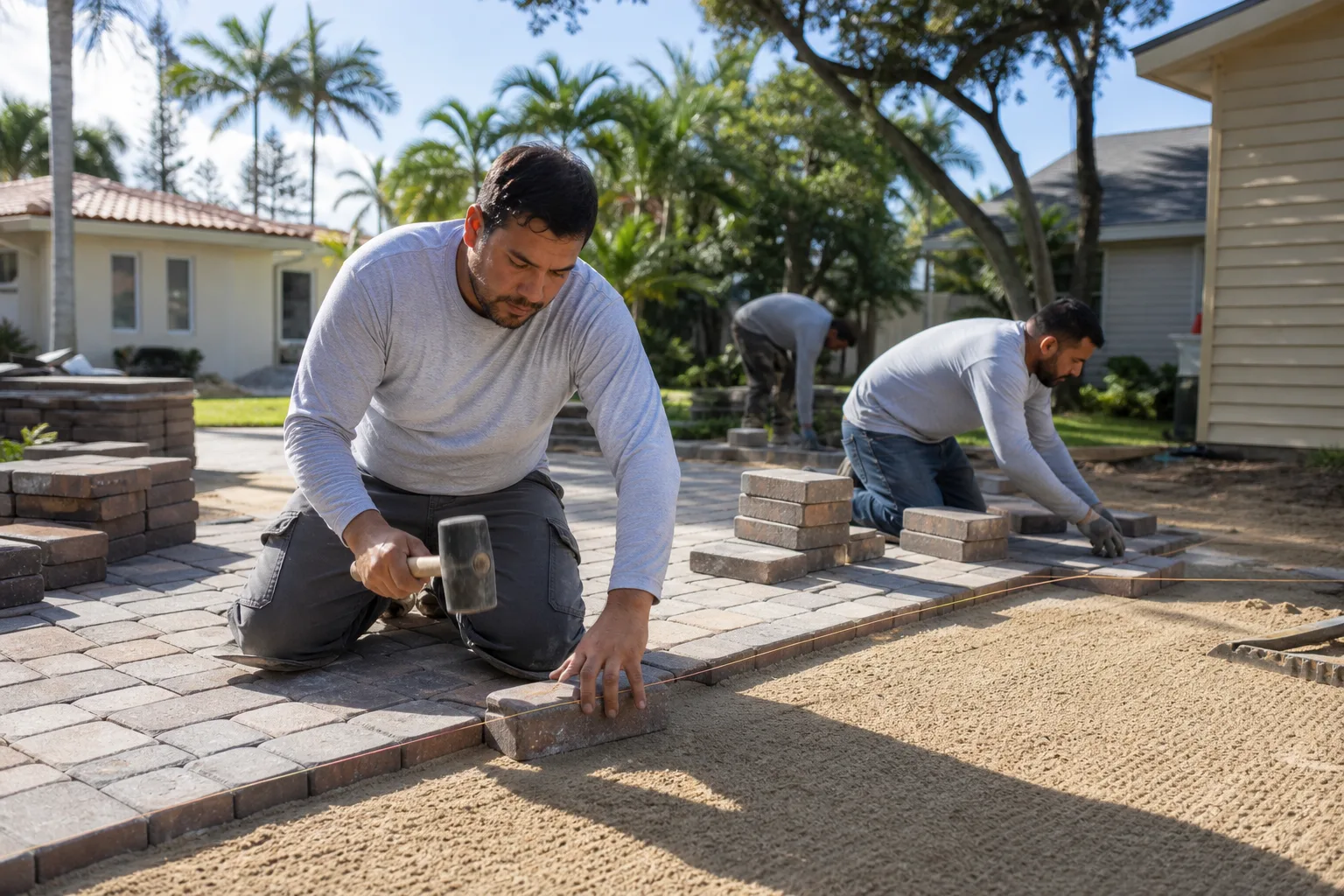
DIY compaction is enough when the affected area is small, the base under it is still firm, and the paver or pavers can be lifted and reset while the base course is topped up. It stops being enough when the dip is larger than a couple of pavers, when several pavers rock together, or when the base under them feels spongy. At that point you’re not fixing a surface, you’re resetting a base, and that’s a paved-area job, not a weekend one. In those cases it’s worth looking at how Driveway & Pavers in Henderson is done properly, with the base compacted and the edge restraint secured before any sand goes back in.
Also consider where the driveway sits on your property. A driveway that abuts an open desert edge is going to collect more caliche dust than one sealed against a wall. We’ve seen the difference clearly on Henderson properties bordering undeveloped ground or wash edges.
Choosing a Sealer Built for Desert Heat
Sealer isn’t mandatory, but in Henderson it earns its cost by holding joint sand in place and slowing UV degradation. The wrong sealer, though, can cause more problems than it solves. A high-solids film-forming sealer with the wrong chemistry will trap moisture and haze over in the heat. Here’s what to look for in a desert-climate product.
- UV inhibitors: forty percent or higher by volume is a sensible minimum in Henderson. Below that, the sealer itself starts to break down under the same sun it’s supposed to defend against.
- VOC content: low-VOC (under 100 g/L) water-based sealers are the practical choice for a residential driveway in Henderson, and they’ve improved enormously in durability. If a solvent-based product is specified, the crew handles the ventilation and cure-time restrictions.
- Breathability: water vapor has to escape. A breathable sealer prevents the blistering that shows up when trapped moisture pushes against a film on a hot day.
- Warranty term: a product that comes with a written UV warranty is better than one that only claims UV resistance in the marketing copy.
Belgard, Unilock, and Techo-Bloc all make sealers and joint materials for their own paver lines, and those are the products most likely to be compatible with what’s already on your driveway. Ask for the spec sheet before any sealer goes down. If a contractor can’t produce a product data sheet, including the surface-temperature limit, that’s your answer.
Timing matters for sealing too: October is the month in Henderson, after monsoon season and before the surface stays hot all day. Sealing in July is asking for a poor cure and early failure.
The Cost of Deferred Maintenance
Maintenance is cheap compared to a reset, and the numbers make the case. Based on what we see in the Henderson market, here’s the rough picture for a typical two-car paver driveway:
- Re-sanding: $0.80 – $1.20 per square foot.
- Re-sealing: $1.50 – $3.00 per square foot, depending on the product and the size of the driveway.
- Targeted spot reset (a few pavers, base topped up): $250 – $600.
- Full paver reset (lift, recompact base, reinstall): $12 – $18 per square foot.
On a 400-square-foot driveway, re-sanding costs roughly $320 – $480. A full reset runs $4,800 – $7,200. Same driveway, fifteen-fold difference. That’s the whole argument.
The inflection point comes when the base has failed. Re-sanding stops working once the loss is coming from below, meaning a rocking paver or a visible dip that keeps returning after re-sand. At that point the sand you’re buying is being pumped out by a moving base, and no amount of topping up fixes it. A sensible rule: if you’ve re-sanded the same section twice and it’s still low, that section needs a base reset, not a third bag of sand.
We give every homeowner a flat written price with a written scope before any work starts, and no work proceeds on a change until the change order is signed. That’s exactly the discipline that keeps a reset from becoming a number you didn’t agree to. A free second opinion on any other written estimate is available too, line by line, at no charge.
A 10-Minute Inspection You Can Do Yourself
You don’t need tools or trade skills for this, and it’s worth doing twice a year, in March and again in October.
- Walk the full perimeter of the driveway and watch your feet, not the road. Note any paver that moves underfoot.
- Look down the length of the driveway from one corner. Any place the line of the surface breaks is a dip worth marking.
- Check the joint lines every few feet. Sand should sit close to the paver surface. Measure the gap with your finger, and note anything more than a quarter inch low.
- Look at the edges, especially near the house and at any landscape transition. Gaps there mean water and dust are entering the base.
- After the next rain, watch the driveway for at least ten minutes. Water should sheet off or soak at the joints, not pool in a low spot.
- Sweep a small area and look at what you collected. Pale, gritty dust in quantity is a caliche signal; dark grit is normal road debris.
- Write down what you found, take a photo, and date it. A record across two years tells you whether you’re dealing with wear or a failing base.
If the inspection turns up a rocking paver or a persistent dip, that’s your cue to stop topping up sand and get a professional assessment. A photo record of what the crew finds, included on every visit, gives you documentation for insurance if a bigger issue is at fault.
Neighborhood Notes: What We See Across Henderson
Henderson neighborhoods don’t all fail the same way. In Anthem and the hillside communities with more grade and open ground at the property line, wind-blown dust is the bigger threat, and we see caliche infiltration concentrated on the edges nearest undeveloped slope. Driveways there benefit most from an October re-sand and a breathable sealer, plus an edge-restraint check.
In Green Valley and Green Valley Ranch, where lots are tighter and landscaping runs closer to the driveway, water is the issue rather than wind. Runoff from irrigated beds crosses the driveway and works into the joints, and if a downspout or a bed border drains straight onto the pavers, that one spot will lose sand faster than anywhere else. Redirecting the flow and re-sanding that zone each spring usually solves it.
Downtown and older Henderson properties that sit on compacted caliche-heavy soils tend to be the ones where a full reset eventually becomes unavoidable. The base was likely laid over unprepared ground, and no surface treatment fixes that. If your driveway is showing more than one persistent dip and a couple of rocking pavers, we’d want to see it before it becomes a safety hazard to walkways and children.
Whatever the neighborhood, the same cycle applies: catch it early with cheap re-sanding, seal in October, and watch the edges.
Common Mistakes to Avoid
- Trusting the “high heat” label. A 140°F maximum surface rating is below a Henderson July. Ask for the spec sheet and the actual temperature limit, never the label.
- Re-sanding in the middle of summer. Sand won’t fully settle and binder won’t cure cleanly in the worst heat. Watch for a March or October window.
- Topping up sand over a failing base. If the same joint keeps losing sand, the base is moving. Another bag won’t fix it, and it wastes your money every time.
- Ignoring the edge restraint. It’s the single most overlooked place for water and caliche dust to enter. Check it twice a year.
- Sealing on a hot or dirty surface. Sealer needs a clean, cool, dry paver to bond, or you’ll trap moisture and haze it. Wait for October.
- Overlooking caliche dust because it looks harmless. That fine pale powder is the early warning sign of a settling base. Treat it as a prompt, not a nuisance.
- Choosing a sealer by brand loyalty rather than spec. Even well-known names have products that aren’t built for a desert. Check UV inhibitor percentage, VOC content, and breathability before a single can goes down.
See the difference
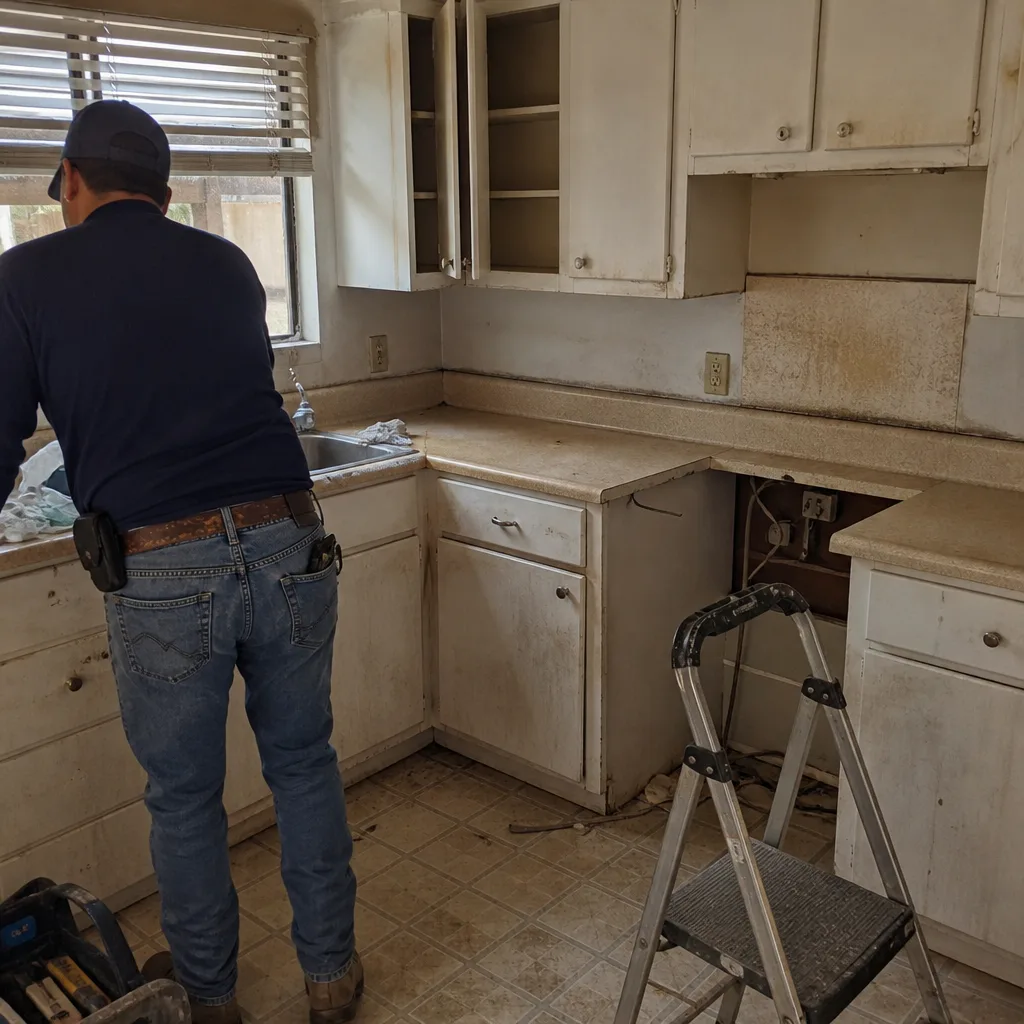 Before
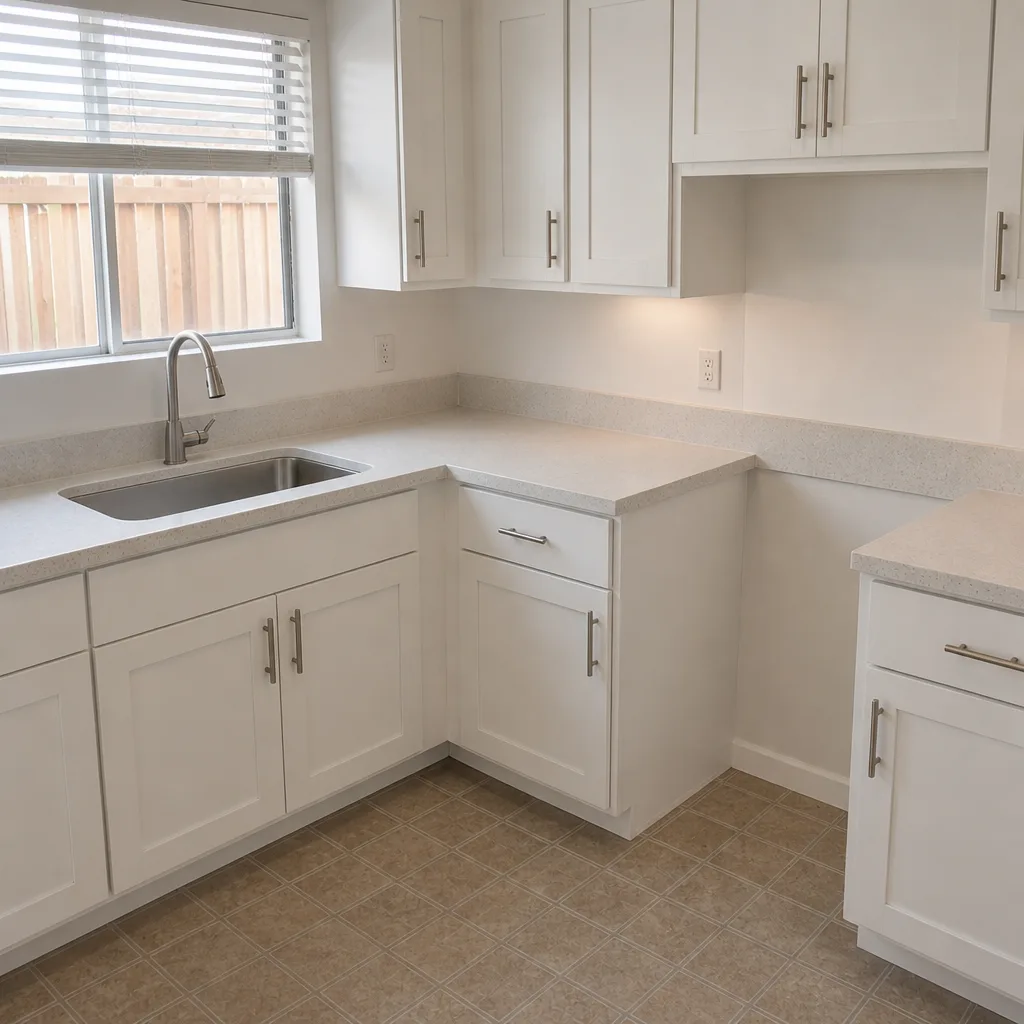 After
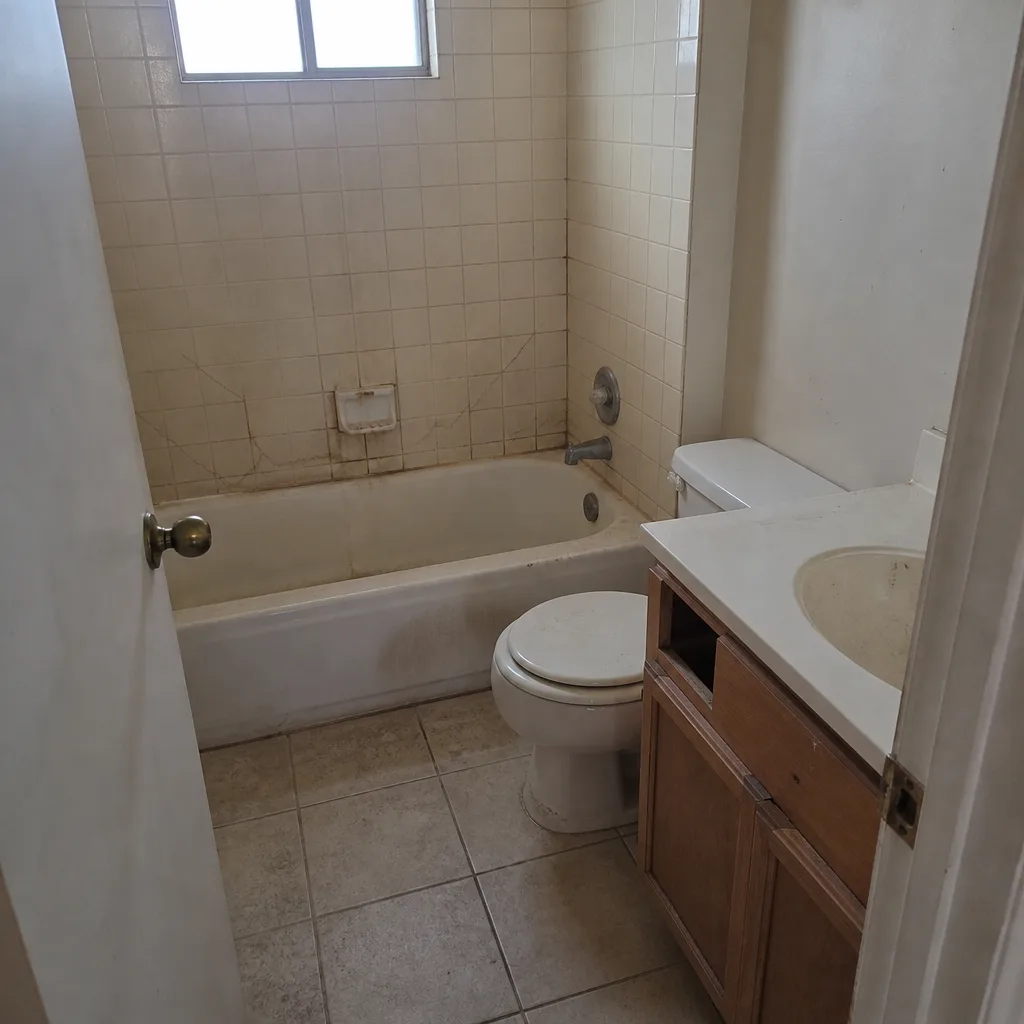 Before
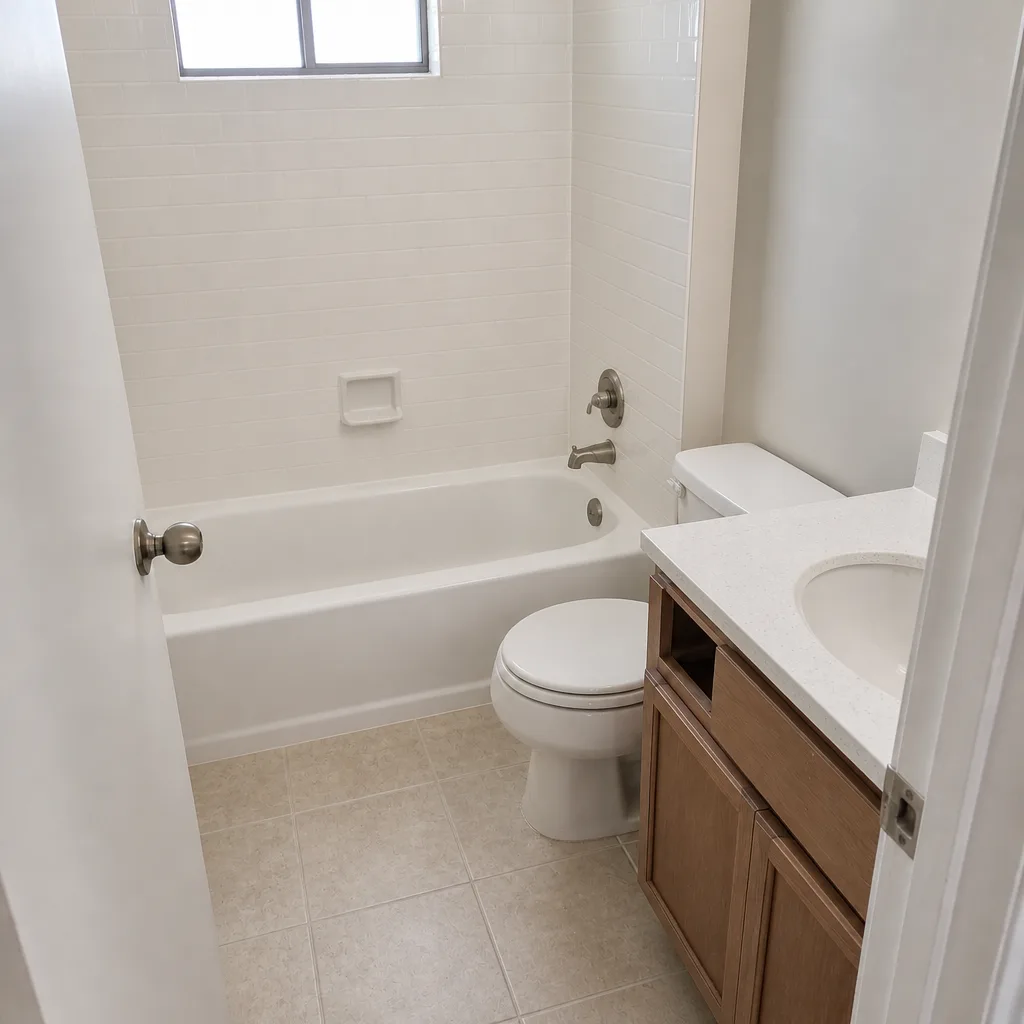 After
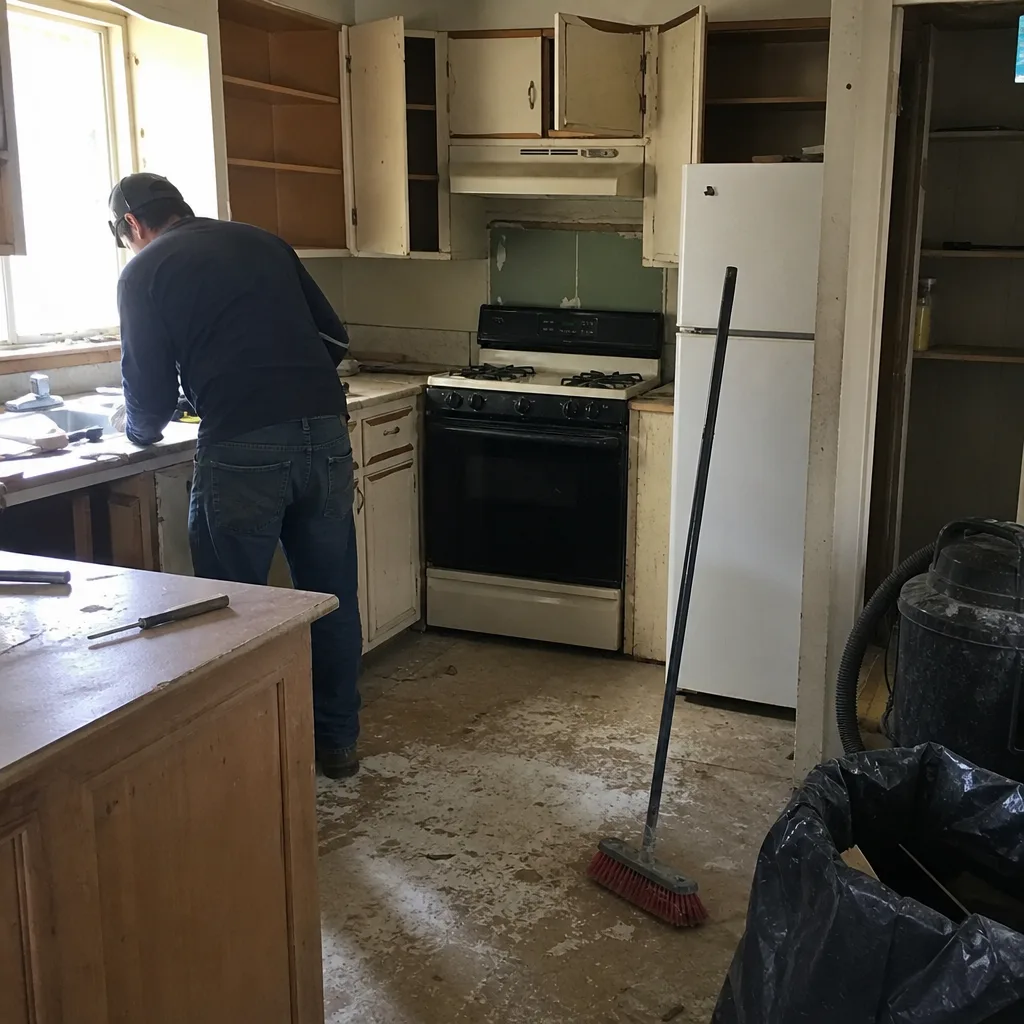 Before
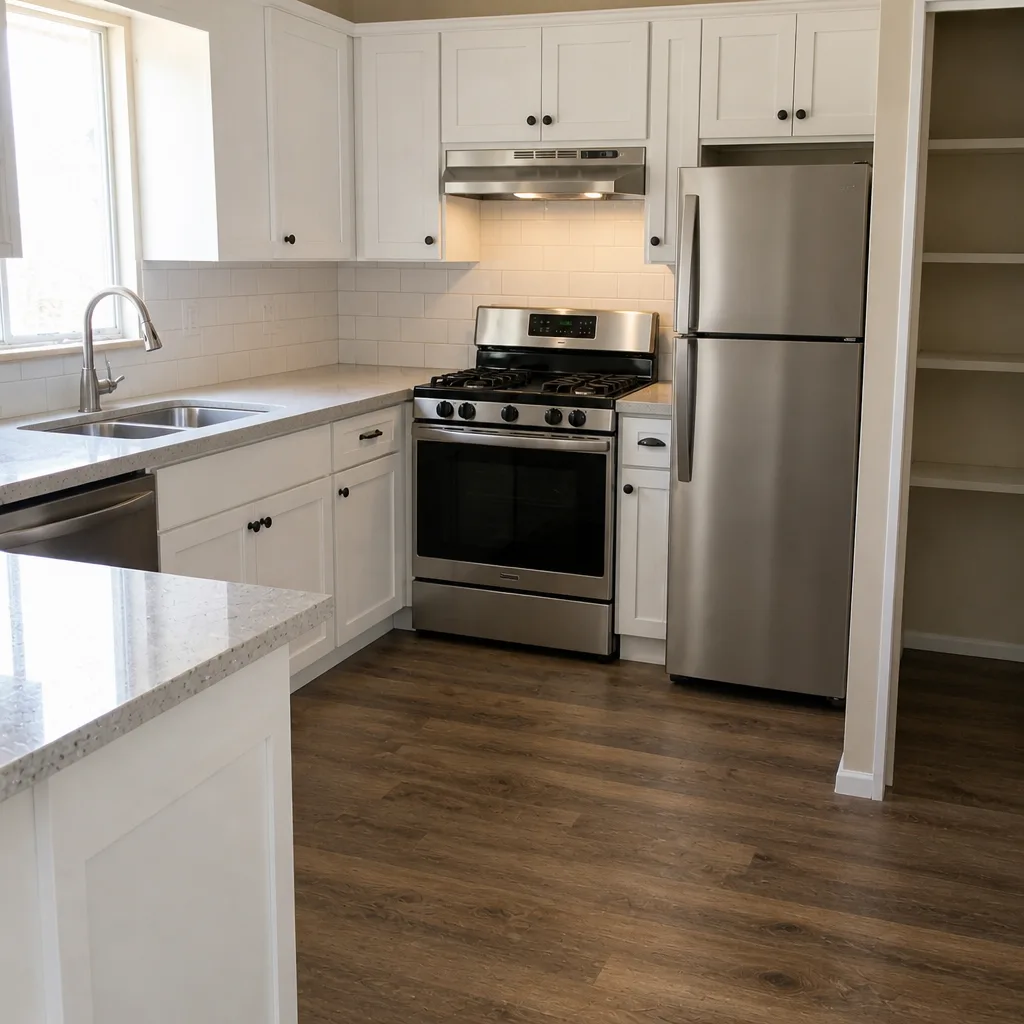 After
When to Call a Professional
Most wear-and-tear maintenance in Henderson is doable with sand, a broom, and the right timing. But some situations call for a trained eye. Call in a professional when pavers rock as a group rather than individually, when a dip persists after two re-sanding attempts, when the edge restraint has pulled away from the pavers, or when water pools on the driveway for more than a few minutes. Those are base and drainage problems, not surface problems, and a full or partial reset is the only fix that holds.
There’s a practical side too. A base reset with the right compaction equipment is physical, dusty work, and it’s a lot harder to get right by hand than it looks. Rowan Construction Group Henderson offers free estimates in Henderson – call (833) 954-5920, and we’ll give you a flat written price with a written scope before any work starts.
If your pavers and your driveway are only part of what needs attention, the same free-estimate offer applies to the rest of the property’s exterior, including Fence Installation in Henderson and planning for a Home Additions & ADU in Henderson that will change your driveway’s traffic and drainage. Looking at the whole lot at once tends to save money, because the crew is already there and the base work can be coordinated.
Frequently Asked Questions
Every 18 – 24 months is the realistic interval in Henderson, rather than the 3 – 5 years national guides recommend. UV exposure and summer surface temperatures degrade the polymeric binder faster here, and wind-blown caliche dust accelerates the loss. If your joints are more than a quarter inch below the paver surface, re-sand now rather than waiting for the next cycle.
No, we don’t recommend it. Sealing in Henderson’s summer heat causes the product to cure unevenly, and the surface is often too hot for the sealer to bond properly. October is the best month, once the monsoon has passed and surface temperatures have dropped. Call (833) 954-5920 for a free quote on a fall re-sand and seal.
Re-sanding runs about $0.80 – $1.20 per square foot, and re-sealing $1.50 – $3.00 per square foot. A targeted spot reset of a few pavers typically lands at $250 – $600, while a full paver reset runs $12 – $18 per square foot. On a 400-square-foot driveway, that’s a few hundred dollars versus several thousand, which is why early maintenance pays for itself. Call (833) 954-5920 for an exact quote; estimates are free.
Caliche is a calcium-carbonate soil layer common in Henderson, and its fine dust blows into paver joints and the base course. When it mixes with the bedding sand, the base stops transferring load evenly, and the pavers begin to settle. Persistent pale grit along your edges is the early warning, and catching it early is what keeps a cheap re-sand from becoming a full reset.
A breathable sealer slows dust infiltration at the surface but doesn’t stop it entirely, especially at the edges. Sealing buys time and holds joint sand in place, but the real defense is checking the edge restraint and re-sanding on schedule. If caliche is already in the base, a sealer won’t fix a base that’s failed.
Surface re-sanding and sealing don’t require a permit. A full base reset or a driveway expansion can cross into work where the local jurisdiction expects permits and inspections, and we handle that as part of the written scope. If a permit is required, it’s named on the estimate before work starts, and the inspection is part of the job, not a surprise add-on. Call (833) 954-5920 and we’ll confirm what applies to your address.
The Bottom Line
Henderson pavers live under conditions the standard maintenance guides were never written for. Plan on re-sanding every 18 – 24 months, inspect in March, seal in October, and watch the edges for caliche dust. Treat any rocking or returning dip as a base issue rather than a sand issue, because that’s where the money gets saved. The gap between a few hundred dollars of upkeep and a several-thousand-dollar reset is a decision you make years before the reset is needed. Rowan Construction Group Henderson gives you the number in writing first, and answers the phone when you call.
Call (833) 954-5920 to schedule your free estimate on driveway maintenance, a base reset, or any exterior work on your Henderson property. Start with the Rowan Construction Group Henderson home to see the full list of trades and how every project is priced.
Written by the team at Rowan Construction Group Henderson.