Last updated November 18, 2026




Free written scope consultation - allowances, timeline, and change-order rules on paper before a single trade is scheduled
Bathroom Remodeling Warning Signs Every Homeowner Should Know
Most bathroom remodels that go wrong are already going wrong before the first tile is set. They go wrong in the bid. A proposal that lists “tile allowance: $1,800” but never names a manufacturer, a model number, or a grade is not a scope. It is an opening. Your contractor can install a $12-per-square-foot porcelain when you discussed a $28 tile with a specific name, and the paperwork will not give you a leg to stand on. That single omission is the most common root cause of the disputes we get called in to referee around Henderson, and it is entirely avoidable. This guide walks through the warning signs in the order you will meet them: the documents before you sign, the job site during demolition, the payment schedule, the license lookup, and the closing paperwork nobody reads until it matters.
Quick Answer
The clearest warning signs of a failing bathroom remodel appear in paperwork first: lump-sum bids with no line-item material spec, an unsigned-change-order policy, deposits above 10 – 15% of project value, and no named subcontractors. On the job site, the red flag is a contractor who finds rot, mold, or bad plumbing and keeps working instead of stopping to document and price it separately. If any of these show up, pause the project and get a written scope before another dollar moves.
Styles & brands we work with
- Kitchen remodeling
- Bathroom remodeling
- Home additions & ADU
- Roofing
- Windows & doors
- Driveway & pavers
- Fence
Table of Contents
- Pre-Contract Warning Signs in Writing
- On-Site Warning Signs During Demolition
- Payment Schedule Red Flags
- What a Nevada Contractor’s Board Lookup Shows (and Doesn’t)
- Post-Project Warning Signs: Liens, Permits, and Warranties
- Henderson-Specific Warning Signs
- Common Mistakes to Avoid
- When to Call a Professional
Pre-Contract Warning Signs in Writing
The bid is the job. If the paperwork is vague, the build will follow the paperwork. We review competitor estimates line by line for Henderson homeowners as a standing offer, and the same four weaknesses turn up in roughly the same order every time.
- No material specification sheet. A real spec names the manufacturer, the line, the model or SKU, and the grade. “Porcelain tile” is a category, not a material. “Kohler Archer 60-inch alcove tub, white” is a material. If the bid cannot survive being screenshotted and price-checked online, it is not a spec.
- Lump-sum total with no breakdown. A single number covering demo, rough-in, tile, fixtures, and finish labor is undifferentiated. You cannot audit it, you cannot compare it to a second bid, and you cannot tell whether the tile line is $8 or $30 per square foot until the truck arrives.
- Unsigned change-order policy absent. Ask directly: “If we find something unexpected, what has to happen before the price changes?” A contractor who says “we’ll work it out” is telling you the price is negotiable after the fact. The answer you want is a written change order, signed by both of you, before any work on the change begins.
- No named subcontractors. Bathrooms pull in electricians, plumbers, and often a tile setter who is not the general contractor. Those names should be on the bid with their license numbers. If the contractor will not tell you who is doing the electrical, that is information you are entitled to.
One more: an expiration date on the bid that is measured in hours rather than weeks. There is no legitimate reason a bathroom remodel price becomes invalid by Friday afternoon. That is urgency theatre, and it is designed to stop you from reading the scope. Under Clause 1 of the Haven Standard, our price is written before anyone starts a job, and it does not evaporate to force a signature.
On-Site Warning Signs During Demolition
Demo is where a written scope meets reality. Under the tile of a 1990s Henderson build, you can find water damage around the shower pan, a rotted subfloor, galvanized supply lines that should have been replaced two owners ago, or drywall with evidence of old mold growth behind it. None of that is unusual. The warning sign is what happens next.
What should happen: the crew stops, photographs the condition, describes what was found in plain terms (the substrate is rotted across a 4-foot span at the shower valve wall; the drain pan has failed and the mortar bed is saturated), prices the repair as a separate line, and gets a signature before continuing. What a bad contractor does instead: keeps working, buries the rot under new cement board, and presents a surprise invoice at the end or – worse – simply mutters “there was some rot, we handled it” and moves the price without telling you until the final bill.
- Ask who documents the unexpected. If the answer is nobody, the change process does not exist.
- Require photos before the substrate is covered. Once the cement board is screwed down, the evidence is gone. A documented photo record of what was found and what was done should be a standard deliverable, not an upsell.
- Insist the change is priced before the work resumes. “We’ll sort out the number at the end” is how projects drift 30% off the agreed price.
If a contractor will not stop for a signed change order when they find rot, you have learned something important about how the rest of the project will run. Many of the professional standards we follow around Henderson come directly from this one discipline.
Payment Schedule Red Flags
The payment schedule is where trust gets tested with real money. A deposit funds materials and mobilization – it is not a completion bonus. Industry practice keeps the initial deposit in the range of 10 – 15% of the project value. If your bathroom remodel is quoted at $24,000 and you are asked for $9,600 to “get on the schedule,” that contractor is using your deposit to fund someone else’s project.
- Front-loaded deposits above 10 – 15%. The rest of the payments should tie to completed milestones you can see: demo and rough-in, tile and waterproofing, fixtures, final punch list.
- Cash requests. A request for cash, cashier’s check made out to a person, or Zelle to a personal account is a paperwork problem you cannot recover from. You want a check or card to the licensed business, with an invoice that names the milestone.
- Invoices that don’t match progress. If the invoice says “50% complete” but the shower is still bare studs, the billing is fiction. Ask for a milestone schedule in writing before you sign, and match every invoice to a completed milestone on that schedule.
- Pressure to pay the next draw early. “Pay the next stage now and we’ll get you on the calendar sooner” is a warning, not a courtesy.
A written price with a written scope makes every one of these conversations easier. When the number is fixed and the milestones are printed, the only question at each invoice is whether the milestone happened.
What a Nevada Contractor’s Board Lookup Shows (and Doesn’t)
You can verify a Nevada contractor’s license status in about five minutes at the Nevada State Contractors Board website, and you should do it for every bid you are seriously considering. Here is what the lookup gives you and what it does not.
What it shows: whether the license is active or expired, the license classification (bathroom remodels typically fall under residential classifications, not general engineering), the monetary limit the license carries (a limit below your project value is a red flag), the bond amount on file, and any disciplinary history or complaints the board has recorded. It also shows the license expiration date – check it, because an expired license means no valid workmen’s compensation coverage on the job.
What it doesn’t show: the quality of the work, whether the contractor meets deadlines, whether their tile setter is any good, or how they handle a dispute short of a board complaint. It will not tell you if the contractor is current on paying their subcontractors, which is the lien risk you will deal with later. And it will not show you the contractor who subcontracted your job to someone with a different license without telling you. That is why you also want the subcontractor names in the bid.
- Go to the Nevada State Contractors Board license search.
- Enter the contractor’s license number from the bid – not the company name alone.
- Confirm active status, classification, monetary limit, and bond.
- Read the complaint and disciplinary section, not just the status line.
- Confirm the subcontractors named on the bid hold their own active licenses.
Post-Project Warning Signs: Liens, Permits, and Warranties
The last month of a bathroom remodel is where the paperwork gets finished, or doesn’t. Three documents should be in your hands before you make the final payment.
- Lien releases from every subcontractor and supplier. In Nevada, a subcontractor or material supplier who was not paid can file a mechanics lien against your home even after you paid the general contractor in full. The release is the document that protects you. If the contractor cannot produce one for every named sub and supplier, do not make the final payment.
- Permit close-out documentation. The building permit for your bathroom remodel should be closed, and you should have the final inspection record. An open permit is a problem that follows the house. It slows your sale later and, for plumbing or electrical work, leaves you without proof the work passed inspection.
- A written warranty that names manufacturers. “We stand behind our work” is not a warranty. You want a written document: the workmanship terms, the duration, and the manufacturer’s warranty for every fixture and finish – the Kohler or Toto warranty on the toilet, the waterproofing membrane warranty, the exhaust fan, the tile. Ask for the actual document, not the brochure language.
Our 365-Day Done Right Promise prints on every page and is backed by a written terms document because a guarantee you cannot read is not a guarantee. If a Henderson contractor’s warranty is verbal, assume it ends the day the last check clears.
Henderson-Specific Warning Signs
Bathrooms in Henderson sit in a particular climate. Summer humidity is low, which is good for drying, but the interior air conditioning runs hard and long, and the temperature swing between a 108°F afternoon and a 72°F interior is exactly what fails a poorly specified shower membrane. A few local specifics to watch for:
- Water hardness. Henderson municipal water runs hard enough that a cheap shower valve cartridge will scale and fail within a few years. If the bid specifies a no-name valve behind the tile, you will replace the wall to fix it. Kohler and Toto fixtures are not status symbols here; they are the difference between a 15-year valve and a 4-year one.
- Slab-on-grade plumbing. Most Henderson homes are on slab. Moving a drain or supply line means saw-cutting concrete, and any contractor who says “we’ll just reroute it in the wall” without discussing the slab has not looked at your floor plan.
- HOA approvals in master-planned communities. If your home is in one of the master-planned communities around Henderson, exterior-facing changes – a window, an exhaust vent relocation – may need HOA sign-off before the permit. A contractor who does not ask about your HOA has not read your whole situation.
- Older builds off Water Street and the older downtown grid. Homes here sometimes still carry galvanized supply lines and cast-iron drains. A responsible bid mentions them before demo, not after.
If your project grows beyond a bathroom, the same paperwork discipline carries over to Home Additions & ADU in Henderson, and the same standard applies to the exterior scope when you’re planning Driveway & Pavers in Henderson or Fence Installation in Henderson. The whole plan usually reads better as one written scope than as a stack of separate promises. The bathroom itself is one of Rowan Construction Group Henderson‘s seven trades, and we treat the bid the same way on every one.
Common Mistakes to Avoid
- Signing a bid that says “allowances” without naming the material. An allowance without a spec is a price ceiling the contractor can move under. You want the brand and model written in.
- Paying a deposit over 15% to “hold a spot.” In Henderson’s remodeling market, there is no legitimate reason to hand over $10,000 for a date on a calendar. Pay to start the job, not to reserve it.
- Letting demo proceed after rot is found. Once the substrate is covered, you cannot verify what was done. Stop, photograph, price it in writing, sign, then continue.
- Skipping the Nevada State Contractors Board lookup. Five minutes of verification catches expired licenses, low monetary limits, and complaint history that no bid will mention.
- Making final payment without lien releases. Pay the general contractor and leave the subs unpaid, and the lien lands on your house, not theirs. No release, no check.
- Accepting a verbal warranty. A written warranty names the manufacturer, the term, and what the contractor will actually do if something fails. If it’s not on paper, it does not exist.
- Assuming HOA rules don’t apply to an interior job. In Henderson’s planned communities, anything that touches an exterior wall – a vent, a window, a skylight – can trigger an HOA review you should start before demo, not after.
When to Call a Professional
Call a professional before you sign, not after the tile is up. The moments that most warrant a second set of eyes: a bid you cannot fully read or price-check; a contractor who will not name their subcontractors; a job site where the crew found rot or bad plumbing and kept working; a payment schedule that asks for a deposit north of 15%; a final walkthrough with no lien releases, no permit close-out, and no written warranty; and any bathroom where a previous remodel’s waterproofing is in doubt. If your shower is over 15 years old and the substrate is unknown, get it documented before you retile.
Rowan Construction Group Henderson offers free estimates in Henderson. Bring a competitor’s written estimate and we will review it line by line at no charge, or call (833) 954-5920 to schedule your free estimate. Our technicians have up to 19 years of experience, crews are background-checked and uniformed, and a live person answers calls 24/7.
See the difference
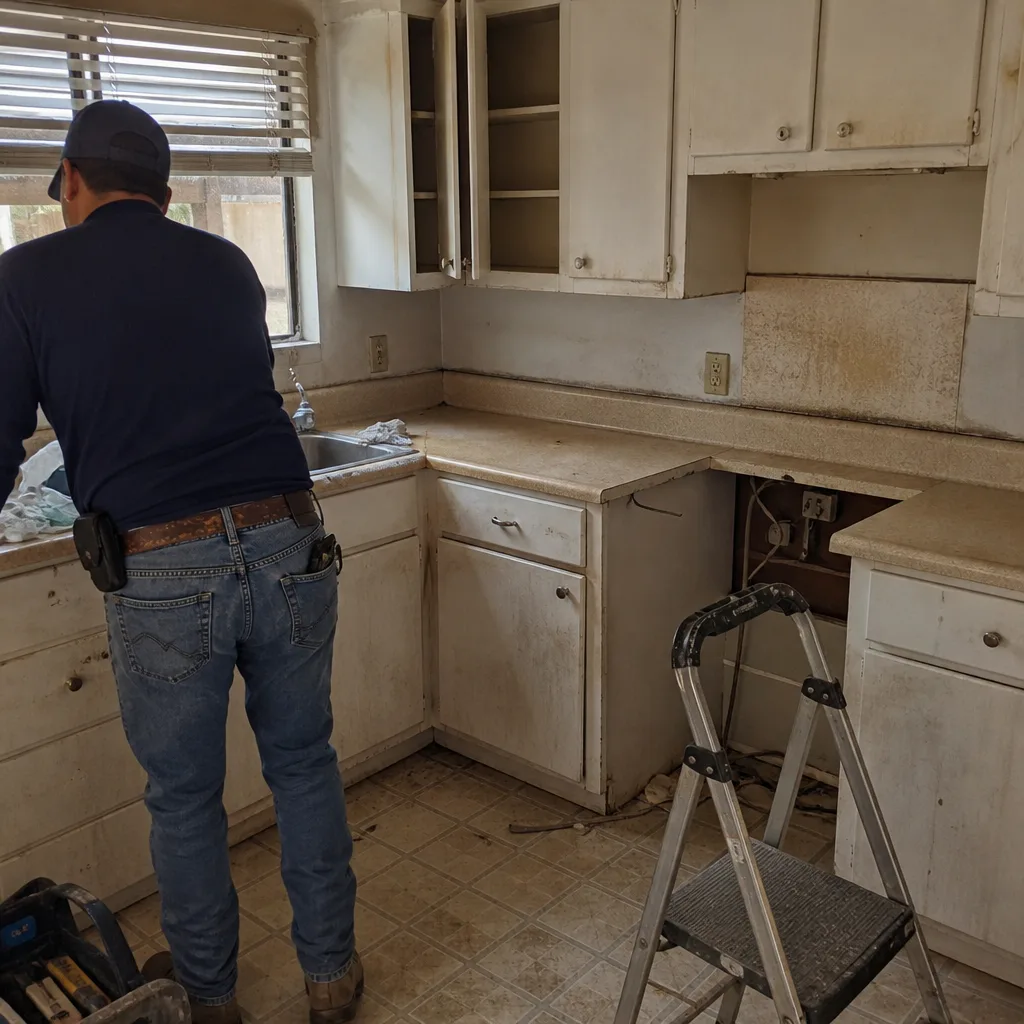 Before
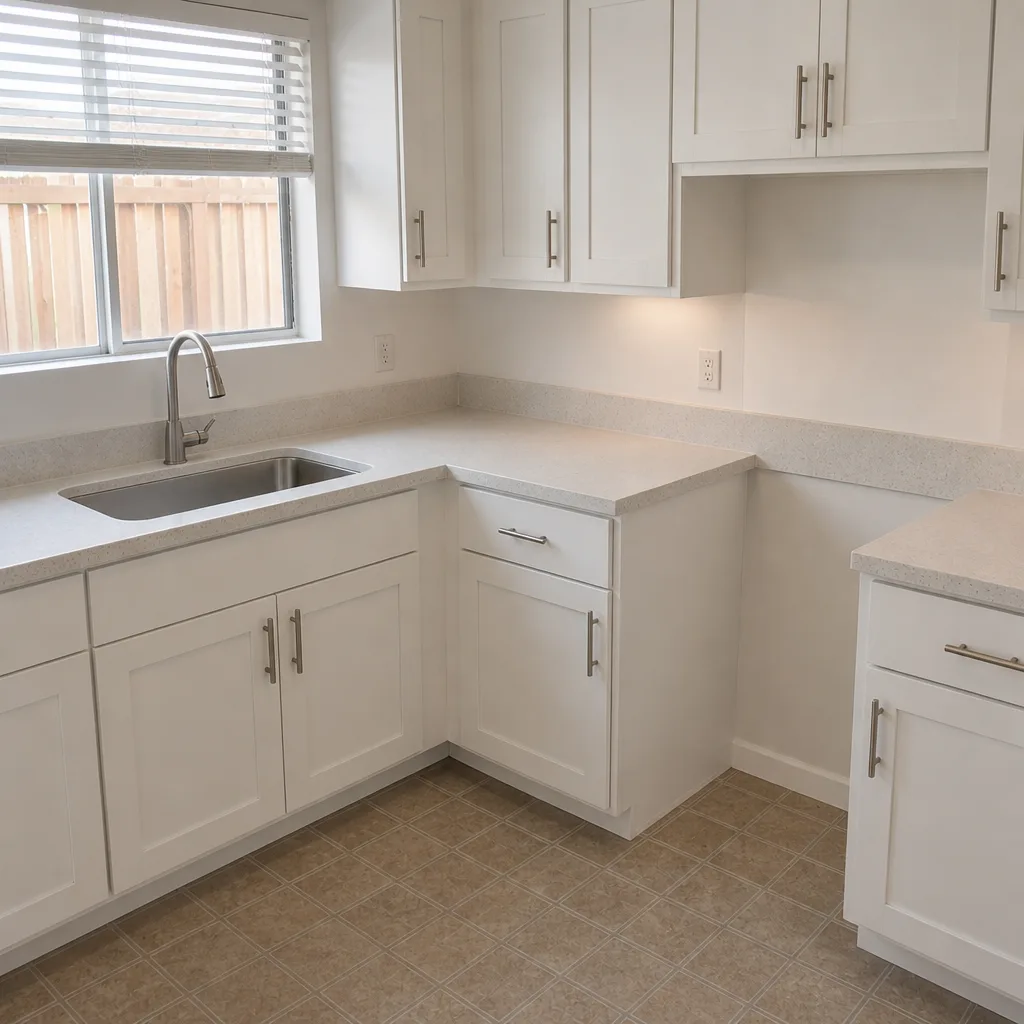 After
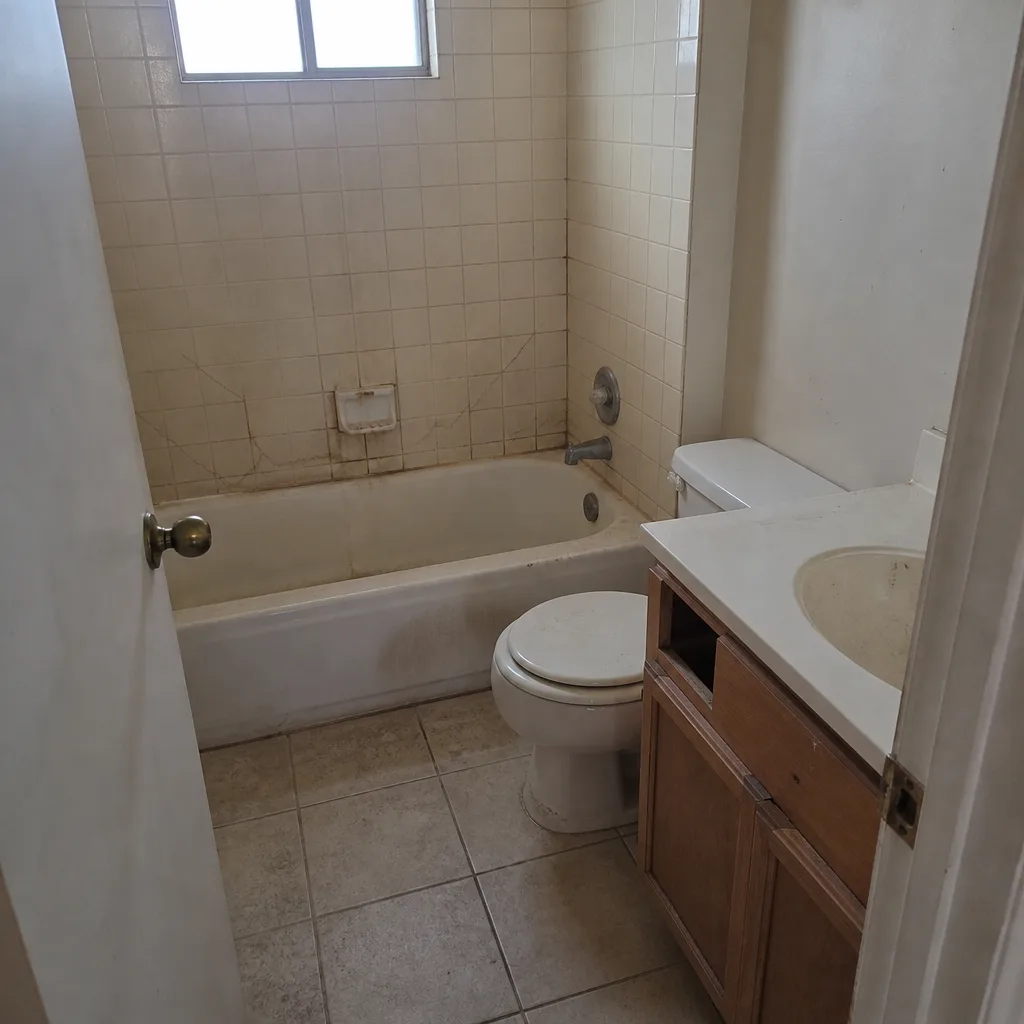 Before
 After
 Before
 After
Frequently Asked Questions
The biggest warning sign is a lump-sum price with no line-itemed material specification sheet. If the bid does not name the manufacturer and model for every tile, fixture, valve, and membrane, you have no written recourse when a cheaper substitute shows up on the truck. Ask for a written scope that names brands and grades before you sign, and ask what the change-order process is.
Expect a deposit of 10 – 15% of the total project value, and no more. A $30,000 Henderson bathroom remodel should start with roughly $3,000 to $4,500 down, not $12,000. If a contractor asks for more than 15% up front or requests cash, walk away and get another written bid. Call (833) 954-5920 for a written Henderson quote – estimates are free.
They should not. The correct process is to stop, photograph the condition, describe what was found in plain language, price the repair as a separate line item, and get your signature on a change order before any work resumes. A contractor who covers hidden rot without a signed change is telling you how the rest of the job will be billed. Our written price only changes when the change order is signed, and no change proceeds until it is.
Use the Nevada State Contractors Board online license search and enter the license number from the bid. Confirm active status, residential classification, the monetary limit (it should exceed your project value), the bond amount, and read the complaint and disciplinary history. The lookup will not tell you about work quality or whether the contractor pays their subs, so also require lien releases at the end of the job.
You should have lien releases from every subcontractor and supplier, the closed permit with the final inspection record, and a written warranty that names the manufacturer for every fixture and finish in addition to the workmanship terms. Withholding the final payment until those three items are in hand is standard practice. If the contractor cannot produce them, do not pay the last draw.
Yes for anything involving plumbing, electrical, or structural changes – moved drains, new circuits, relocated walls. Cosmetic tile and paint generally do not. An open permit at the end of a project is a problem that follows the house and slows a future sale, so ask for the permit close-out documentation and confirm the final inspection passed before you make the final payment.
The Bottom Line
Most bathroom remodeling disasters are visible in the paperwork weeks before they show up in the tile. A bid that names brands, models, and grades gives you something to hold the contractor to. A signed change order keeps the price where you agreed. A 10 – 15% deposit and milestone billing keeps your money where you can see it. A five-minute Nevada State Contractors Board lookup catches what the bid will never mention. And lien releases, closed permits, and a written warranty are what you should have in hand before the final check. The work is in the documents. Get those right, and the tile takes care of itself.
Written by the team at Rowan Construction Group Henderson.