Last updated November 18, 2026
Free written scope consultation - allowances, timeline, and change-order rules on paper before a single trade is scheduled
The Complete Driveway & Pavers Guide for Henderson Homeowners
A concrete driveway poured over unexcavated caliche can heave 1.5 inches in a single monsoon season. Yet most national paver guides never mention the word caliche once. That gap matters here. Henderson sits on a layer of calcium-carbonate hardpan that behaves like a different material than the sandy soils the standard 4-inch base spec was written for, and surface temps over 100°F for months change how polymeric sand cures. This guide covers base depth, real 2024 pricing, the HOA color lists most likely to get a paver approved, City of Henderson permit triggers, and where concrete ends and travertine begins.
Quick Answer
In Henderson, expect $18-$26 per square foot installed for concrete pavers, $28-$38 for natural travertine, and $22-$30 for permeable pavers. The single biggest cost driver isn’t the material – it’s the base. Henderson’s caliche requires 8-10 inches of compacted base, not the 4 inches national guides assume, which adds $3-$5 per square foot before a single paver is laid.
Styles & brands we work with
- Kitchen remodeling
- Bathroom remodeling
- Home additions & ADU
- Roofing
- Windows & doors
- Driveway & pavers
- Fence
Table of Contents
- Why Caliche Changes Everything About a Henderson Driveway
- Base Depth: The 8-10 Inch Rule and What It Costs
- How 110°F Surface Temps Affect Polymeric Sand
- What Pavers Actually Cost in Henderson in 2024
- Concrete Pavers vs. Travertine vs. Permeable
- HOA Color Palettes in MacDonald Ranch and Green Valley
- City of Henderson Permit Triggers
- Keeping a Henderson Driveway Alive in the Heat
Why Caliche Changes Everything About a Henderson Driveway
Caliche is a naturally cemented layer of calcium carbonate that forms in arid soils when water dissolves minerals and re-deposits them as the moisture evaporates. In the Henderson Valley, that layer typically shows up somewhere between 6 and 18 inches down. To a hammer it looks like low-grade concrete. To a paver installer, it’s a decision point.
There are only two honest ways to handle it. You excavate it until you hit native soil that won’t hold water against the base, or you over-build on top of it. A contractor who skips both steps and lays base material directly onto caliche is pouring a driveway on a bathtub. Water leaches down through the joints, hits the caliche, and stays there. In the monsoon months (July through September), that trapped moisture expands and contracts, and the pavers start to lift and shift.
We’ve walked driveways in Anthem and Seven Hills where a two-year-old install had visible waves because the caliche was never addressed. The fix isn’t cosmetic. It’s tear-out and re-do, and that runs $8-$14 per square foot on top of whatever the homeowner already paid.
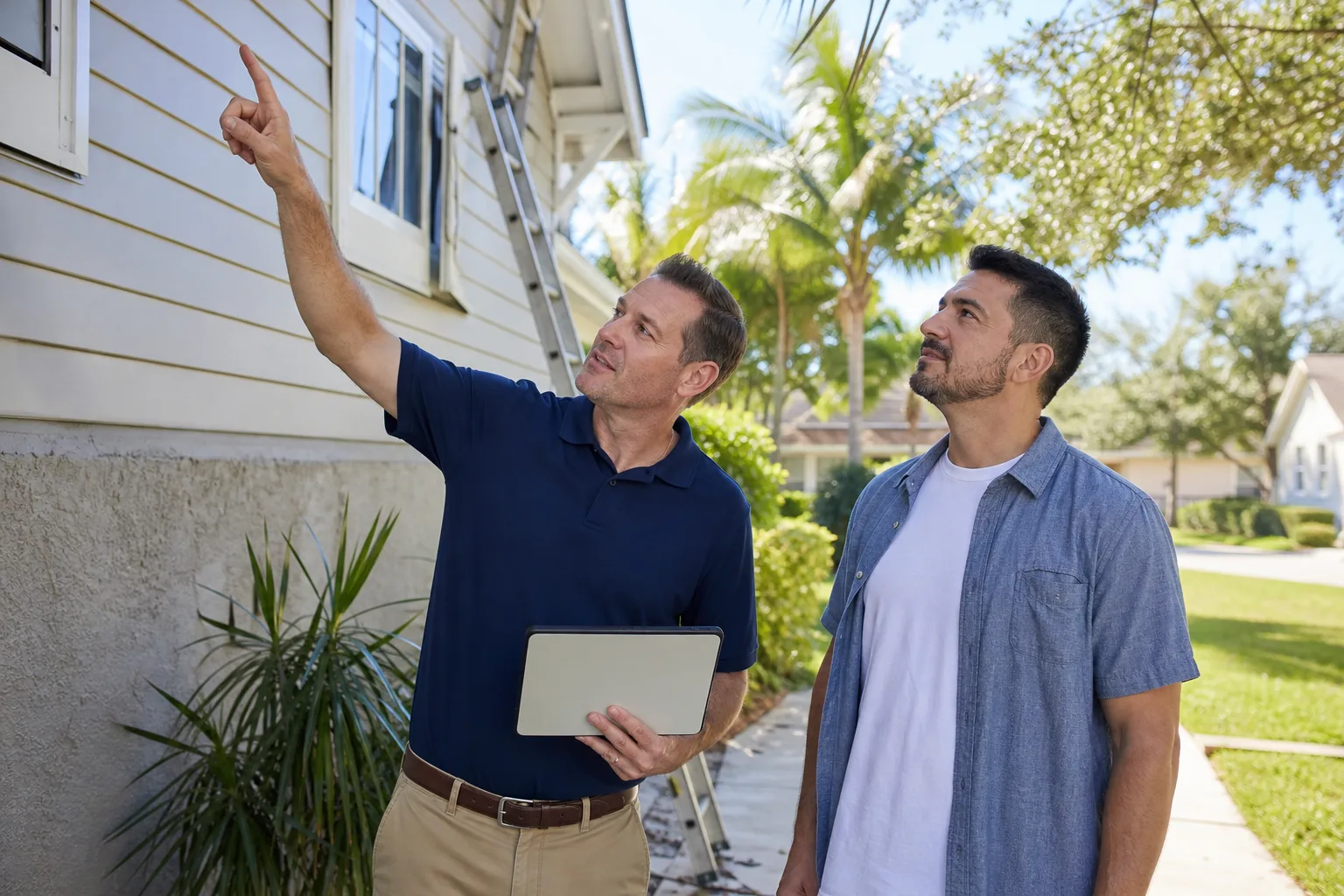
Here’s what we ask before quoting a Henderson driveway:
- What does the soil log say at 12 inches, and at 24?
- Does the yard drain toward the street, away from it, or pool in the middle?
- Is there an existing slab underneath, and if so, is it cracked through?
The answers determine whether the quote includes excavation – which is real money – or not. A written price that assumes “typical soil” in a Henderson neighborhood is a price that will move once the excavator hits hardpan. Under Clause 1 of the Haven Standard, our number is written before anyone starts, and the only way to hit it is to know what’s under the driveway.
Base Depth: The 8-10 Inch Rule and What It Costs
The national standard for paver base is 4 inches of compacted aggregate, plus 1 inch of bedding sand. That spec was written for stable, well-draining soils in temperate climates. Henderson isn’t that. Our recommendation for caliche-heavy lots is 8-10 inches of compacted Class II base, placed in two lifts and compacted between each.
Why it matters: on lots where caliche sits close to grade, the base material is doing the work the soil won’t. It’s distributing load across a broader area and giving water a place to drain rather than sitting against a hardpan. Four inches of base on Henderson caliche is a driveway that will be re-leveled within five years.
The cost math is straightforward. Every additional inch of base material, plus the labor to place and compact it, adds roughly $0.55-$0.75 per square foot. Going from 4 inches to 9 inches adds about $3-$5 per square foot. On a typical 500-square-foot driveway, that’s $1,500-$2,500 more than the national-standard quote.
That difference is the single most important line item on the estimate. When you compare bids – and you should compare at least two – look at the base depth written on each one. A quote that undercuts the others by $2,000 usually does it by quietly going back to the 4-inch spec.
Two other items belong in a Henderson base estimate:
- Geotextile fabric between the native soil and the base. It stops fines from pumping up through the base under load, which on caliche-heavy lots means less settling over time. Cost is minor, typically $0.30-$0.50 per square foot.
- Edge restraint – a polymeric or aluminum edge set in concrete along the driveway perimeter. Without it, the outer row spreads and the whole field loosens. This is specified on every Belgard and Techo-Bloc install we run.
How 110°F Surface Temps Affect Polymeric Sand
Polymeric sand is the product swept into paver joints and activated with water to lock the surface together. In Henderson, that activation step has a narrow, heat-driven window that most national installation guides don’t budget for.
Both Belgard and Basalite document the same limitation in their Southwest installation specs: when surface temperatures exceed 100°F, polymeric sand can cure too fast on top while staying uncured underneath. The result is a hard crust over a soft joint. Six months later, the crust cracks and the joint washes out. Belgard’s spec essentially runs the install window from early morning to mid-morning during peak summer months.
In practice, that means a summer install in Henderson looks like this:
- Crew starts at first light. Base work, if scheduled, happens before 10 a.m.
- Sand is swept in and watered while the paver surface is still under 90°F.
- Misting rather than flooding is used, because flooding a hot surface can flash-cure the top layer.
- The freshly sanded area is left undisturbed for at least 24 hours. No cars, no sprinklers.
There’s a second risk the manufacturers document: reactivation. If the joint is exposed to standing water within the first 72 hours, the polymer re-softens and can wash out entirely. That’s why we tell Henderson homeowners to hold off on the irrigation schedule for three days after the install. Not one watering cycle during that window – nothing.
The heat also affects how fast the pavers themselves come up to temperature. Surface temps on exposed concrete pavers in direct Henderson sun can run 30-40°F above ambient. On a 105°F day, the paver surface is 135-145°F, which is hot enough to burn a bare foot and hot enough to warp some polymeric products. We run installs with the manufacturer’s cure schedule pinned to the invoice so there’s no guesswork.
What Pavers Actually Cost in Henderson in 2024
Here are real installed ranges for the Henderson market. These include excavation, base, bedding sand, pavers, polymeric sand, edge restraint, and cleanup. They do not include rock removal beyond the base excavation depth, which is quoted separately if caliche drilling is required.
| Material | Installed cost per sq ft | Notes |
|---|---|---|
| Concrete pavers (interlocking) | $18-$26 | Most common choice in Henderson; palette sets from Belgard and Tremron fit most HOA lists |
| Natural travertine | $28-$38 | Cooler underfoot; more common on pool decks than driveways in this market |
| Permeable pavers | $22-$30 | Open-graded base plus reservoir layer; useful on lots with drainage constraints |
| Stamped concrete (for comparison) | $12-$18 | Cheap up front; cracks in Henderson heat within 5-8 years on average |
Itemized, a 500-square-foot Henderson driveway in concrete pavers typically breaks down like this:
- Excavation and haul-off: $900-$1,400 (higher if caliche drilling required)
- Base material and compaction (9 inches): $1,600-$2,400
- Bedding sand and geotextile: $350-$550
- Pavers (material): $3,000-$4,500
- Polymeric sand and edge restraint: $400-$700
- Labor and cleanup: $2,500-$3,500
There’s one more number worth having in hand. A full re-do of a driveway whose base was undersized runs $8-$14 per square foot beyond the original invoice. On a 500-square-foot drive, that’s $4,000-$7,000 to fix a mistake you already paid for. The math favors getting the base right the first time, and it’s why our written quotes make the base depth and compaction standard visible line items rather than boilerplate.
For a fuller breakdown of how we scope a driveway project, see our Driveway & Pavers in Henderson page. If the driveway ties into a fence line, deck, or new addition, the sequencing matters and we plan those as one project rather than three.
Concrete Pavers vs. Travertine vs. Permeable
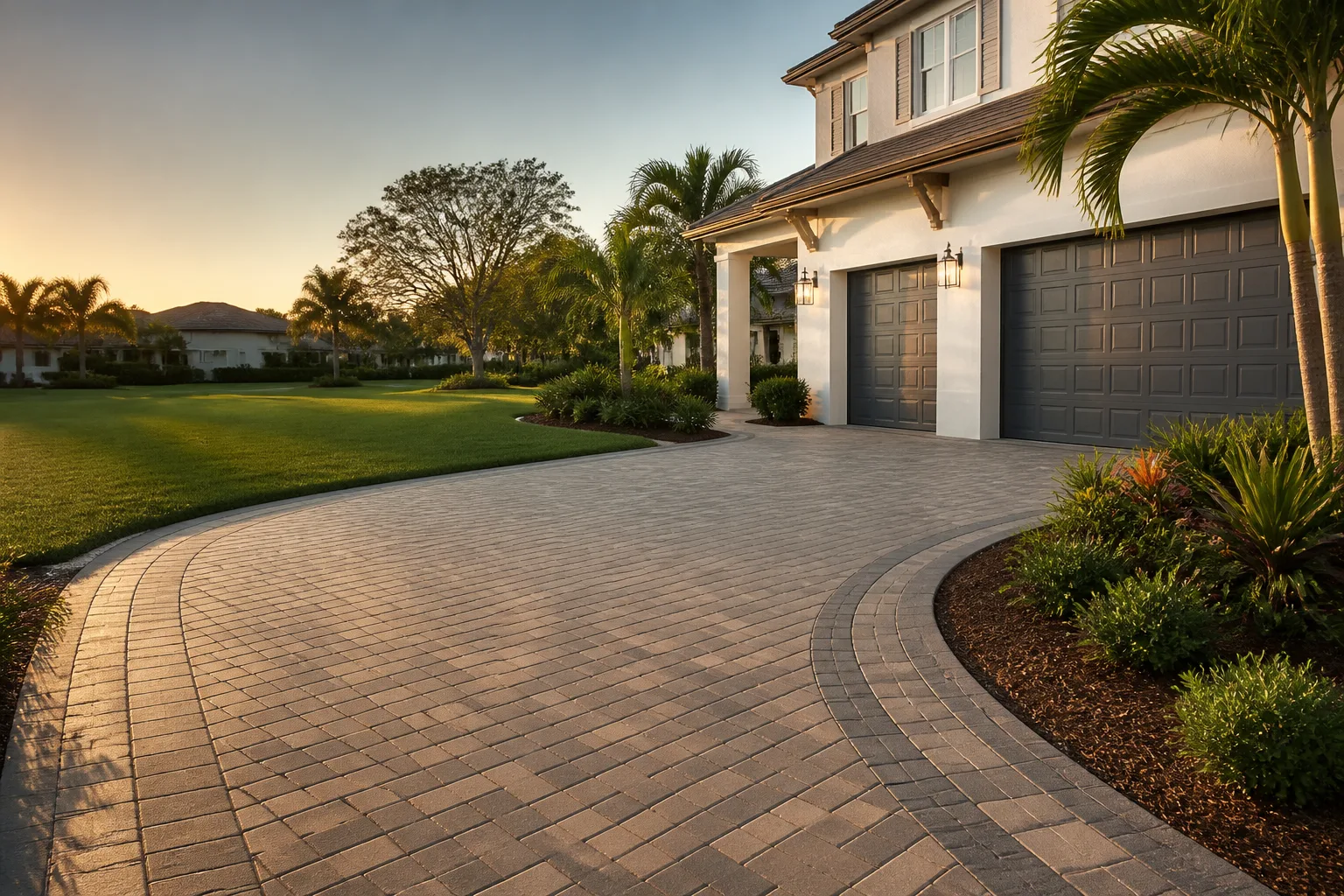
The three materials in the Henderson cost table above solve different problems. Concrete pavers are the default for a reason – they hold up to foot and vehicle traffic, come in palettes wide enough to match most HOA color lists, and the surface stays reasonably cool for a Clark County product. Belgard’s Artisan and Tremron’s Mega Olde Towne are the two lines we specify most often for Henderson driveways.
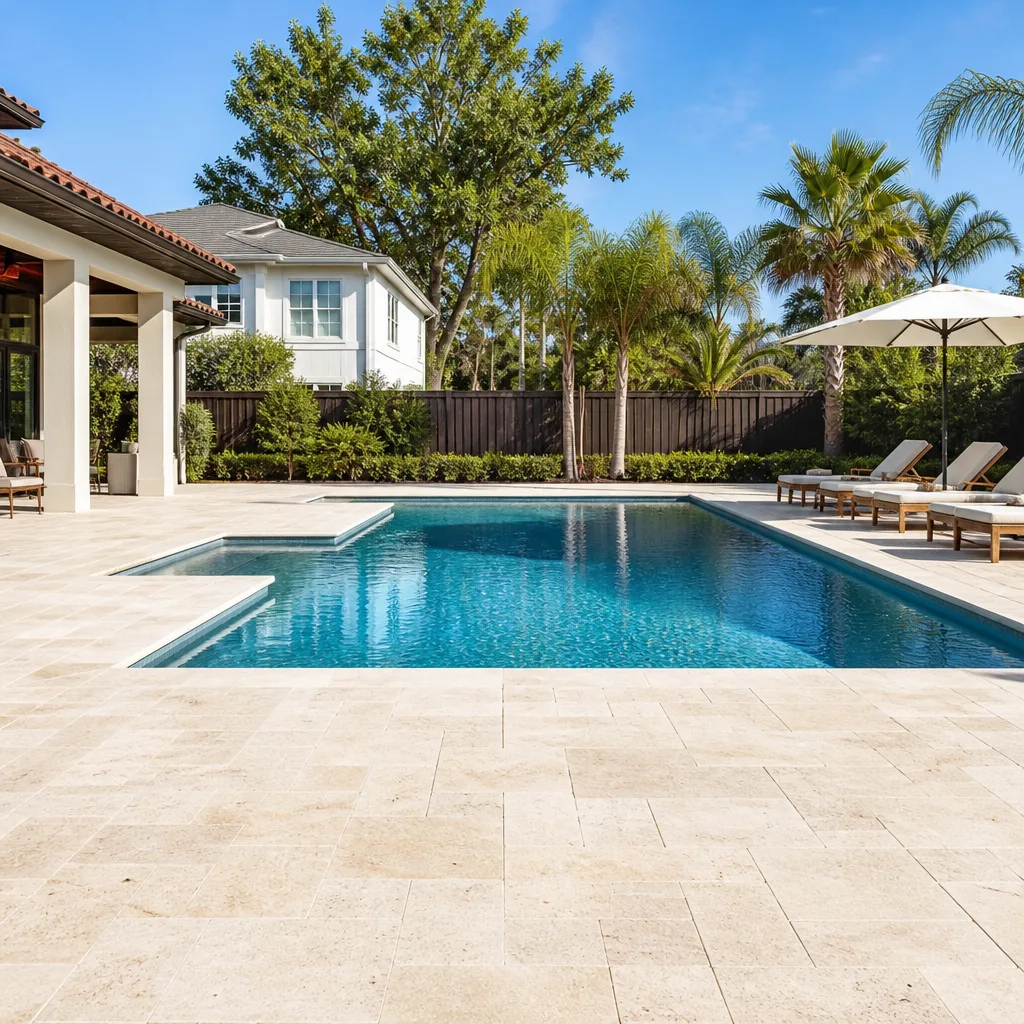
Travertine is a natural stone, cut into pavers and finished in one of two ways: tumbled (softer edges, matte) or honed (flatter surface, smoother). It runs 5-10°F cooler than concrete pavers under direct sun, which is why it dominates Henderson pool decks. For driveways, it’s the premium choice and it shows – but it requires a slightly different base and it stains more readily from vehicle fluids, so it needs sealing every few years.
Permeable pavers use an open-graded base and a reservoir layer underneath to hold stormwater and let it infiltrate rather than run off. They’re the right call on lots with poor drainage or where a homeowner wants a smaller footprint on the storm sewer. The added cost is base material and excavation – you’re building a reservoir, not just a driveway – and the maintenance schedule adds one item: vacuuming the joints once a year to keep the surface pores open.
Where the choice is close, the deciding factor is usually HOA rules. Most Henderson master-planned communities maintain a specific list of approved products, and the product on the list wins over the product the homeowner preferred.
HOA Color Palettes in MacDonald Ranch and Green Valley
Two of Henderson’s larger master-planned communities – MacDonald Ranch and Green Valley – maintain HOA architectural review processes that include color palette restrictions for driveways and other hardscape. The restrictions vary by community and by sub-association, and they change over time, so the community’s current architectural guidelines are always the source of truth. But two patterns show up frequently enough to plan around.
First, most approved lists lean toward earth tones – sand, tan, beige, light browns, subtle greys – and specifically exclude bright reds, dark charcoals, and pigment-heavy colors that read as “accent” rather than “driveway.” Second, the palettes are usually drawn from specific paver manufacturer lines rather than color families in general, so a Belgian block-style paver in “Sandstone” from one manufacturer may be approved while a similar color from another isn’t.
The products that most reliably fall within Henderson HOA approval lists include:
- Belgard’s Artisan and Mega Arbel lines in sand and tan tones
- Tremron’s Mega Olde Towne and Olde Towne in the natural and sand palettes
- Techo-Bloc’s Blu 60 in the lighter greys
- Unilock’s Brussels Block in the sandstone and harvest tones
The practical step: pull your community’s architectural guidelines before you sign anything, and check the specific product, color, and layout option against the list. If the list is silent or ambiguous, the HOA architectural committee is the authority, not the contractor. We’ll hold a sample against the guidelines before the order goes in – because reordering 4,000 square feet of a rejected color is nobody’s idea of a good week.
City of Henderson Permit Triggers
Not every driveway requires a City of Henderson permit. The threshold most homeowners should know:
Residential driveway work requires a permit from City of Henderson Public Works when the driveway exceeds 20 feet in width, or when the driveway connects to or crosses a public sidewalk, curb, or right-of-way.
In practice, that covers more than you might think. A standard two-car driveway is often 16-20 feet wide, but adding an RV pad or widening the apron to the street will typically trip the threshold. Any work that touches the public right-of-way – the apron between your property line and the curb – is Public Works territory regardless of width.
What the permit review is checking:
- That the driveway apron matches the city’s standard slope and material spec at the street connection.
- That the driveway doesn’t block required drainage flow along the curb.
- That any sidewalk crossing meets accessibility requirements.
Two practical notes for Henderson homeowners. First, permits are pulled by the contractor on the job, not the homeowner – which means the permit and inspection records are held against the licensed entity. Verify the contractor’s license and insurance before they apply. Second, a permit is usually the difference between an inspection that happens and one that doesn’t. If a driveway company tells you “permits aren’t required” for a widened apron, ask them to show you the Public Works code section that says so. If they can’t, the answer is no.
Under the Haven Standard, every permit pulled on a Rowan project is tracked and attached to the project record – which is part of what goes into the photo documentation delivered at closeout.
Keeping a Henderson Driveway Alive in the Heat
A properly built Henderson driveway is a low-maintenance asset. The failure modes that make paver driveways look old before their time are almost always about water and sun, and both are manageable.
What to do, by season:
- Spring (March-May): Sweep the surface and inspect joints. Any joint missing polymeric sand should be refilled before monsoon season, not after.
- Summer (June-September): During monsoon, watch for ponding after a storm. If water is sitting in the same spot two hours after the rain stops, the base or grading needs attention. Otherwise, do nothing – the driveway is designed to handle the heat.
- Fall (October-November): If the pavers are travertine, get them sealed every 3-5 years. Concrete pavers can be sealed optionally; Belgard specifies sealing as optional rather than required on most driveway products.
- Winter (December-February): No salt, no ice melt on a paver driveway. Both degrade the polymeric sand and (on travertine) etch the surface. If Henderson winter brings a rare freeze, let it melt off on its own.
One item worth knowing: a small amount of movement – one or two pavers every year or two, particularly at the apron where the driveway meets the street – is normal on any paver surface and usually fixable in an hour. What isn’t normal is a field of pavers that’s been uniformly shifting for a year or more. That’s a base problem showing itself, and it doesn’t fix itself.
Our 365-Day Done Right Promise covers workmanship for a full year after install. If a joint washes out or a paver lifts in a Henderson monsoon within that window, we make it right at no charge.
Common Mistakes to Avoid
- Accepting a 4-inch base on caliche. This is the most expensive mistake in Henderson paver work. Four inches is the national standard and it was written for temperate soil, not calcium-carbonate hardpan. Ask for 8-10 inches and confirm it in writing.
- Installing polymeric sand in midday summer heat. Belgard and Basalite both warn against it. The joint cures on top, not through, and washes out the first real rain. Summer installs should start at first light.
- Watering the new driveway within 72 hours. Polymeric sand is reactive to water during its cure window. A single irrigation cycle in the first three days can re-soften the joints entirely. Hold the sprinklers.
- Ordering pavers before checking HOA guidance. Aesthetic preference matters, but the HOA architectural committee has veto authority and reorders aren’t cheap. Check product, color, and layout against the current guidelines before the order goes in.
- Skipping the permit on a widened apron. City of Henderson Public Works reviews anything over 20 feet wide or connecting to a sidewalk or public right-of-way. Skipping the permit means the work isn’t inspected and can complicate a future sale.
- Comparing quotes without comparing base specs. A $2,000-lower quote is almost always a thinner base or a skipped geotextile. Put both quotes next to each other and look at the line items, not the totals.
- Sealing travertine with the wrong product. A solvent-based sealer on an unsealed travertine driveway can trap moisture and discolor. Use a penetrating sealer formulated for natural stone, or hire it out.
See the difference
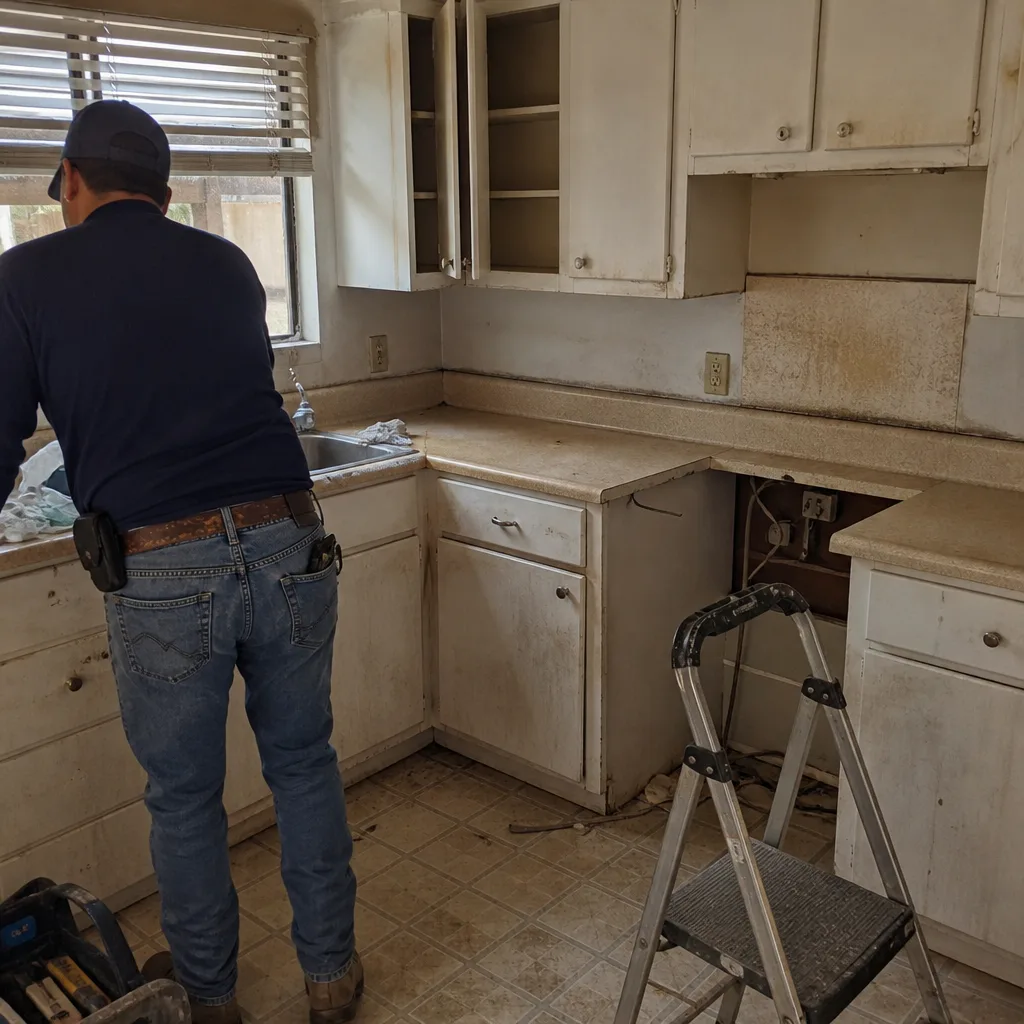 Before
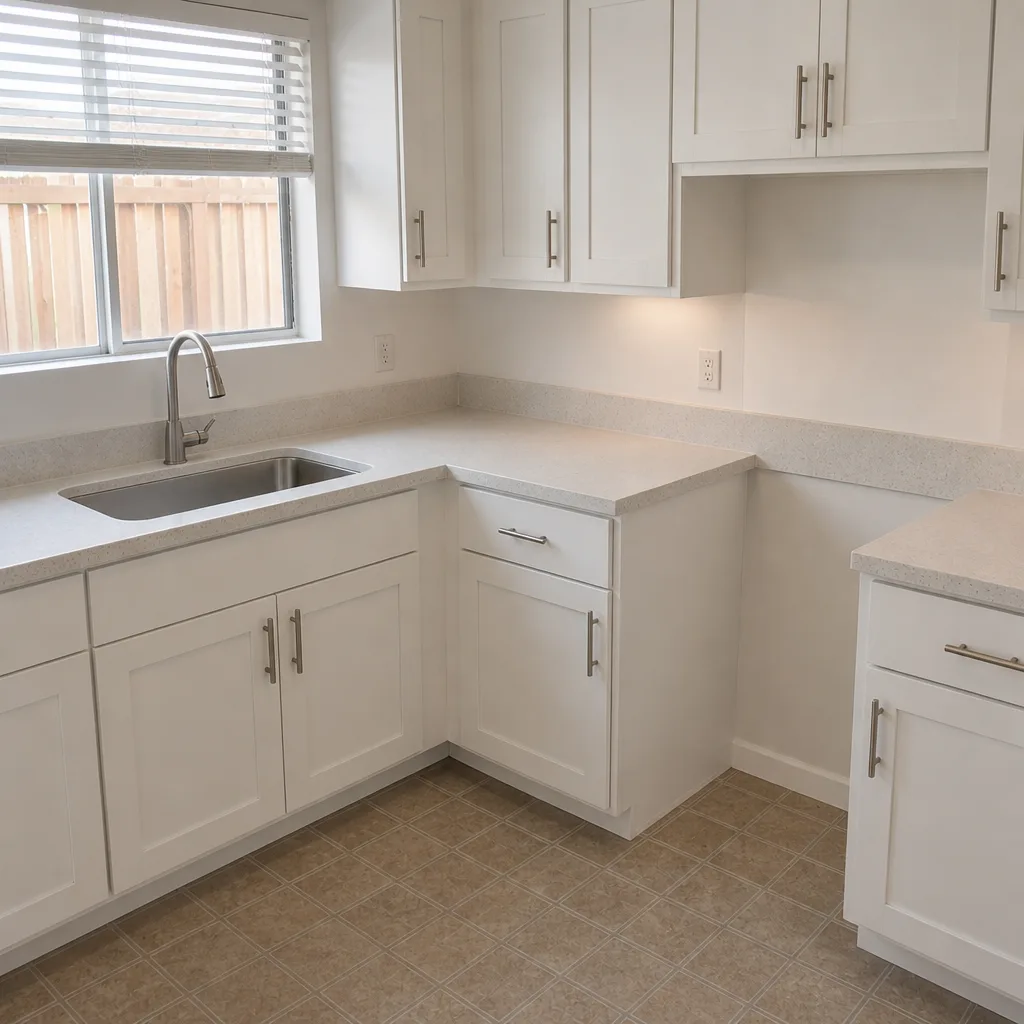 After
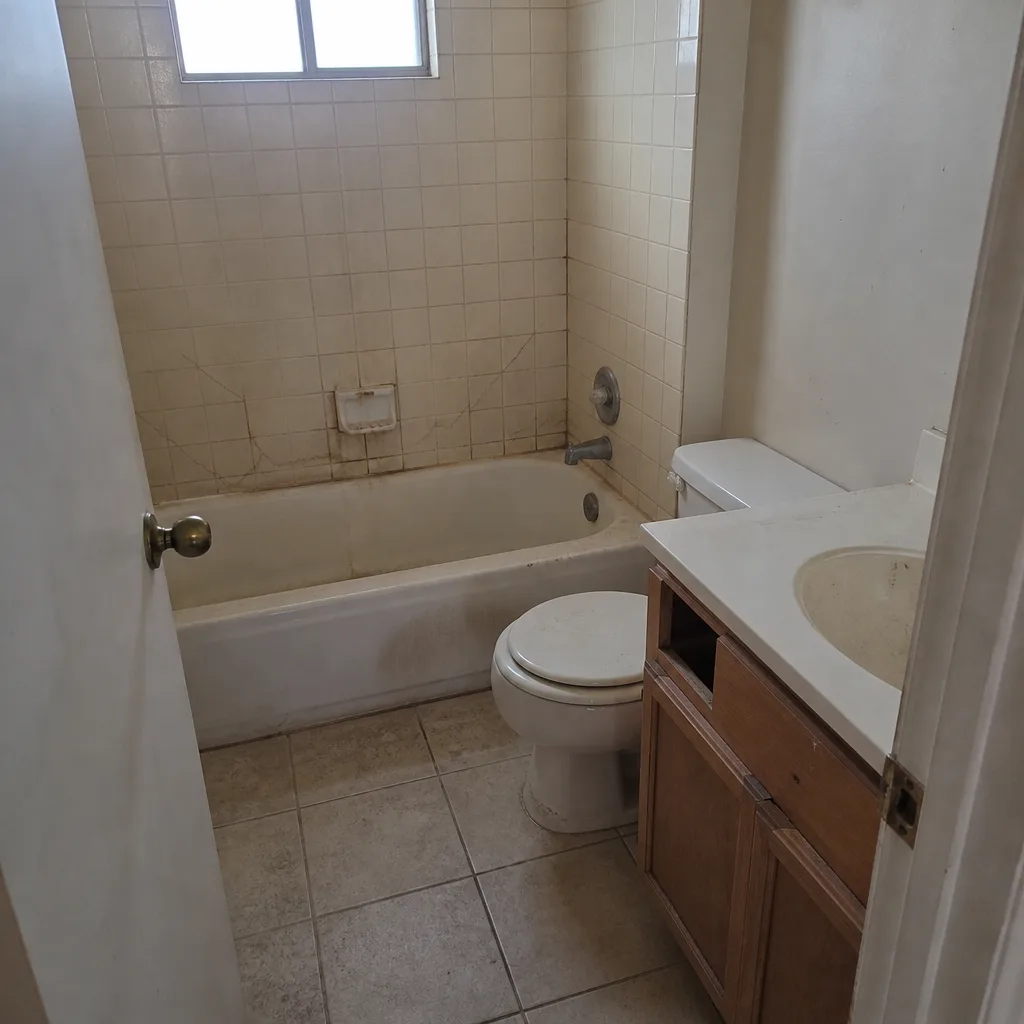 Before
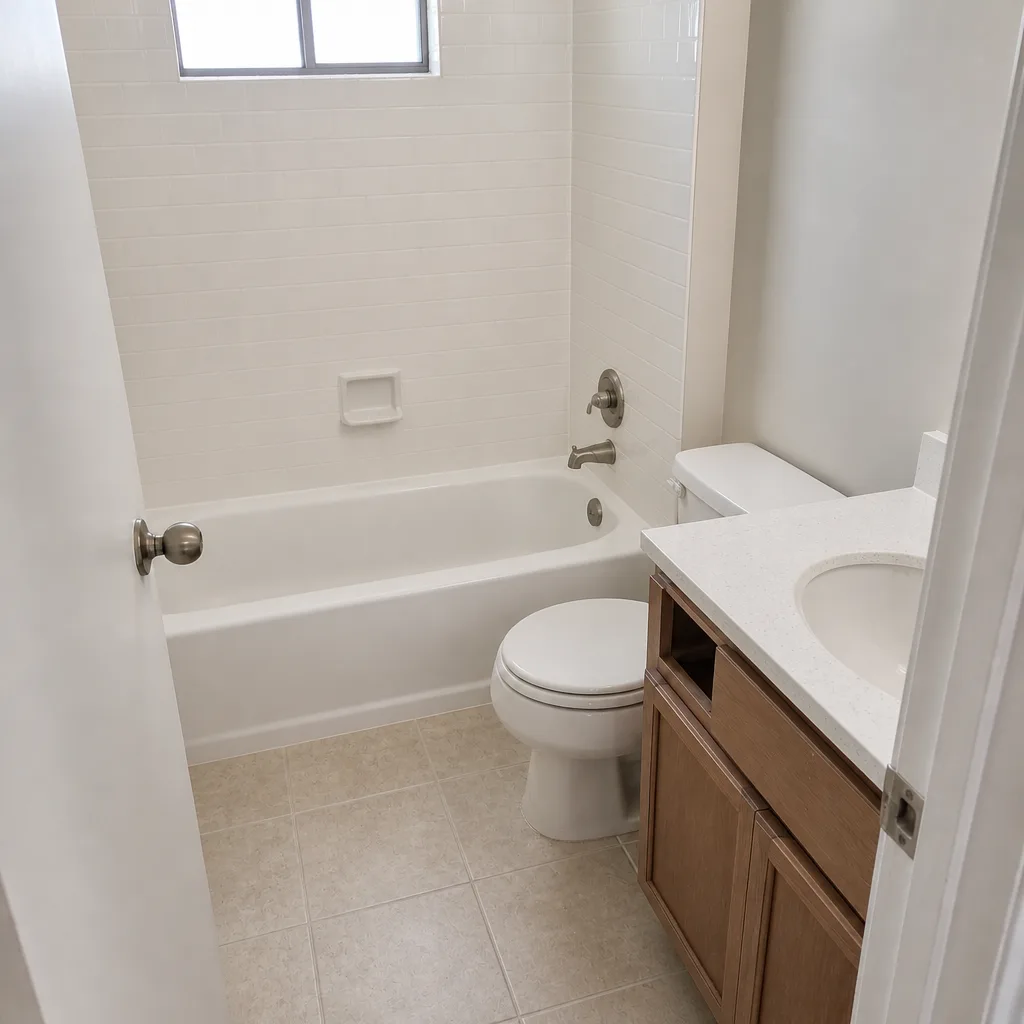 After
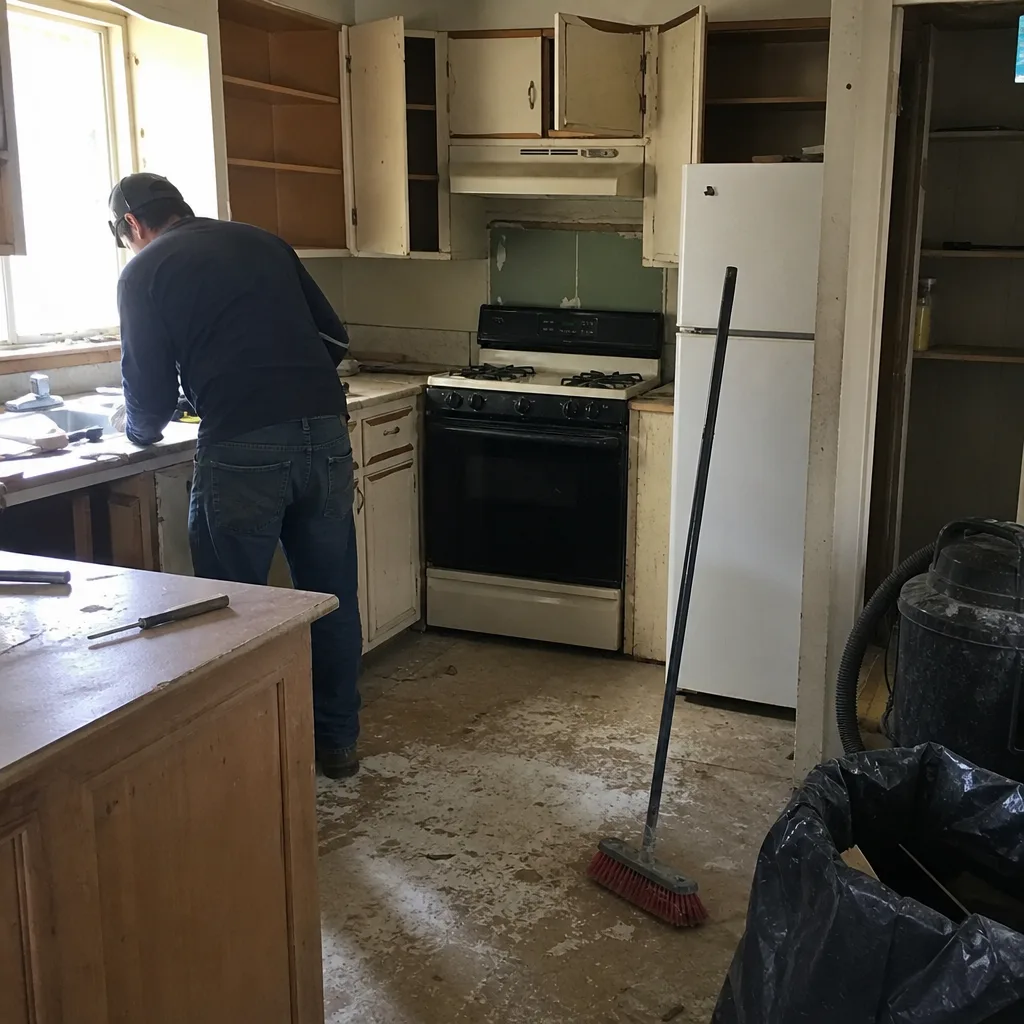 Before
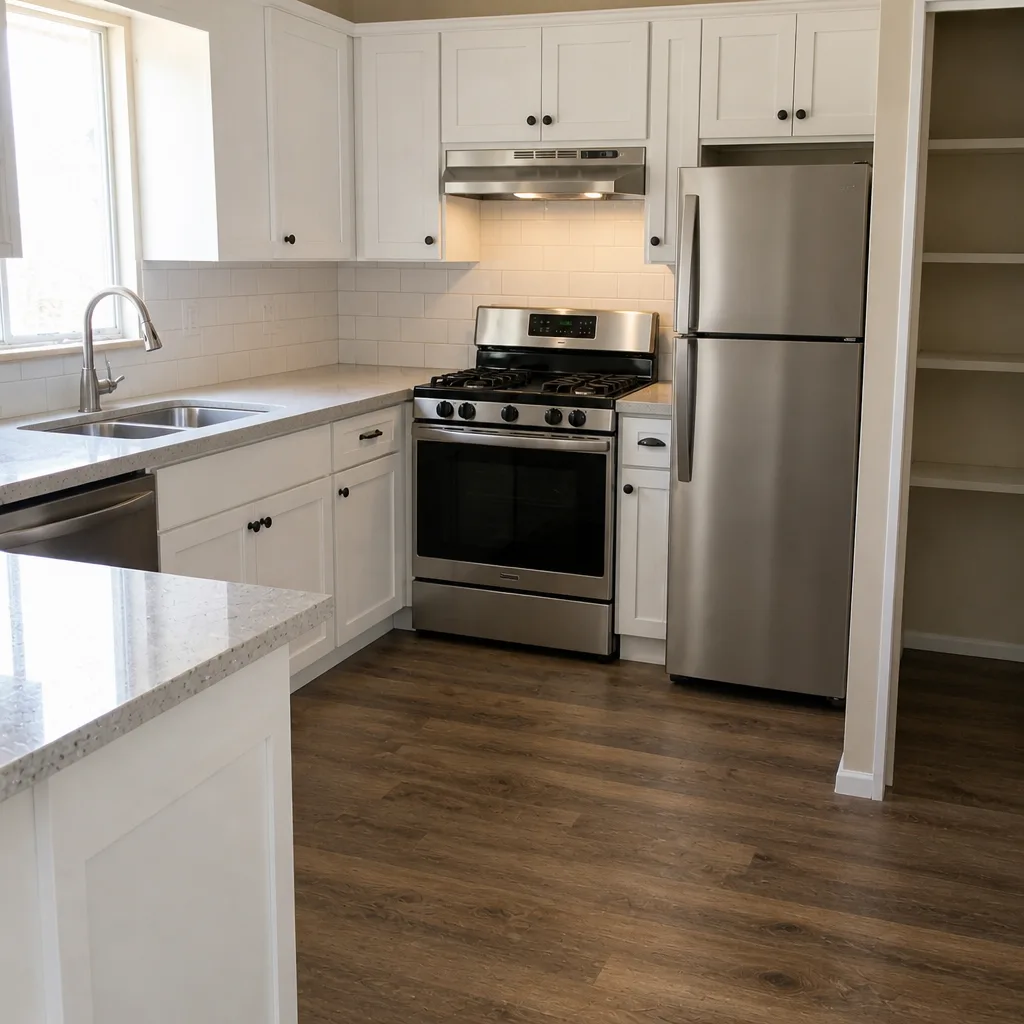 After
When to Call a Professional
Some driveway work is genuinely DIY-able: sweeping joints, refilling a single washed-out joint, sealing a travertine surface on a mild fall weekend. The rest of it isn’t. Call a professional if you’re seeing any of these:
- Pavers lifting, rocking, or forming visible waves – that’s a base failure, not a surface issue.
- Standing water in the same spot 24 hours after a storm.
- A driveway that connects to or crosses a public sidewalk, or is more than 20 feet wide and needs widening.
- Any settlement in the first year after install (if you’re within a workmanship warranty, this is on the installer).
- Excavating into visible caliche. This needs a mini-excavator or a jackhammer and a compaction plan, not a shovel and a weekend.
Rowan Construction Group Henderson offers free estimates in Henderson – call (833) 954-5920. Bring any other written estimate and we’ll review it line by line, at no charge. If the base depth on a competitor’s quote is short, we’ll tell you. If it’s right, we’ll tell you that too.
Frequently Asked Questions
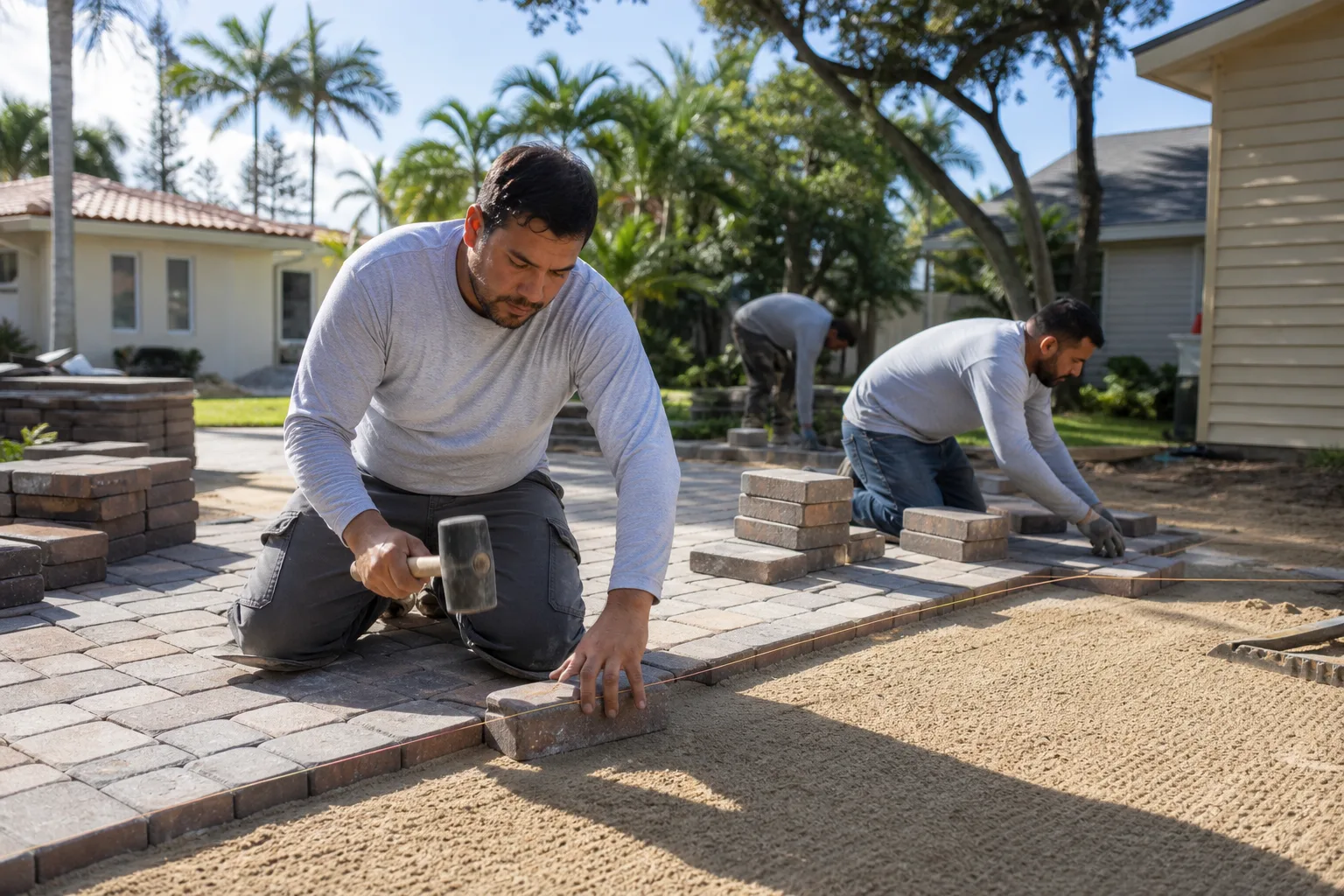
Concrete pavers installed in Henderson in 2024 run $18-$26 per square foot, travertine runs $28-$38, and permeable pavers run $22-$30. A typical 500-square-foot concrete paver driveway lands between $9,000 and $13,000 all-in. The variance is mostly base depth – Henderson’s caliche typically requires 8-10 inches rather than the 4-inch national standard, adding $3-$5 per square foot. Call (833) 954-5920 for an exact quote – estimates are free.
Yes, if your driveway exceeds 20 feet in width, or if it connects to or crosses a public sidewalk, curb, or right-of-way. The permit is issued by City of Henderson Public Works and is typically pulled by the contractor rather than the homeowner. Most standard two-car driveways at their original width are below the threshold; widenings and apron replacements usually aren’t.
8-10 inches of compacted Class II base is the right answer for a Henderson driveway on caliche-heavy soil, placed in two lifts and compacted between each. The 4-inch national standard assumes temperate, well-draining soil and doesn’t account for caliche. The cost difference is about $3-$5 per square foot – cheap compared to a $8-$14 per square foot tear-out later.
Most likely the polymeric sand was reactivated by water during its 72-hour cure window, or it was installed on a surface that exceeded 100°F and flash-cured on top while staying soft underneath. Both are documented failure modes in Belgard and Basalite’s Southwest specs. If the joints are washing out across the whole field rather than in one spot, it’s usually an installation issue.
Earth-tone palettes in specific manufacturer lines usually clear the architectural review: Belgard Artisan and Mega Arbel in sand, Tremron Olde Towne in natural and sand tones, Techo-Bloc Blu 60 in the lighter greys, and Unilock Brussels Block in sandstone and harvest. MacDonald Ranch and Green Valley each maintain their own community guidelines, and those guidelines – not a contractor’s experience – are the authority. Always check the current list before ordering.
A properly built Henderson paver driveway – 8-10 inches of base, geotextile, edge restraint, polymeric sand installed within the manufacturer’s cure window – lasts 25-30 years with normal maintenance and resealing on a 3-5 year interval for natural stone. An undersized install on caliche fails much sooner, often within 3-5 years as the base settles.
Small repairs, like resetting a single lifted paver or refilling one washed-out joint, are reasonable DIY projects anywhere. A full driveway install in Henderson isn’t, because the failure points are the base excavation (caliche drilling requires equipment), the compaction (requires a plate compactor), and the polymeric sand cure (requires timing that most homeowners don’t have visibility into). The tear-out cost of getting either wrong is more than the install.
The Bottom Line
The decisions that make a Henderson paver driveway last are made before a single paver is set: how deep the base runs on caliche, when the polymeric sand cures, whether the HOA palette matches an approved product, whether the city permit triggers. Surface aesthetics are the last decision, not the first. If you get the base depth right (8-10 inches), install within the manufacturer’s cure window, and pull the permit when required, the driveway you install now will still be flat and tight in 25 years. If any one of those is skipped, the driveway will start telling you about it within a few monsoons. Our written price makes every one of those line items visible, so you can see exactly what you’re buying before the first shovel goes in.
If a wider scope is on the table – a new driveway paired with a fence rebuild or a home addition – see our Fence Installation in Henderson and Home Additions & ADU in Henderson pages, or start at the Rowan Construction Group Henderson home page. We plan the sequencing across trades as one project, so the driveway isn’t redone because a fence post landed the wrong side of the containment wall.
Get a Free Estimate
If you’re considering a driveway project in Henderson – new install, tear-out and re-do, or a widened apron that needs a Public Works permit – call (833) 954-5920 for a free estimate. Every quote is a flat written price with a written scope, before any work starts. Bring a competitor’s estimate and we’ll review it line by line at no charge. Under the 365-Day Done Right Promise, if it isn’t done right, we make it right – in writing, not as an asterisk.
Written by the team at Rowan Construction Group Henderson.