Last updated November 18, 2026




Free written scope consultation - allowances, timeline, and change-order rules on paper before a single trade is scheduled
Construction Emergency Preparedness Guide for Henderson Homes
Most Henderson homeowners can’t find their main water shutoff valve in under 60 seconds. Restoration contractor intake data puts the cost of that gap between $800 and $3,200 per incident in avoidable water damage – money spent on drywall, flooring, and baseboards that a homeowner with a tagged valve photo and a five-minute plan would have caught at the source. The pattern repeats across Henderson: monsoon pressure spikes split supply lines, the first 110°F week of May finds the flat-roof membrane that was already tired, and a rare hard freeze leaves stucco hanging from the wall by Wednesday. The homeowners who get through these events cheaply aren’t luckier. They documented their house before anything went wrong. This guide is that documentation protocol, plus the seasonal triggers, licensing checks, and insurance steps that follow.
Quick Answer
Construction emergency preparedness for a Henderson home means three things done before an emergency: a documentation package (GPS-tagged photos of every shutoff, permit history from Henderson Development Services, and material specs for roof and stucco), a seasonal trigger list mapped to Henderson’s monsoon, heat, and freeze cycles, and a verified shortlist of licensed contractors you can call without panic-shopping. The documentation is what makes insurance claims settle faster, keeps temporary repairs from triggering permit problems, and stops a $600 problem from becoming a $3,000 one.
Styles & brands we work with
- Kitchen remodeling
- Bathroom remodeling
- Home additions & ADU
- Roofing
- Windows & doors
- Driveway & pavers
- Fence
Table of Contents
- The Home Documentation Package Every Henderson Homeowner Should Build First
- Henderson’s Seasonal Emergency Triggers, Month by Month
- The First 15 Minutes of an Active Roof Leak
- Verifying a Nevada Contractor’s License During an Emergency
- What Your Insurance Adjuster Will Ask For
- Temporary Repairs vs. Permanent Repairs: When the Permit Clock Starts
- What We See by Henderson Neighborhood
- Common Mistakes to Avoid
The Home Documentation Package Every Henderson Homeowner Should Build First
The single highest-value hour you can spend on your Henderson house is building a documentation package while everything is working. Emergency response is 90 percent recall and 10 percent action. If you’re searching for the shutoff valve while water is running down a hallway, you’ve already lost the recall battle. Build the package on a quiet Saturday, store it in a shared cloud folder every adult in the house can open on a phone, and update it when anything material changes.
Here’s what goes in it:
- GPS-tagged photos of every utility shutoff. Main water valve, the irrigation backflow preventer (often in a front-yard box near the sidewalk), the gas meter shutoff, and the electrical panel main breaker. Take a wide shot showing the location in context and a close shot showing the valve handle position. Your phone embeds GPS coordinates automatically; verify location services are on.
- Permit history from Henderson Development Services. Pull the permit record for your address and save the PDFs. This tells an adjuster and a future contractor what was permitted, when, and by whom – and it flags unpermitted additions that will complicate a claim.
- Roof material specifications. Brand, product line, shingle layer count or membrane type, and the installation date. For flat roofs, note the membrane (TPO, modified bitumen, or built-up) and the drain locations.
- Stucco specification. Whether it’s a one-coat or three-coat system, the weep screed locations, and any known repair history. Stucco failures after a freeze are diagnosable in minutes with this record and a mystery without it.
- Appliance and fixture model numbers. Water heater, dishwasher supply lines, washing machine hoses, and ice maker lines are the four most common interior flood sources in Henderson homes.
- A dated video walkthrough of the whole house. Ten minutes, once a year. This is the record your adjuster will thank you for.
Keep a printed copy in a waterproof envelope in the garage, too. Cloud access fails exactly when the power and the cell tower are both down.
Henderson’s Seasonal Emergency Triggers, Month by Month
Henderson construction emergencies aren’t random. They cluster around three seasonal pressure points, and each one rewards a specific prep step.
Monsoon season: July through September
Henderson’s monsoon pattern delivers intense, short-duration rain on ground that’s been baked hard for months. Water doesn’t soak in; it runs. The failure mode is drain and grade backup, not roof collapse. Before the first storm of the season:
- Clear every area drain, scupper, and French drain inlet. On flat-roof homes, the roof drains are the priority – a single clogged scupper can pond hundreds of gallons.
- Check that the finish grade slopes away from the foundation on all sides. A one-inch negative slope is enough to push water to the stucco and into the wall cavity.
- Photograph the drainage path during the first storm so you know where water actually goes, not where you assumed it goes.
The first 110°F week: late April into May
Flat-roof membrane failures in Henderson tend to surface in the first sustained heat week, when thermal expansion finds every seam that was already compromised. If you have a flat or low-slope roof, walk it in April, before the heat arrives, and photograph every seam and penetration. A seam that’s lifting in April is a leak by June. This is also when we regularly see AC condensate lines back up into ceiling assemblies – check the drain pan and the line before the first 110°F day.
Freeze events: December through February
A hard freeze in the Vegas Valley is rare, which is exactly why it does damage. Henderson homes aren’t built for it. Outdoor hose bibs, irrigation lines, and exposed backflow preventers are the first casualties. After a freeze, inspect stucco in this order: north-facing walls first (slowest to thaw), then the weep screed line at the base of every wall, then any horizontal trim band. Stucco that’s delaminated will sound hollow when tapped and may show a hairline crack along the top of the weep screed. Document it with dated photos before anything is repaired – that’s the record your claim needs.
The First 15 Minutes of an Active Roof Leak
Water is coming through the ceiling. What you do in the next 15 minutes determines whether you’re looking at a $700 ceiling repair or a $4,000 one. This sequence applies to any roof, but it’s written for the flat-roof homes common in Henderson’s older core, where the leak path is harder to trace than on a pitched roof.
- Minute 0-2: Move, don’t investigate. Get furniture, electronics, and anything irreplaceable out from under the leak. Put a bucket down. Do not go on the roof during active rain – wet membrane and ladder work is how people fall.
- Minute 2-5: Kill the source of spread. If water is pooling in the ceiling, a small pinhole in the drywall at the lowest point gives it a controlled exit and prevents the whole sheet from collapsing. That’s a damage-control step, not a repair.
- Minute 5-10: Locate the entry, not the exit. The wet spot on your ceiling is rarely under the hole in the roof. Water travels along the deck and finds the lowest point. On a flat roof, the leak is almost always at a seam, a penetration (vent, skylight curb, AC unit), or the drain – look for the stain’s uphill edge and trace back from there.
- Minute 10-15: Document before you touch anything. Video the water actively coming in, photograph the wet ceiling, the bucket, and the affected belongings. That footage is your claim evidence and it’s worth more than any photo you take after cleanup.
Once the rain stops, a temporary tarp is reasonable to limit further damage – but read the next two sections before you hire anyone or sign anything.
Verifying a Nevada Contractor’s License During an Emergency
The pressure to hire the first available contractor is highest exactly when you’re least equipped to vet them. Out-of-state crews follow storm events into Henderson, and a homeowner signing a repair contract at 9 p.m. during an active leak is precisely the customer a bad actor is looking for. The good news: Nevada’s licensing database makes verification a three-minute job on a phone.
- Ask for the contractor’s Nevada State Contractors Board (NSCB) license number. Every legitimate residential contractor has one. A crew that can’t produce it in writing isn’t licensed.
- Open the NSCB’s mobile license lookup and enter the number. Confirm three things: the license is active, the classification matches the work being quoted (roofing, stucco, plumbing, and general building are separate classifications), and the qualifying party named on the license is connected to the company you’re hiring.
- Check that the company carries a current monetary limit sufficient for the job. An underqualified license limit is a red flag on a large repair.
- Confirm the business name and address on the license match the estimate you’re being handed.
Our own standard is that every crew member is background-checked and uniformed and arrives having been verified before the visit – and we expect any homeowner to hold us to the same three-minute check. It’s one of the reasons our written estimates and the Rowan Construction Group Henderson home pricing pages carry a flat written price rather than a “call for a quote” line. When the work is documented up front, the verification conversation gets shorter, not longer.
What Your Insurance Adjuster Will Ask For
Adjusters aren’t the obstacle – missing documentation is. The Henderson homeowners who get a fast settlement are the ones who hand the adjuster a complete file on day one. Here’s what typically gets requested for a construction-related claim, and why having it before the event speeds everything up.
- Dated photos and video of the damage before any cleanup. The adjuster needs to see the water actively coming in, the crack in the stucco, the membrane failure. Once it’s dried and tarped, the evidence is gone.
- The permit record for the affected work. If the roof or addition was permitted, the record establishes the age and quality of the original work. If it wasn’t, the adjuster needs to know that up front.
- Written contractor estimates with a line-item scope and a flat price. This is where documentation discipline pays off. An invoice that says “roof repair – $X,XXX” invites questions; a written scope with line items and a warranty on the back gets approved.
- Proof of temporary repair. Keep the tarp invoice and photos of the temporary repair in place. Insurers want evidence you mitigated further damage – and mitigation is usually a covered cost.
- Contractor license and insurance documentation. A licensed contractor’s paperwork is part of the claim file; an unlicensed one can complicate or void portions of it.
Every Rowan visit includes a documented photo record as a standard deliverable, not an upgrade – the same record you’ll hand your adjuster. If you’re carrying a competitor’s estimate, our Free Second Opinion service reviews it line by line at no charge before you make a decision.
Temporary Repairs vs. Permanent Repairs: When the Permit Clock Starts
This is where well-meaning homeowners get into trouble after an emergency: they go past the temporary repair and into permanent work without a permit. The distinction in Henderson is mostly about scope, and getting it wrong can cost you a claim, a re-do, or both.
What counts as a temporary repair. A tarp over a leaking roof section, sealant at an active leak source, boarding a broken window, or a temporary patch to stop water infiltration are the classic emergency-protection measures. These are about stopping active damage while you document and call in a licensed contractor. They don’t include structural rework, re-membraning the whole roof, or anything touching framing, electrical, or gas.
What starts the permit clock. Once the work becomes permanent, the permit process applies: a full membrane replacement, re-roofing with a new layer, structural repair, stucco replacement over a defined area, electrical or gas repairs, and any work that changes the footprint or structure. A licensed contractor pulls the permit, and the inspection is passed before the work is considered complete. If a crew offers to “finish it without paperwork,” that’s the moment to walk away – an unpermitted repair is a liability that resurfaces when you sell.
The practical rule: temporary stops the bleeding, permanent goes on a permit, and you never let anyone push permanent work through without one. When the storm appears is not when permanent decisions should be made.
What We See by Henderson Neighborhood
Henderson’s housing stock varies enough that the emergency triggers change from one part of town to the next. These are patterns, not guarantees, but they’re useful when you’re planning what to document.
In Green Valley, the built-out suburban core, the recurring emergency pattern is irrigation and supply-line failures on homes that are now two to three decades old. The fix is documentation of the backflow preventer and hose bibs before a freeze, not after. In Anthem and the southern foothill areas, roof and stucco take the brunt – wind-driven monsoon rain against a taller wall profile, and freeze exposure on north-facing stucco. The documentation package for those homes needs a roof membrane record and a numbered photo sequence of every weep screed.
Closer in, the older, low-slope roofs around the historic core leak at seams and penetrations first, and the leak path is harder to trace from below. Those homes benefit most from the uphill-trace method in the roof-leak section above. For additions and ADUs that were permitted, the permit history is the single most valuable document – for anything touching flat roofs and stucco, it’s worth reading the spec before the first storm. If your documentation finds a roof or stucco problem that needs a real fix rather than a temporary one, it’s the right time to look at a Home Additions & ADU in Henderson assessment rather than another patch.
Common Mistakes to Avoid
- Hiring the first crew that shows up after a storm. Out-of-state crews follow monsoon and freeze events into Henderson, and the pressure to sign fast is highest when you’re standing in a wet kitchen. Verify the NSCB license on your phone before anything else.
- Skipping the shutoff-photo documentation because “the house is new.” New homes flood at the same $800-$3,200 per incident as old ones. The valve is the same; the pressure spike doesn’t care when the house was built.
- Spreading plastic over a ceiling stain instead of letting the water drain. A sealed pocket of water in a ceiling assembly is worse than a controlled pinhole. Let water out where you can see it.
- Letting a crew start permanent work without pulling the permit. A re-membrane or re-stucco job done without a permit can complicate a claim and surface at resale. Temporary stops the bleeding; permanent gets a permit.
- Photographing only the messy aftermath. The adjuster needs the active leak, the crack, the failing seam – the pre-cleanup evidence. Take the video before the bucket comes out.
- Skipping the stucco check after a freeze because the wall looks fine. A hollow sound under a tap and a hairline crack above the weep screed are the early signs. Catching them before the first heavy rain is the difference between a patch and a full replacement.
- Accepting a verbal estimate in an emergency. A written scope with a flat price is the only estimate you can hand an adjuster or hold a contractor to. Verbal promises disappear along with the water.
See the difference
 Before
 After
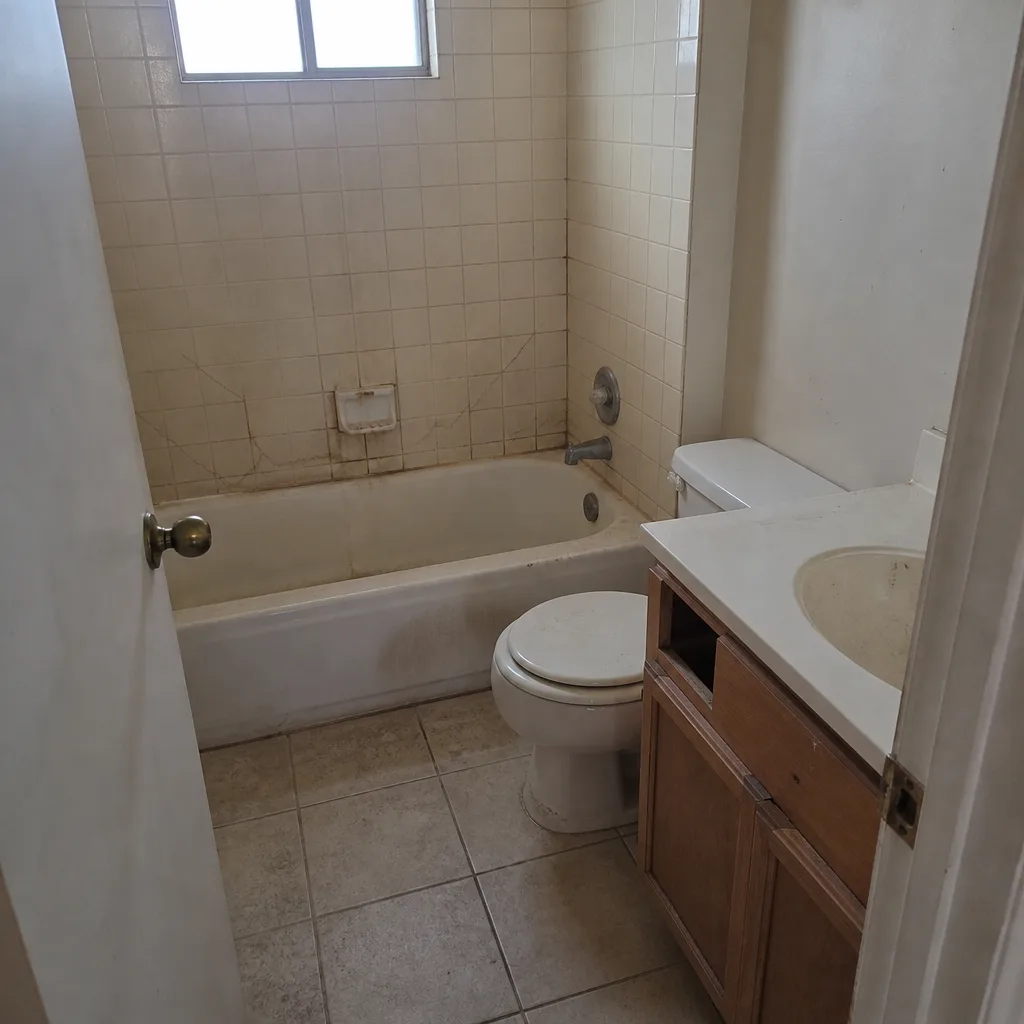 Before
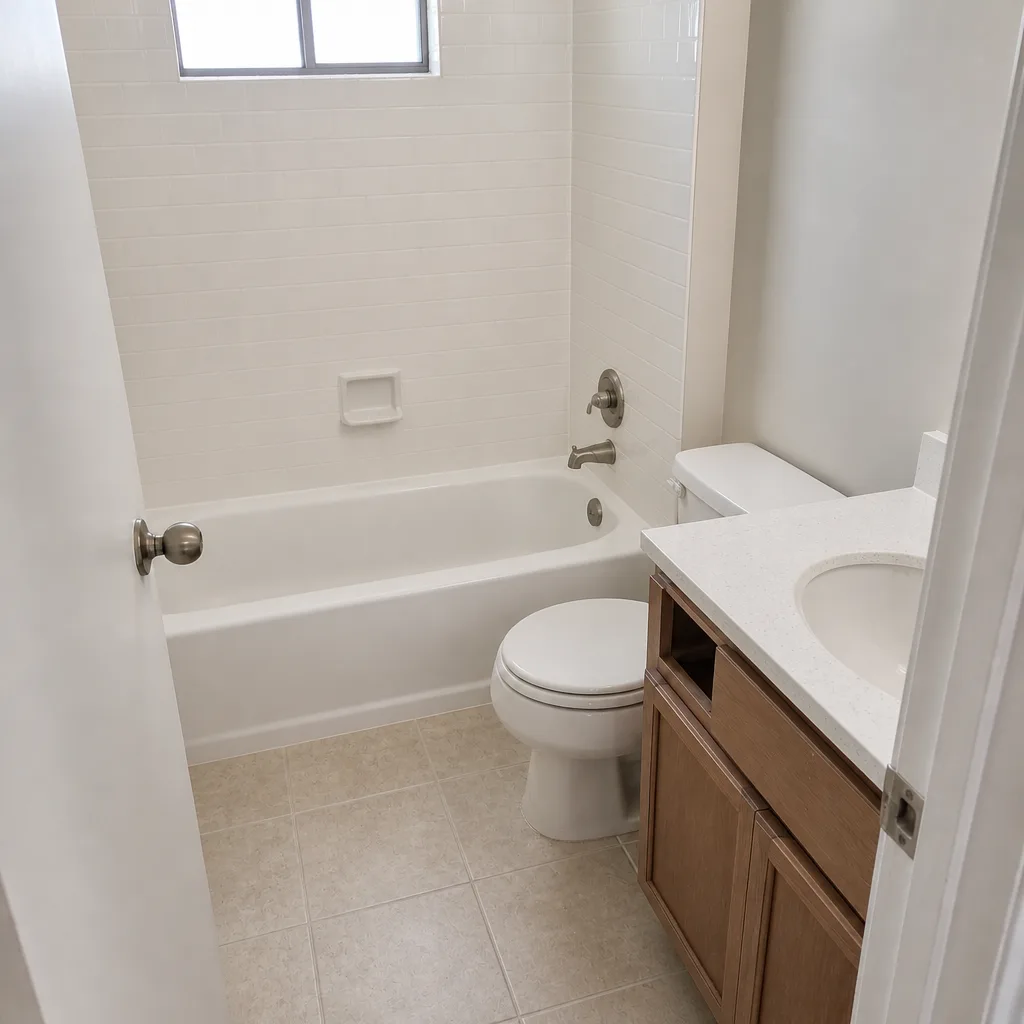 After
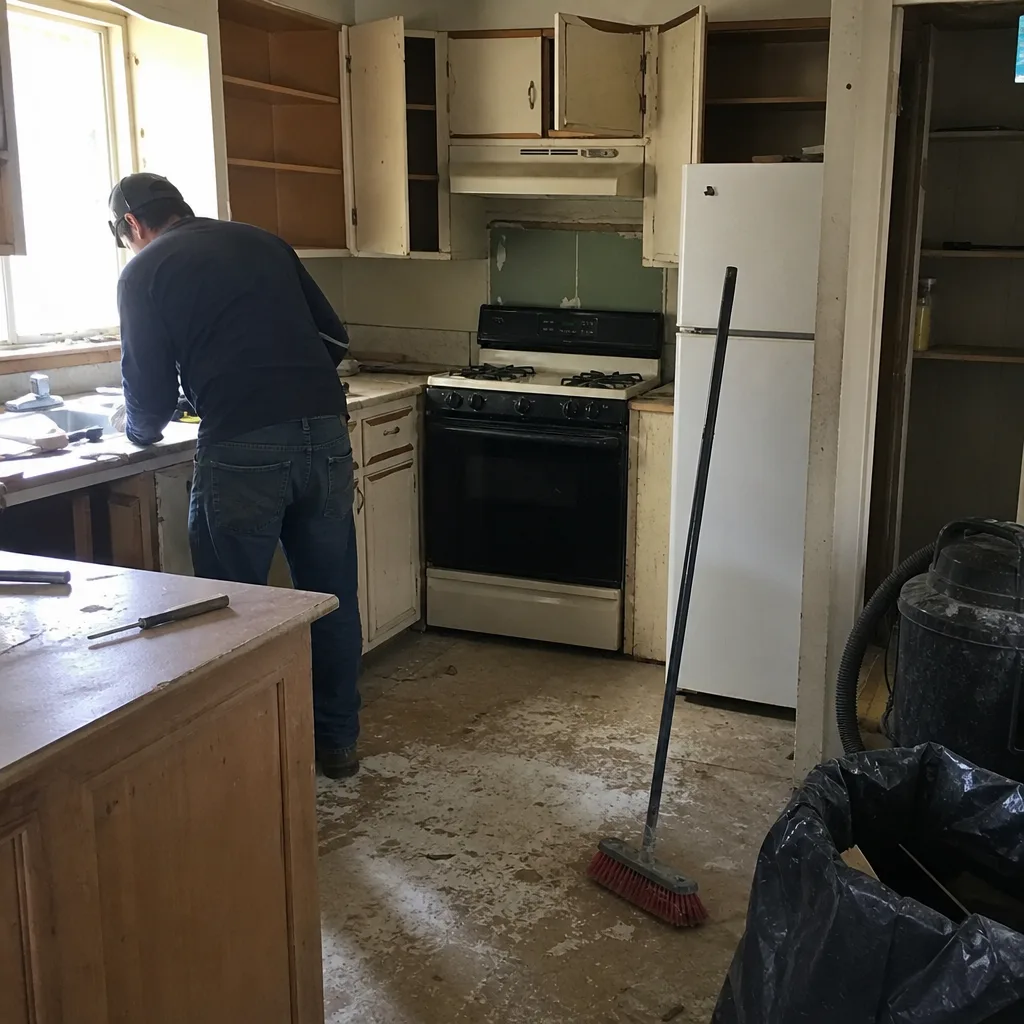 Before
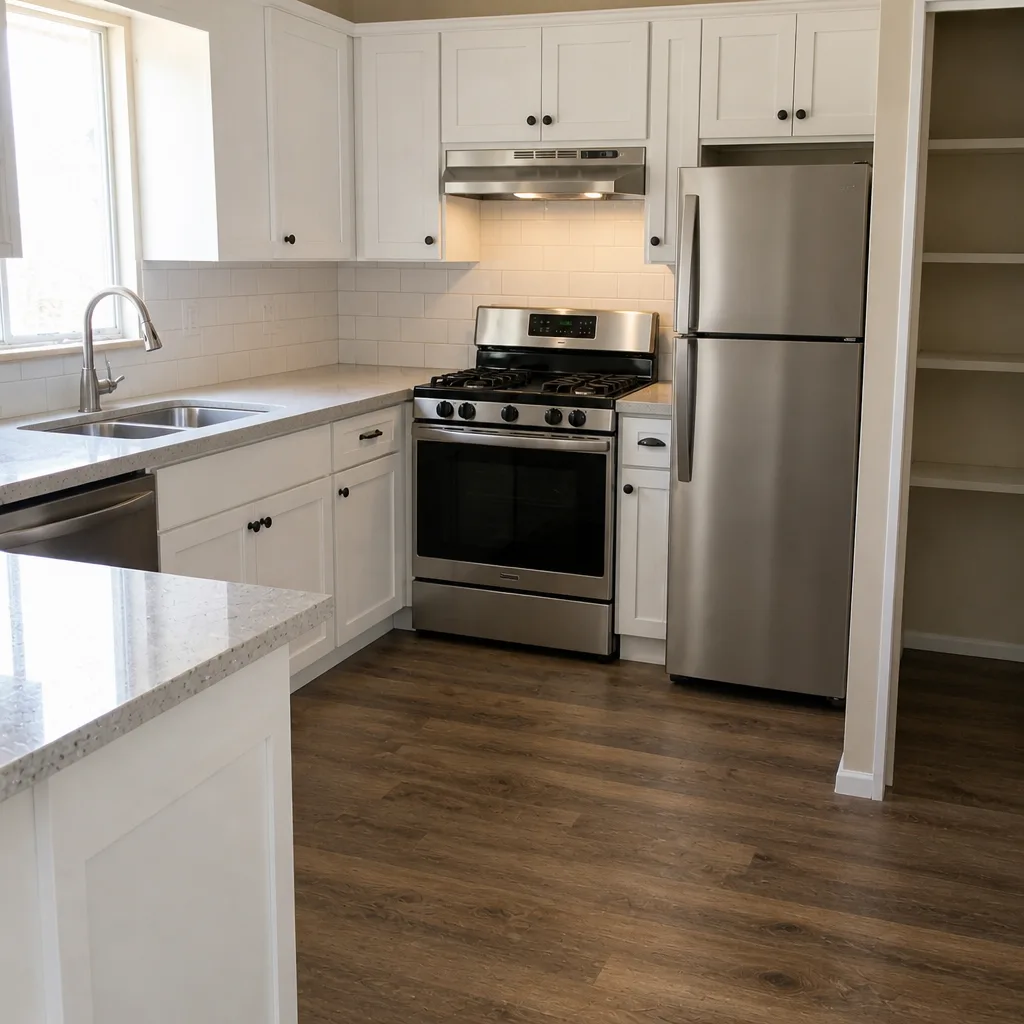 After
When to Call a Professional
Call a licensed contractor when the emergency moves beyond active damage protection: water entering through a roof, ceiling, or wall; any stucco delamination after a freeze; a structural crack; anything touching gas, electrical, or the framing of the house; or a temporary repair that needs to become permanent. Those are the scenarios where a wrong step does real damage – and where a trained professional, working to permit and warranty, is worth every dollar. If you’re carrying an estimate from another contractor and want a line-by-line review before you commit, we’ll do that at no charge. Rowan Construction Group Henderson offers free estimates in Henderson – call (833) 954-5920 to schedule one, whether you’re in the middle of an emergency or building your documentation package before the season turns.
Frequently Asked Questions
Most Henderson water-damage repairs from a burst supply line or failed appliance land between $800 and $3,200, with the cost driven by how quickly the water was stopped and how much drywall and flooring was affected. The most reliable way to lower that range is documentation and a fast shutoff – which is why the shutoff-photo package matters more than any phone number in this guide. Call (833) 954-5920 for an exact written quote – estimates are free.
The main water shutoff is usually at the street side of the property in a concrete or plastic meter box, or at the point where the supply line enters the house, often near the garage or laundry room. Take a GPS-tagged photo of yours today and put it in a shared folder every adult in the house can open. If water is actively running and you can’t find it, call (833) 954-5920 – a licensed crew can walk you to it.
A tarp or sealant application to stop active damage is a temporary repair and doesn’t start the permit clock. Once the work becomes permanent – a full membrane replacement, structural repair, or stucco replacement – a permit is required and a licensed contractor pulls it. Temporary stops the bleeding; permanent gets a permit. Call (833) 954-5920 to get a written scope for the permanent repair – estimates are free.
Ask for the Nevada State Contractors Board license number and look it up on the NSCB mobile site – the whole check takes about three minutes. Confirm the license is active, the classification matches the work, and the business name on the estimate matches the license. If a crew can’t produce a number, don’t hire them. If you want a second look at any estimate before you sign, call (833) 954-5920 for a free line-by-line review.
Move belongings out from under the leak, put a bucket down, and make a small pinhole in the ceiling at the lowest pooled point to control the water – don’t go on the roof in active rain. Then video the active leak and photograph the stain before cleanup. The water almost never enters directly above the stain, so trace uphill along seams, penetrations, and the drain. Call (833) 954-5920 once it’s safe to get a written repair scope – estimates are free.
Adjusters strongly prefer a written contractor estimate with a line-item scope, a flat price, and a warranty on the back – an invoice with a lump sum invites questions and delays. Keep your dated damage photos, the permit record, and proof of any temporary repair in the same file. Every Rowan visit includes a documented photo record as standard, so the file is ready to hand over. Call (833) 954-5920 to schedule a free estimate.
The Bottom Line
Construction emergencies in Henderson follow a pattern. The monsoon backs up a drain, the first 110°F week finds a tired membrane, the rare freeze leaves stucco hanging. The homeowners who get through these events cheaply are the ones who did three things before anything went wrong: built a GPS-tagged documentation package, mapped the seasonal triggers to their house and neighborhood, and verified a licensed contractor on the NSCB database before there was a reason to call. That documentation is what makes an insurance claim settle faster, keeps a temporary repair from becoming an unpermitted one, and keeps a $600 problem from turning into a $3,200 one. If you have a repair waiting or a documentation package to review, call (833) 954-5920 for a free written estimate – and if you’re planning the permanent fix for a roof, stucco, or driveway issue your documentation uncovered, our Driveway & Pavers in Henderson and Fence Installation in Henderson teams quote the same way: a flat written price before anyone picks up a tool.
Written by the team at Rowan Construction Group Henderson.